
RUTENI. - In the terminology of the Roman Curia and the Royal Chancery of Poland, from the Middle Ages onwards the term R. designated the Christian populations of Byzantine-Slavic rite residing west of the line running roughly from the upper Dvina to the lower Dnieper.
I. INCORPORATION OF THE RUTHENIANS INTO THE POLISH-LITHUANIAN STATE
In the 10th-12th centuries these regions were for the most part under the rule of the various Rurikid princes grouped around the Grand Prince of Kiev (v. Storia). After the conversion of the Grand Prince of Kiev, St. Vladimir (980-1015), Christianity of the Byzantine-Slavonic rite spread rapidly throughout the Ruthenian principalities, and the bishoprics erected there formed part of the metropolis "of Kiev and of all Russia" (v. KIEV), which depended on the Patriarchate of Constantinople. Therefore, following the Byzantine schism, the Ruthenians as well found themselves separated from communion with Rome. In the course of the 13th century, internal wars and Tatar invasions so disintegrated the federation of Rurikid princes that in the 14th century the Ruthenian principalities — including the city of Kiev — were progressively conquered by Lithuania and Poland. The political union between Poland and Lithuania, initiated in 1386 with the marriage of Grand Prince Jogaila to Queen Jadwiga and later strengthened by the agreements of Horodlo (1413) and Lublin (1569), also united the Ruthenians within the framework of the Polish-Lithuanian State, where they represented an important factor in political life.These political events and the transfer of the see of the Metropolitan of Kiev to Moscow also compromised the unity of the metropolis itself. Following the fluctuations of political conditions, the Patriarchs of Constantinople from time to time dismembered the metropolis by appointing separate metropolitans for Halić and for Lithuania, and from time to time reunited it in the hands of a single metropolitan residing in Moscow. Finally, the metropolis "of Kiev and of all Russia" Isidore (v.) appointed by the Patriarch of Constantinople in 1436. Isidore took part in the Council of Florence (v.), where, together with the Greeks, he adhered to the union and then promulgated it both in Poland and in Russia (in 1441). Imprisoned for this in Moscow by Grand Prince Vasily, he managed to escape, and unable to remain even in Poland because the antipope Felix V was recognized there at the time, Isidore retired to Rome, where in 1458 he resigned from the see of Kiev. His successor Gregory (1458-72) was recognized by King Casimir (1445-92), but his effective jurisdiction was limited to the territory of the Polish-Lithuanian State. Gregory's successors remained in communion with Rome until Metropolitan Joseph Soltan (1507-21), but then returned to requesting canonical investiture from the Patriarchs of Constantinople.
II. UNION OF BREST LITOVSK
Meanwhile, within the common Polish-Lithuanian State, the predominance of the Polish-Catholic element grew ever greater, being economically, socially, and culturally superior to the R.The Ruthenian nobility, which had continuous contact with the Polish nobility in frequent diets and in the army, inevitably underwent the influence of Polish-Latin culture. Mixed marriages and Catholic schools, which were also attended by dissident Ruthenian youth, frequently led to conversion to Catholicism and the adoption of the Latin rite. After 1550, Protestant propaganda also increased in Poland, where it won over many Catholic noble families and even more Ruthenian ones. Indeed, the dissident Church, being religiously, culturally, and socially weaker than the Catholic one, was not capable of resisting effectively on its own, nor could it be helped effectively from abroad, since both the Church of Constantinople and that of Moscow were then situated in States politically hostile to the Polish-Lithuanian one. Nevertheless, the dissident confraternities, headed by those of Lemberg and Vilna, offered a certain resistance to the expansion of Protestantism in the cities through their schools and publications. A similar activity was also carried out by Prince Constantine Ostrogskij (v.) helped in this
by Prince Andrew Kurbskij and the monk Artemij, Russian refugees. From the printing press annexed to the school of Ostrog, then the only dissident school that reached the level of those of the Catholics, there issued in 1581 the first Bible printed in the Church-Slavonic language.
Meanwhile, certain Ruthenian bishops, on the one hand considering the disastrous state of their own Church and on the other seeing the success of the Catholic Church in the struggle against Protestantism, conceived the idea of union with Rome. They hoped that, by inserting their metropolis into the organism of the universal Church, they would improve its religious, cultural, and social conditions and thereby save it from imminent ruin. The project of union was discussed secretly in several meetings of the bishops and treated with King Sigismund III (1587-1632), who was favorable to the union also for political reasons. However, Prince Ostrogskij was left aside, and this later created considerable difficulties.
Finally, Bishops Cyril Terleckij of Luck and Hypatius Potiej of Vladimir went to Rome, where on Dec. 23, 1595, they made the act of obedience to Pope Clement VIII on behalf of the entire Ruthenian episcopate. The Pope, with the bull of Feb. 23, 1596, confirmed all the ancient rights of the metropolis of Kiev. The Eastern rite and canonical institutions were to be preserved intact; the bishops were to receive canonical investiture from the metropolitan, who, elected by the bishops, had to be confirmed by the Pope. The Synod of Ruthenian bishops, held at Brest Litovsk from Oct. 6 to 10, 1596, solemnly proclaimed the union of the metropolis of Kiev with Rome. King Sigismund officially recognized the union and considered the united hierarchy as the sole legitimate hierarchy of the R. However, at that time the Ruthenian bishops of Lemberg and of Peremyšl did not adhere to the union, supported by a portion of the monks and the Ruthenian nobility with Prince Ostrogskij at their head and by numerous confraternities, especially those of Lemberg and Vilna. Therefore, Metropolitan Michael Rahoža (1588-99), faithful to the union but weak, had to struggle against this opposition to implement the decisions of the Synod of Brest. His successor Hypatius Potiej (1600-1613), of high noble origin, a practical and energetic administrator, was better able to uphold rights against the dissidents, who through judicial lawsuits and covert armed attacks sought to prevent the united hierarchy from exercising ecclesiastical jurisdiction. Potiej obtained from the King the confirmation of all rights and privileges already granted to the united at the time of the union concluded in Florence.
III. CONSOLIDAMENTO DELL'UNIONE
A Potiej succedette il Rutskij (v.). Potiej aveva consolidato l'unione nel campo giuridico ed amministrativo, ma occorreva ancora rendere più conscia e profonda l'adesione del clero e del popolo all'unione.Perciò Rutskij volle elevare il livello religioso-culturale del clero e del laicato ruteno, che era inferiore di fronte a quello dei cattolici latini polacchi. A questo scopo occorrevano a Rutskij le scuole come le avevano i latini. Egli ottenne da Paolo V la parificazione giuridica delle sue scuole con quelle latine, ma per mancanza di mezzi finanziari non le poté istituire. Anche la famosa scuola dissidente di Ostrog passò nel 1620 ai Gesuiti. Neppure riuscì ad aprire il Seminario di Minsk, perché l'edificio e i beni destinati a questo scopo furono restituiti dal re Ladislao IV ai dissidenti.
Più successo ebbe BASILIANE (v.), i quali fino allora dipendevano dai vescovi e menavano vita monastica. Rutskij ideò la trasformazione dei Basiliani in un grande Ordine diretto da un superiore generale distinto ed indipendente dal metropolita. I sacerdoti dovevano costituire la parte principale dell'Ordine e dedicarsi anche alla cura di anime. Però i vescovi dovevano tutti essere basiliani, come prima. Un capitolo generale dei monasteri basiliani accettò queste proposte nel 1621 e così ebbe principio la riforma, approvata poi anche da Roma. L'Ordine riformato divenne poi fulcro della vita religiosa e culturale della metropolia rutena
The consolidation of the union was also hindered by the attitude of the Latin hierarchy, which opposed the full social and juridical equalization of the united clergy with the Latin clergy, and especially the admission of the united bishops to the Senate, which was then its most notable sign.
The Latin bishops often regarded the united Catholics as of an inferior grade and considered only those of the Latin rite as "true" Catholics. Therefore, the united Ruthenian nobility and bourgeoisie, wishing to escape this social inferiority, passed over to the Latin rite, thus depriving the united Church of the element that was then most important economically, socially, and culturally. Rutskij and Rome understood the grave danger of this social degradation of the Ruthenian Church, and the Propaganda in 1624 prohibited free transfer from one rite to another. But the decree was not published in Poland due to the opposition of the Latin episcopate, although the King was willing to do so. In this way, the union seemed to many to be a provisional matter, preparing the R. for the transition to the Latin rite.
Other difficulties for the union came from the dissident hierarchy, re-established in 1620 by the Patriarch of Jerusalem, Theophanes. The dissident bishops, although not officially recognized by the King, but supported by the dissident nobility, laid claim to the churches, monasteries, and property of the united, resorting even to violence, which culminated in 1622 with the killing of the united Archbishop of Polock, St. Josaphat Kuncevič. When King Vladislaus IV (1632-48) recognized the new dissident hierarchy in 1635, Rutskij opened negotiations for a new union with the dissident Metropolitan Peter Mohyla (1633-47); but due to the king's lack of interest and the hostility of the Cossacks, the negotiations failed. Rutskij died in 1637, leaving the union solidly rooted and organized, so that it was able to overcome the dangers that threatened II.
IV. THE UNION IN DANGER
Rutskij's successors, Raphael Korsak (1637-40) and Anthony Sielava (1640-51), had to sustain severe struggles with the dissidents. In 1641, the Diet itself ratified the equalization of the dissident bishops with the united ones, despite the protests of the united and Latin clergy and of the nuncio, who had to leave Poland. United bishops again negotiated with dissident bishops for a new union, but in vain. King John Casimir (1648-68), involved in war with Sweden, Russia, and theCossacks, concluded a Treaty with the latter at Hadiač in 1658, which admitted Ukraine as the third member of the Polish-Lithuanian State and recognized only the Latin and dissident hierarchy there, thus tacitly suppressing the union. The united bishops protested in vain; they did not surrender, but instead negotiated once more with the dissidents for union. When, by the Treaty of Andrusov (a. 1667), Russia gained the left bank of the Dnieper and the city of Kiev, the see of the dissident metropolitan, King Casimir in 1668, before abdicating, withdrew the concessions made to the dissidents and reconfirmed the privileges granted to the united metropolia, which under the leadership of Metropolitan Gabriel Kolenda (1666-74) was consolidated and repaired the damage caused by the mortal danger it had just successfully overcome.
V. VITTORIA DELL'UNIONE
The prosperous development and growing prestige of the Uniate Church, supported also by King John Sobieski (1676-96), also favorably influenced the three dissident bishops who still remained in Poland after the latest territorial concessions made to Russia. In 1691 the union was promulgated by the Bishop of Peremyšl Innocent Winnickij, in 1700 by that of Lviv Giuseppe Šumljanskij, and in 1702 also by the Bishop of Luck Dionigi Žabokrickij. The prudently prepared clergy and faithful accepted the union without difficulty. In 1708 the important stauropegian confraternity of Lviv, until then a stronghold of schism, also adhered to the union. Thus, under the Uniate Metropolitan, almost all the R. of the Polish-Lithuanian State were united, and only insignificant dissident communities in the regions bordering Russia remained.Having overcome external difficulties, the Ruthenian Uniate Church could direct all its energies toward the internal development of its religious and cultural life. Serious difficulties arose from disputes between the hierarchy and the Basilian Order. The monks, while holding important offices in church administration and the care of souls, depended on the superior of the Order, who was independent of the Metropolitan. Since all the bishops had to be Basilian monks, their selection depended practically more on the religious superior than on the Metropolitan. An agreement (nexus) concluded in 1686 between the Order and the Metropolitan did not substantially change the state of affairs, practically reserving to the Metropolitan only the right to receive appeals from the monks without granting him effective means to enforce his own decisions. Since the R. had no seminaries of their own, they made use of scholarships reserved for them in Latin schools, even abroad (Prague, Olomouc, Rome). The secular clergy, generally married, did not like to send their sons so far away, and therefore the cultural level always remained very low. However, the priests, especially the monks, trained in Latin schools, were strongly influenced by Polish-Latin spirituality and culture, and this was not long in manifesting itself in the religious and cultural life of the R., especially in the liturgy, into which many Latin forms and customs were progressively introduced (monstrance, Eucharistic processions, side altars, low Mass, etc.). These arbitrary changes caused great uncertainty in liturgical practice, and to remedy this, Metropolitan Leo Kiška (1714-29) convoked a Synod, which met in 1720 at Žamošč. The Synod introduced the Filioque into the Creed, established norms for a new edition of liturgical books, and approved various customs taken from the Latin rite. The Synod insisted on the need for schools and seminaries, and issued decrees concerning ecclesiastical discipline, drawing inspiration for this from the decrees of the Council of Trent. The Synod of Zamošč represents, in the religious field, the reflection of the compromise between traditional Byzantine-Slavic culture and Polish-Lithuanian culture, and constitutes a decisive turning point in the cultural and religious life of the Ruthenian metropolis. Metropolitan Athanasius Szeptickij (1728-46) prepared a new edition of liturgical books (1730-32), but even so, uniformity in practice was not achieved. At that time, disputes between the hierarchy and the Basilian Order became particularly bitter. Finally, Pope Benedict XIV in 1733 invited the bishops to establish seminaries and to call the secular clergy to ecclesiastical dignities as well. From then on, the Basilian monks were to depend on their own superiors in religious discipline and on the bishops in the care of souls, just like Latin religious.
VI. DISMEMBERMENT OF THE METROPOLIS
The further development of the Ruthenian Uniate Church was interrupted by the First Partition of Poland (a. 1772), which also dismembered the Ruthenian metropolis. The Ruthenians of White Russia with the archbishopric of Polock were annexed to Russia, the dioceses of Peremyšl and Lviv to Austria. The Four-Year Diet (1788-92) attempted to reorganize the remainder of the Polish State and also planned to grant the Uniate clergy legal and social parity with the Latin clergy. Meanwhile, numerous professors were formed among the Basilians, so that after the suppression of the Jesuits (1773) they took over some of their schools. However, the two subsequent partitions of Poland (1793-95) completely divided the metropolis itself among Russia, Prussia, and Austria. Each of its parts subsequently followed its own destiny.1. Ruthenians in Prussia
In 1795 Prussia also acquired the Bialystok region inhabited by the Ruthenians. Pius VI erected a new diocese for them in 1799 with its see in the monastery of Suprasl. With the Peace of Tilsit (1807) the region passed to Russia and from then on followed the fate of the Ruthenians in the Russian domains.2. Ruthenians in Russia
In the first decade after the First Partition of Poland the Ruthenians encountered no special difficulties. But in 1779 Catherine II (1762-96) stripped the Archbishop of Polock, Jason Junoša-Smogoševskij, of Russian citizenship when he was elected metropolitan. In 1785 Heraclius Lisovskij, faithful to the union but too weak to face the growing difficulties, succeeded him in the diocese of Polock. When new territories inhabited by the Uniate Ruthenians were annexed to Russia in 1793 and 1795, the government increased pressure to induce them to pass to the dissident Church.Metropolitan Theodosius Rostockij (1787-1805), who had gone to Petersburg to intervene with the Empress in favor of the Uniates, was detained there until his death. In 1795 Catherine II suppressed the Uniate metropolis and all dioceses except for the archbishopric of Polock, to which she subjected all the Uniate Ruthenians of Russia. The short reign of Paul I (1796-1801) eased the position of the Uniates. Alexander I (1801-25) in 1801 subjected the Uniates to the "Catholic Ecclesiastical College," the supreme administrative and judicial body for Catholics in Russia presided over by the Latin Archbishop of Mogilev Stanislao Siestrzenciewicz-Bohusz (1783-1826), a servile prelate entirely compliant with the government, without any regard for the provisions of the Holy See. In 1805 the College was divided into a Latin section and a Uniate section, the latter presided over by E. Lisovskij. Emperor Alexander also re-established the Uniate metropolis by erecting four bishoprics in 1809 (Vilna, Polock, Łuck, Brest). Gregory Kochanovič (1809-14), who succeeded Lisovskij (d. 1809), together with the other Uniate bishops made a declaration of loyalty to the Pope and decided to ask the Holy See as soon as possible for the ratification of the new ecclesiastical province. Metropolitan Joseph Bulhak (1817-38) obtained delegated metropolitan powers from Rome. But Emperor Nicholas I (1825-55), an autocratic man rigidly attached to the national dissident Church, was hostile to the Uniate Church. The young assessor
of the College of the Uniates, Joseph Siemaško, educated in the Latin Seminary of Vilna according to the anti-Viennese ideas of Josephinism, presented the Tsar with a plan for the submission of the Uniate Ruthenians to the Russian dissident Church. Appointed auxiliary bishop to Metropolitan Bulhak, Siemaško, helped by his friends A. Zubko and G. Lužinskij who were also appointed bishops, prepared the ground by replacing many faithful priests with others who were ready to pass to schism. Upon the death of Metropolitan Bulhak, who had always remained faithful to the union, Siemaško, Zubko, and Lužinskij with 21 priests on Feb. 12, 1839 proclaimed at Polock the reunion with the Russian dissident Church. Resisting priests were deported. Since the Ruthenian nobility had been almost entirely latinized, the mass of Uniate faithful, composed of serf peasants, was protected by no one, and any attempt at resistance was easily crushed by violence. Thus the Uniate Church was stifled in Russia; in 1825 it had numbered 6 bishops, 1,476 parishes with 1,985 secular priests, 47 monasteries with 507 religious, and 1,427,579 faithful.
After the failure of the Polish insurrection of 1863, a similar fate befell the Uniate diocese of Chełm, which since 1815 had been part of the restored Kingdom of Poland governed by the Russian tsars. Siemaško's role was played here by the priest Marcellus Popiel, administrator of the diocese, who, helped by some apostate priests coming from Austrian Galicia, proclaimed the reunion with the Russian dissident Church in 1875 at a diocesan synod. The diocese of Chełm then numbered ca. 300 parishes with 250,000 faithful. The resistance of the clergy and the faithful was violently repressed. From 1878 to 1905, with the approval of the Holy See, Catholic priests, especially Jesuits coming from Austrian Galicia, traveled secretly to Russia to provide spiritual assistance to these clandestine Uniates. Ca. 200,000 of them, taking advantage of the Edict of Tolerance granted in 1905, again publicly declared themselves Catholics, but of the Latin rite, which was then the only one recognized in Russia.
3. Ruthenians in Austria
The Ruthenian dioceses of Lviv, Peremyšl, and Chełm, which found themselves under Austrian rule, continued to recognize the jurisdiction of Metropolitan Theodosius Rostockij, who was detained in Petersburg, although they were unable to communicate with him. After Rostockij's death (1805) Emperor Francis I obtained from the Holy See in 1807 the erection of the Ruthenian metropolis of Halič, with its see in Lviv, elevated to an archbishopric. The metropolitan was to be presented by the Emperor and confirmed by the Pope; the bishops, appointed by the Emperor, received canonical institution from the metropolitan. The Imperial Chancery then coined the name "Greek-Catholics" for these Ruthenians.The first metropolitan was Anthony Anhelovič of Peremyšl (d. 1814), then the only surviving Ruthenian bishop in Galicia. In 1806 he took under his exclusive direction the Central Seminary of Lviv, founded by Joseph II, reclaimed usurped and confiscated ecclesiastical property, and in 1813 established the Metropolitan Chapter in Lviv. His successor Michael Levickij (1816-58), in the metropolis diminished by the diocese of Chełm having passed to Russia, worked to improve the economic and social conditions of the Ruthenian clergy. The Concordat of 1855 guaranteed the perfect equality of the Ruthenian clergy with the Latin one, and Levickij was elevated to the purple, becoming the first Ruthenian cardinal since the Union of Brest. The abolition of serfdom (1848) made it possible for the Ruthenians to form a new educated class in place of the latinized and polonized nobility. Ruthenian chairs were also established at the University of Lviv. The peaceful development of ecclesiastical life was disturbed by internal political struggles between the Russophile and Ukrainian parties, which had their adherents among the clergy. The struggles intensified under Metropolitan Joseph Sembratovič (1870-82), who at first supported the Russophile party, but abandoned it after the apostasy to schism of some Russophile priests (Ivan Naumovič, Marcellus Popiel, etc.). Regarded with suspicion by the government and fought by the radical Ukrainian party of Michael Dra-
homaniv, Sembratovič resigned. He was succeeded by his auxiliary bishop and nephew, Silvestro Sembratovič (1885-1898). Meanwhile, in 1882, under the guidance of the Jesuits, the reform of the Basilians began, transforming them into a modern Order of apostolic activity. In 1885, a part of the vast Archdiocese of Lviv was erected into a diocese with its seat in Stanislaviv. To re-establish order and to divert the clergy from excessive political activity, the Metropolitan convened a Synod in Lviv in 1891, which completed the disciplinary and liturgical legislation of that of Zamošč, adopting almost all the Trent decrees. The question of the celibacy of the secular clergy was debated, but not resolved. In 1895 the decrees of the Synod were approved by the Holy See and Metropolitan Sembratovič was created cardinal. After the brief government of Metropolitan Giuliano Kuilovskij (1899-1900), Andrea Szeptickij (1900-44), Bishop of Stanislaviv, succeeded him. Coming from the illustrious family of the former Ruthenian nobility, a man of vast culture and intelligent energy, while avoiding radical extremisms, he firmly claimed his people's rights to full social and cultural development and to the use of their own language. Through his initiative, or at least with his help, numerous religious, social, and cultural works arose. In 1906 he instituted the monastic Order of the Studites. In 1907 the seminary in Stanislaviv and the Ukrainian National Museum in Lviv were opened. Alongside the Order of the Basilians, the eastern branch of the Redemptorists was also established in Galicia in 1913. The cultural level of the clergy, who also studied abroad (in Vienna, Innsbruck, and the Ruthenian College opened in Rome in 1897), rose rapidly, and in their ranks talented professors and writers of a European standard were already distinguishing themselves. Women's religious congregations were also developing, completing the apostolate of the clergy with their educational and welfare activities. In addition to the female monasteries of the Basilians, the Servants of the B.V. Mary Immaculate were founded in 1892, the Myrrh-bearing Sisters in 1910, the Sisters of St. Josaphat in 1911, and the Sisters of the Holy Family in 1912. Religious publishing, especially popular printing, also grew.
This peaceful development was disturbed by the First World War (1914-18). Galicia was largely occupied by Russian armies. In 1914 the Metropolitan, along with numerous clerics, was deported to Russia, and the occupying authorities supported the dissident movement, but with little success. In 1917 Szeptickij returned from Russia to his metropolis, which still had to suffer greatly because of the Polish-Ukrainian civil war. The war having ended, the Metropolis of Halych remained encompassed within the restored Poland. Despite many difficulties created by political tension between Poles and Ukrainians, the Metropolitan, always Christianly conciliatory and remaining apart from radical extremisms, knew how to guide his metropolis toward the continuous development of religious and cultural life. In 1923 the publication of the theological review Bohoslovia began, and in 1928 the Academy of Theology was opened in Lviv. The number of clergy and religious of both sexes increased. Religious-cultural periodicals numbered about thirty. The Metropolis of Halych counted, in its three dioceses, 3,576,237 faithful in 2,226 parishes with 2,275 secular priests.
With the new partition of Poland between Russia and Germany (1939), the metropolis found itself for a brief time almost entirely under Soviet rule, but in 1941 it was occupied by German troops. The war paralyzed the normal development of religious and cultural life. With the definitive victory of the Soviet Union, the territory of the Metropolis of Halych — with the exception of Peremyšl and its surroundings, which remained in Poland — was incorporated into the Soviet Ukrainian Republic. At first, the Soviet authorities showed a certain tolerance toward the Uniate Church. Following the death of Metropolitan Szeptickij (1944), Giuseppe Slipyj succeeded him. In 1945
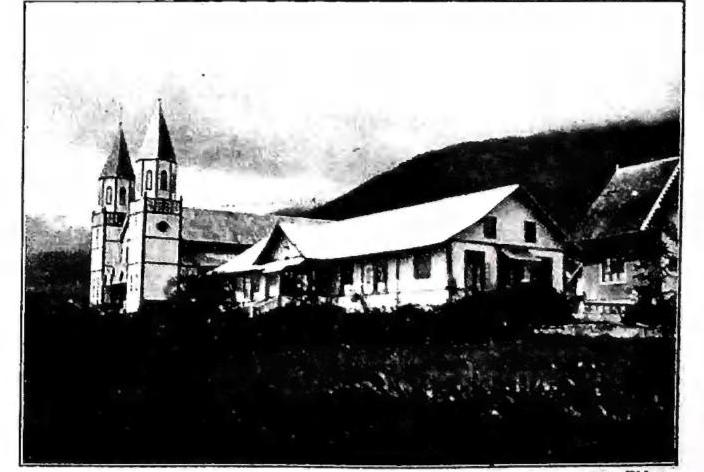
VII. R. IN SUBCARPATIA. - The southern slopes of the Carpathians descending down to the Hungarian plain were inhabited by the R., Christians of the Byzantine-Slavic rite from an imprecisely known date, with their religious center in the monastery of St. Nicholas near Mukačevo, the residence of the bishop, who depended on the Constantinopolitan patriarch. The Subcarpathian R. returned to union with Rome in the 17th century through the work of their bishops Basil Tarasovič (d. 1648), Parthenius Rostošinskij (d. 1668), and especially the Greek John De Camillis (1689-1706). The united bishops had to overcome serious difficulties due to the Turkish wars and the hostility of the Calvinist family of the Rákóczi princes. In 1775 Bishop Andrew Bačinskij transferred his see to Užhorod, a more important city, and in 1778 also opened the Seminary there. In 1818 another diocese was erected with its see in Prešov. As a reaction against the growing Magyarization of the clergy and the Latinization of the rite, a pro-Russian political-religious movement developed. When, after the war of 1914-18, the Subcarpathian R. found themselves within the borders of the Czechoslovak Republic, a violent reaction broke out against the Magyarization they had suffered, leading in the years 1920-23 a part of the united to the point of schism. To stem the movement, the Holy See entrusted the dioceses to Ruthenian bishops by origin and sentiment, who enjoyed the esteem and trust of their own people: Mukačevo to Peter Gebej (1924-32) and then to Alexander Stojka (1932-43), Prešov to Dionysius Njaradi (1922-27) and then to Paul Gojdič (from 1927).
The following twenty-year period marked a great economic, social, cultural, and even religious progress for the Subcarpathian R., promoted by the secular clergy, the Basilians, and the Eastern Redemptorists. Ecclesiastical institutions, schools, and religious press were in full development. After the dismemberment of Czechoslovakia in the years 1938-39, the bishopric of Mukačevo found itself in Hungary and that of Prešov remained in Slovakia. In 1945 almost the entire territory of the diocese of Mukačevo was annexed to the Soviet Union. The Soviet authorities, following the violent suppression of Bishop Theodore Romža (1947), proceeded to liquidate the union according to the methods already tested in the metropolis of Halych, and the diocese of Mukačevo was officially incorporated into the Patriarchate of Moscow on Aug. 28, 1949.
Instead, the diocese of Prešov, which remained in re-established Czechoslovakia, was then resuming normal life and numbered 305,000 faithful with 500 priests. But in 1948 the communist regime was also established in Czechoslovakia, which, as part of the general struggle against the Catholic Church, proceeded to suppress the union, which officially took place on April 28, 1950, with the submission of the diocese of Prešov to the Patriarch of Moscow. Bishop Paul Gojdič, along with his auxiliary Basil Hopko and numerous priests resisting the schism, were imprisoned.
VIII. RUTHENIANS IN EMIGRATION
In the 19th century, difficult economic and social conditions drove numerous Ruthenians from both Galicia and Subcarpathia to emigrate to other regions of Europe and America. To provide religious assistance to the emigrants, Ruthenian priests, both secular and regular, followed them; for the largest groups, the Holy See also provided their own bishops.The Ruthenians in Yugoslavia depend Krizevci (v.) founded in 1777. In the United States, the apostolic exarchate for Ruthenians originally from Galicia (with its see in Philadelphia) has 302,775 faithful, and the one for Ruthenians originally from Subcarpathia (with its see in Pittsburgh) has 299,305 faithful. In Canada, there are the apostolic exarchate of Western Canada (see in Edmonton) with 310,355 faithful; the exarchate of Central Canada, with 107,355, was divided in 1951 into the exarchate of Manitoba (see Winnipeg) and that of Saskatchewan (see Saskatoon). Ruthenians in Brazil (approx. 100,000) and Argentina (approx. 120,000) depend on Latin bishops. Ruthenian emigrants and recent refugees in Western European countries (approx. 150,000) are administered by the apostolic visitor residing in Rome.
IX. EVALUATIONS
The united R. - numbering 5,182,285 in total - constitute the largest group of Eastern-rite Catholics. Cultivating the ancient canonical, liturgical, and spiritual traditions of the Christian East while remaining in communion with the Apostolic See, they were tangible proof that the Catholic Church is universal not only de iure but also de facto. Overcoming difficult historical events, the R. have demonstrated their vigorous and fruitful vitality. At the present time, only the R. in emigration are able to freely continue these Eastern and Catholic traditions. The ancient Ruthenian episcopal sees in Halič and Subcarpathia are usurped by dissident bishops, while bishops, priests, and laypeople faithful to the union with Rome are persecuted, exiled, and imprisoned. Yet precisely these persecuted ones are the pledge of the future rebirth of the Ruthenian Church.X. RUTHENIAN RITE
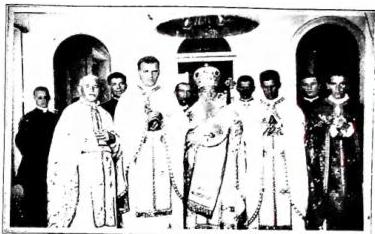
It is the Byzantine rite as it was practiced before 1945 in the Catholic eparchies of Lviv, Przemysł, Stanislaviv in Poland, Mukačevo and Prešov in Czechoslovakia, and Križevci in Yugoslavia, and as it is in use today in the ordinariates for the R. in Canada and the United States, among the numerous groups of R. in South America, and among those dispersed in Central and Western Europe. Among Catholics of the Eastern rite, it is the most numerous group.The Ruthenian rite originated in Kiev when this country accepted Christianity from Constantinople in the 10th century and began to celebrate the liturgy in the Old Church Slavonic language. The translations came from the Bulgarians and Serbs, but the rite developed with particular characteristics and without strict uniformity. The divergences are clearly visible in manuscript codices and did not disappear when the printing of liturgical books began in the 17th century in Stryi, Ostrog, Vilnius, Kiev, and Lviv. The true father of the Ruthenian rite was the dissident Metropolitan of Kiev, Peter Mohyla (1633-47), especially through his editions of the Liturgicon (1629-39) and the Euchologion or Trebnik (1646). Kiev, at that time under Polish rule, was strongly influenced by the West in its schools, academies, theological doctrines, and also in the liturgy—for example, regarding the consecratory value of Christ's words and the form of all the Sacraments. The lack of understanding and sometimes the contempt of the Latins for the Eastern rite caused certain ceremonies to be omitted, changed, or amplified. When, around 1685, Kiev passed under Moscow's rule, the Mohylian reform was continued in Galicia, where the eparchies had not yet adhered to the Union of Brest-Litovsk. On the other hand, in the northern part (Polotsk, Vilnius, Supraśl), where the Union was firmly established, contact with the Latins brought about serious changes in the liturgical field, which became evident, for example, in the first edition of the Liturgicon published in Vilnius in 1692. However, when the bishops of Lviv and Przemysł accepted the union, it became necessary to convene a synod to try to establish greater uniformity between north and south; the Synod of Zamość (1720) confirmed certain ritual changes introduced in the north, but deferred other decisions to a later time. A more unbridled Latinization then began, despite the constant but weak opposition of the conservative party and without the approval of the Holy See. As this dualism persisted down to the present day, the Holy See, at the request of the Ruthenian hierarchy, undertook the publication of liturgical books with the intent of safeguarding the authentic and genuine rite. There have appeared the Liturgy of St. John Chrysostom (1940), the Liturgicon with the calendar (1942), the Evangelion, selected Gospels (1943), selected Epistles (1944), the Office of Easter (1944), the Moli Trebnik (1947), the Horologion (1950), and, in Latin, a Ceremonial for vespers, matins, and the divine liturgy (1945). - See plates XCIII-XCIV.