
SZEPTYCKYJ, ANDREJ. - Metropolitan of Galicia, in secular life Roman Alexander, third son of the Counts de Szeptyci-Szeptyckyj, an ancient noble Ukrainian family, born at Prylbyci on July 29, 1865, died on Nov. 1, 1944. Having completed his legal studies in Breslau, crowned with a degree in law, he embraced the Basilian Order on May 23, 1888, changing his name to Andrew.
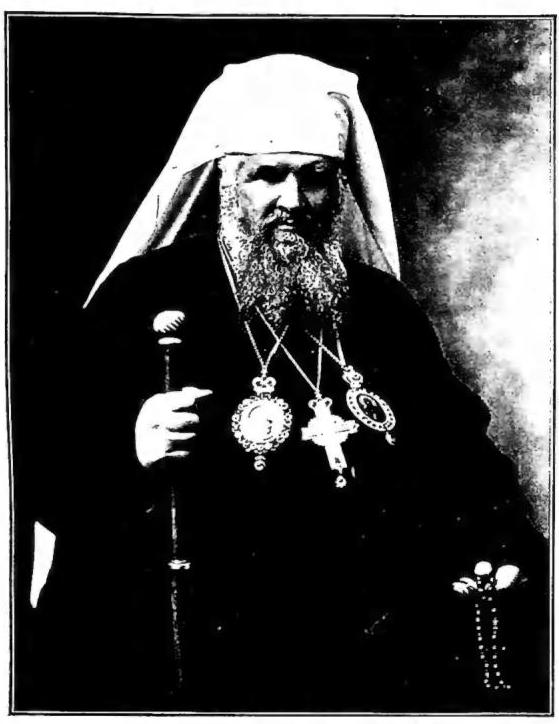
His zeal was not limited only to the administration of the archdiocese, but embraced also those of his faithful who, due to grave social conditions, were forced to emigrate overseas to North and South America. The metropolitan personally visited these destitute people, sent priests, and through his great zeal he deserved to obtain from the Apostolic See the ecclesiastical hierarchy in the United States of America (1907) and in Canada (1912). Having embraced the monastic state, Msgr. S., even while being metropolitan, nevertheless remained an exemplary religious and a promoter of monastic life.
Beginning with the restoration of the Nuns of St. Basil the Great, he renewed ancient Eastern monasticism according to the Rule of St. Theodore the Studite (1901-1902). Then, visiting his faithful in Canada on the occasion of the Eucharistic Congress of 1910-11, he found some Redemptorists who, having obtained the faculty from the Holy See, were devoting themselves to the pastoral care of the faithful of the Byzantine-Slavonic rite. He then concluded an agreement with the Father General of the Redemptorists (1913), later confirmed by the Sacred Congregation of Propaganda Fide on Apr. 27, 1914, by virtue of which the Redemptorists created a branch of the Congregation in the Byzantine-Slavonic rite. Today this branch has already become a province in Galicia, unfortunately now suppressed by the Bolsheviks; another flourishing vice-province exists in Canada and the United States of America.
But the noblest purpose, which dominated all the metropolitan's action, was his eager desire to promote the union of the dissidents with the Roman See, nor did he let any opportunity slip by to be able to realize II. To this end he visited Latin bishops and religious Orders, discussing difficult problems of the Union and encouraging them to collaborate, frequently participated in unionistic congresses, undertook journeys to Moscow (1907), and fostered relations with the most important dissenting ecclesiastical and civil figures. This allowed the metropolitan, freed from imprisonment in 1917 after the revolution in Russia, to be able to hold a provincial Synod of Catholics with priests already known and to achieve the appointment of the exarch for Russia in the person of Leonidas Fedorov (cf. A. Herman, De fontibus iuris ecclesiastici Russorum, Rome 1936, p. 96 ff.). Because of this zealous activity of his in promoting the unionistic action in 1914, after the occupation of Galicia by Russian troops, he was taken "prisoner of the Tsar" and then imprisoned in the Suzdal monastery for more than two years. The Russian Revolution of 1917 freed the metropolitan from prison. In Sept. of the same year he returned to his homeland, devastated and destroyed by the great battles that had taken place in eastern Galicia. As soon as the burned churches had been rebuilt in the laborious years 1918-39, the ecclesiastical institutes that had been destroyed and sacked had been renewed, the minor and major seminaries had been organized, and studies had been restored, the Second World War broke out, during which the metropolitan, when his ecclesiastical province was occupied, consecrated his final efforts to defending his flock and wrote pastoral letters encouraging priests and faithful to resistance and perseverance in the Catholic faith; on May 2, 1940, he celebrated a diocesan Synod in Lviv.