Machine translation of the 1948–1954 Italian original. The original text is authoritative.
GREGORIO XII, POPE. – Angelo Correr, of an ancient Venetian family, born in Venice around 1325, patriarch of Constantinople, then cardinal priest of S. Marco. In order to put an end to the schism of the Church, which had lasted since the time of Urbano VI, when the Conclave assembled to elect the successor of Innocenzo VII (1406), he swore, together with 13 other “Roman” cardinals, that, if elected, he would renounce the papacy, on condition that Benedetto XIII (De Luna), the antipope residing in Avignon, would make an equal renunciation. And since the latter took a similar oath, it was hoped that the Western Schism would soon come to an end. Correr, elected pope on 30 November 1406 at more than seventy years of age, chiefly because he was regarded as a convinced supporter of the unity of the Church, took the name G. XII and was crowned on 3 December. Since the Conclave had decided that, within three months of the election, the new Pope should begin negotiations with his rival in order to arrange a meeting, G. XII declared that he would “immediately take up the pilgrim’s staff” or “in a skiff” would travel to his rival and would not stop until he had fulfilled his vow. At the suggestion of the astute Benedetto XIII, Savona was designated as the place of the meeting (29 September 1407), at that time under the rule of the French king Carlo VI. Through the governor Bucicoldo, the Genoese cardinal Luigi Fieschi, and by means of arms, the latter was carrying out the plan of extending the influence of the Avignon antipope in Italy and had succeeded in winning many cities away from their allegiance to Rome, including Genoa, which had joyfully welcomed the antipope (20 May 1405).
The plague, which suddenly broke out in Genoa, induced the latter to leave that city and take refuge in Savona, and then from there to Marseille, where the Roman mission joined him. G. XII, distrustful of the intentions of the Genoese, and unable to obtain ships from Venice and Ancona, set out by land and
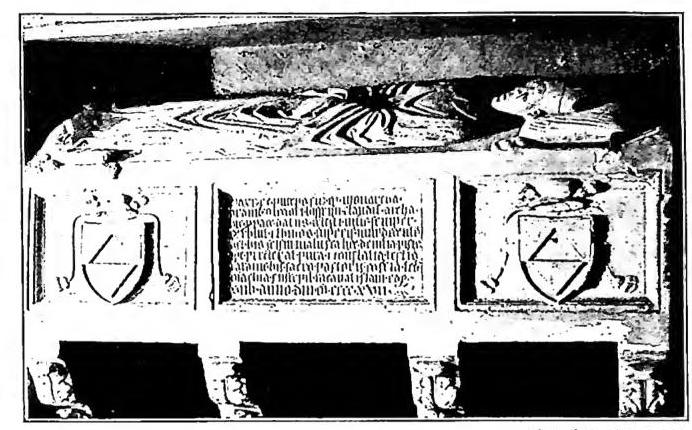
(phot. Gob. national phot. archive) GREGORIO XII, PAPA - Monument to G. XII (c. 1417) - Recanati, Cathedral.He arrived at Portovenere, while his rival was departing from Savona for Marseille. Meanwhile, the Bottiglia del Bucicoldo attempted to seize Rome, an attempt thwarted by Ladislao of Naples. Although only a few miles separated the two rivals, they never met. Disappointed by this, many cardinals who followed G. XII abandoned him. To counterbalance their hostile influence, G. XII, then in Lucca, amid strong protests from the College of Cardinals, appointed four new cardinals (9 May 1408). This contravened the undertaking of the Pope (and of the antipope) not to proceed with new appointments of cardinals, so as not to inflame passions and make the unity of the Church more difficult. While France was rising against G. XII and Florence was working diligently for unity, and King Roberto of Naples was supporting G. XII with zeal that was often excessive, nine cardinals who had until then remained faithful to the latter, having separated from him and joined almost all the supporters of Benedetto XIII, assembled at Pisa to provide for the welfare of the Church. The Synod of Pisa (25 March 1409) declared itself canonically convened, ecumenical, and representative of the entire Catholic Church; it tried G. XII and Benedetto XIII, declared them both perjurers, schismatics, and heretics, and deposed them; it proclaimed Pope Cardinal Pietro Filargo da Candia under the name of Alessandro V. G. XII and Benedetto XIII resisted; and thus, instead of two, there were three Popes, each supported by his own faction, inspired and driven by lust for power, intrigues, and pride. The division within the Church consequently deepened; while heated debates concerning the superiority of the council over the pope spread the opinion that only the synod could put an end to the confusion within the Church. The election of the new Pope was declared null by the two deposed Popes. G. XII convened a Council at Cividale, counting on the support of the King of the Romans Roberto, who was working to secure the allegiance of the Germans to Rome. Since Venice had skillfully avoided admitting G. XII within its walls, he sought to win over that Republic by elevating the Venetian Antonio da Ponte, bishop of Concordia, to the patriarchate of Aquileia, and by appointing a further number of new cardinals. But as hostility around him increased, and he was recognized by no Christian princes except Ladislao of Naples and a few lesser sovereigns, he fled to Austria; and from there, later, at the invitation of Ladislao, he moved to Gaeta, and then to Rimini, to the court of Carlo Malatesta. Meanwhile, Alessandro V died (3 May 1410), and Baldassarre Cossa was elected his successor under the name of Giovanni XXIII. The Council of Constance, convened on the initiative of the Emperor Sigismondo (1 Nov. 1414), deposed Giovanni XXIII, entered into negotiations with G. XII, consented to be canonically convened by him, considering him the legitimate Pope, and acted so that G. truly renounced the papacy (4 July 1415); this renunciation was, in a certain sense, compensated by the appointment of Angelo Correr as perpetual legatus a latere of the March of Ancona, and by the right, recognized for him, to the first place after the Pope. He enjoyed this new position only briefly; for he died at Recanati on 18 Oct. 1417, twenty-four days before the election of Martino V. BIBLICA.: N. Valois, La France et le grand Schisme d'Occident, III-IV, Paris 1901-1902; L. Zanutto, Itinerario del pontefice G. XII da Roma (9 ag. 1497) a Cividale del Friuli (26 maggio 1499). Studio storico, Udine 1901; Pastor, I, see index; A. Mercati, La biblioteca privata e gli arredi di cappella di G. XII, in Miscellanea Fr. Ebrle, V (Studi e testi, 42), Città del Vaticano 1924, pp. 128-65; D. De Campos, Un ritratto ideale di G. XII attribuito a Gerolamo Musiano, nuovamente collocato nella Pinacoteca Vaticana, Firenze (1939). Raffaele Cissca
Cite this article
“GREGORIO XII, PAPA.” Enciclopedia Cattolica, vol. VI (1951), p. 685. Azione Romana digital edition, https://azioneromana.com/article/gregorio-xii-papa.