
DEATH. - It is the end of natural or physical life and occurs through the separation of the two constitutive principles of man: the soul and the body. Due to disorders, whether natural or violent, affecting the essential parts of the human organism, the body becomes unfit for the vivification of the soul, and thus separation occurs. In this way, man ceases to exist, dies. The body then further dissolves into its multiple constituent elements.
CONTENTS:
I. Dogmatic theology
II. Canon law and the juridical effects of death
III. The medico-legal and medico-moral perspective on death
IV. Iconography
V. Biology.I. DOGMATIC THEOLOGY
In Sacred Scripture, death is described as a dissolution (Phil. 1:25; II Tim. 4:6), as the laying aside of one’s garment (II Pt. 1:14), an exit from the body: the body returns to the earth, from whence it came (Gen. 3:19; Ps. 145:4; Eccl. 12:7); before the Redemption, the soul reunited with those previously departed from this life in Sheol, as stated in the Old Testament (Gen. 15:15; 25:8; 49:29; V. LIMBO. II. DESCENT OF CHRIST INTO); after the Redemption, the soul, if worthy, enters Paradise (v. Apoc. 14:13). In Sacred Scripture, death is also called dormitio (entering into sleep): but it must be understood that only the body falls asleep, not the soul (cf. Deut. 31:16; Jn. 11:11-12; I Cor. 7:39; 11:30; 15:18; I Thess. 4:12 ff.; II Pt. 3:4).According to Catholic doctrine, death is originally incurred due to the sin of the progenitors. This is a traditional and explicit teaching of the Church, directly drawn from Revelation. Death was threatened to the progenitors as punishment for the transgression of a divine precept, and since the transgression occurred, the threat took effect (Gen. 2:17; 3:3). Thus, death entered the world through sin (Wis. 2:23-24; Jn. 8:44; Rom. 5:12; I Cor. 15:21-22; Hebr. 9:27). Not that death is not natural to man, a complex creature in his bodily organism, naturally subject to corruption; but he would have been preserved from it by a preternatural gift of God. Providence would have, that is, preserved man from this fatal outcome toward which the human organism naturally tends, by communicating to the soul an indefectible miraculous energy, capable of infusing the body with perpetual vigor and preserving it from violent death. Thus, man "could not have died," as St. Augustine expresses II.
Such a benefit appears fitting to the liberality of God, who, having created a being composed of spirit and matter, such as man, and having further elevated him to participate in His friendship through Grace, had to confer in some way upon the spirit dominion over matter, so that it could preserve it from diseases, old age, and the pains and sorrows of dissolution, which weigh upon the spirit. But this benefit was conditioned upon the submission of man’s will to the will of God, and it would have been a precious element of the total harmony of man, rooted in the right relationship of subjection of the creature to God. Due to the culpable loss of this benefit, death, while being a natural phenomenon with respect to the body, came to assume the character of punishment, becoming at the same time a natural fact and a penalty. The punishment for original sin, in fact, consisted in depriving man, who had withdrawn from the will of God, of the gratuitous preternatural gifts that rendered the body subject to the soul and all other natural forces. Through this punishment, human life on earth became precarious and dominated by the fear of death, always under its threat. Because of this historical connection between sin and death, sin itself is called the death of the soul, and the analogy of death vividly recalls to mind the effects of sin. Christ, who came to earth to destroy sin (and continually destroys it in souls through the Sacraments), will also destroy death, calling men to the Resurrection.
At the moment of death, the state of trial for man ends, reaching its definitive conclusion; the time of merit and demerit ceases: the just can no longer sin, nor can the wicked convert. This is a doctrine constantly taught by the Church, which in the past condemned Origen and his followers, who, inspired by pagan myths, taught the restoration (ἀποκατάστασις) of all things, and thus also of man’s earthly period; as if there were no definitive state for souls even after death; and it no less energetically condemns modern theosophists, who teach the transmigration of souls, according to the fanciful law of "Karma." This error deprives earthly life of all its value, deluding man into believing he can do in other existences the good he must accomplish in this life, contrary to the express teaching of the Gospel, which engages man in this life for the definitive conquest of eternity (Lk. 16:19-20; Mt. 25:31-32; II Cor. 5:10).
Already in some passages of Gratian’s Decretum and the Decretals of Gregory IX, it is expressly affirmed that no absence, however prolonged, can be sufficient to introduce a legal presumption of the death of the missing spouse and, therefore, to authorize the dissolution of the marriage: the passage to a new marriage of the surviving spouse cannot be permitted until "certum nuncium recipiat de morte viri" or "ei firma certitudine constet quod ab hac vita migraverit conius eius" (c. 1, C. XXXIV, q. 1; c. 19, X, V. 1; c. 2, X, V. 21). This principle was later vigorously confirmed by the Council of Trent (sess. XXIV, De sacram. Matrimonii, can. V).
Much debate arose among canonists as to whether, in pronouncing a declaration of death of an absent person, public fame sufficed or whether a more reliable means of proof, such as the deposition of one or more witnesses, was necessary. What remained an undisputed point, however, was the necessity of moralis certitudo of the death of the missing person. Thus, although the simple probabilis causa credendi mortem coniugis was not considered sufficient to authorize the dissolution of the marriage and the passage to a new marriage of the surviving spouse, it was not necessary, on the other hand, to achieve absolute physical certainty: a degree of probability of the death of the absent person, reached through testimonial and circumstantial evidence, was considered sufficient to arouse moral certainty of their actual decease.
Among pontifical instructions, the Matrimonii vinculo, issued on 13 May 1868, is of particular importance, as it constitutes the principal canonical source of the institution. Therein, while reaffirming that "solam coniugis absentiam atque omnimodum ius silentium satis argumentum non esse ad mortem comprobandam", it establishes that in the case of a spouse’s absence, it is possible to proceed to the dissolution of the bond and, consequently, to permit the surviving spouse to enter into a new marriage if proof, at least morally certain, of the death of the missing person has been obtained. In other words, the sufficiency of circumstantial evidence to obtain moral certainty is declared.
In the CIC (can. 1053), reference is made to a possible "permissio transitus ad alias nuptias ob praesumptam coniugis mortem." The interpretation of this norm, however, must also consider another provision contained in can. 1069 § 2, which prohibits a spouse from contracting a new marriage "antequam de prioris unditate aut solutione legitime et certo constiterit," for otherwise one would have to suppose that the legislator had fallen into clear contradiction. By relating the prescription of can. 1053 to that of § 2 of can. 1069, one arrives at the logical conclusion that the expression adopted in can. 1053 is equivalent to the traditional "omnimodo indubitata certitudo moralis" of death. Therefore, in the absence of an authentic document, the ecclesiastical authority may declare death based on a simple presumption, that is, on a conviction determined by reasoning. It is obvious that such a presumption will collapse in the face of any eventual contrary proof, of which, if not probability, at least the abstract possibility remains.
The eventual second marriage will prove
non-existent if the presumed dead person is found to be still alive. If, however, their actual death is established at a date subsequent to the second marriage, the latter may be convalidated (v. CONVALIDAZIONE), provided that consent is renewed or at least persists on the part of the parties. In any case, by virtue of the principle of favor matrimonii, the marriage that the spouse of the missing person may have contracted, despite the state of uncertainty regarding the fate of the absent person, is not considered by canon law to be null and void. Can. 1014 of the CIC states that in doubt, the validity of the marriage must be upheld, and therefore the proof of invalidity must be complete, full, and indisputable before a declaration of nullity of the second marriage can be issued.
Moreover, even after the promulgation of the CIC, the instruction Matrimonii vinculo of 1868 has retained its normative value, as evidenced by the practice of the Sacred Congregation of the Sacraments. Indeed, on 1 July 1929, following the Concordat between the Holy See and the Italian Government, it published an instruction in which, at no. 48, it is stipulated that "in the case of presumed death of one of the spouses, if it concerns soldiers missing in the Great War and there is a civil court judgment declaring the presumed death, the Ordinary shall adhere to the instruction of the Holy Office of 1868, and, if the new marriage is permitted, it shall proceed in the ordinary course and be duly reported to the civil registry. Outside this case, the procedure for civil effects shall be referred to the Secretariat of State." Now, if the marriage has been dissolved or is to be presumed dissolved, having issued the Italian court, following a probative examination, a declaratory judgment of presumed death, the new marriage may be transcribed without further ado. But if no judgment has been issued, logically the transcription of that marriage cannot proceed. Indeed, according to the concordatory legislation, the State does not transcribe those religious marriages in which, for one or both parties, there exists a previous civil marriage or interdiction due to mental illness. Nor, on the other hand, is there any norm of state law that recognizes in ecclesiastical bodies the power to issue rescripts of presumed death that have the efficacy of a civil court judgment.
The fact of the cessation of life and the proximate circumstances that precede and accompany it first raises the problem of apparent death.
Starting from a negative definition of death, it can be said that death is the absence of all those signs that constitute the state of life for the individual in question; and focusing here solely on the death of man, it can be said that death has occurred when there are no longer any signs of the essential functions for his bodily existence.
In relation to the need that every living being has for plastic and energetic substances, metabolism becomes the characteristic and means of life, and the absence of metabolism one of the distinctive signs of death. It should be noted that in the corpse an intense metabolism still takes place, a means of life for a myriad of living forms; but that fervor of exchanges, oxidations, reductions, hydrolyses, cleavages, and reconstructions has taken on a completely different orientation and purpose: it is no longer for the benefit of the organism that hosts them, but to its detriment and for the advantage of other lives. Therefore, considering respiration, circulation, and the activity of the nervous system as essential functions of metabolism, the definitive cessation of these can be taken as a sure sign of death. These three factors and signs of life are so closely linked in the balance of vital functions that the prolonged absence of one inevitably leads to the collapse of the others. However, there exists among them a scale of resistance in direct function of their biological and functional hierarchy, so that when faced with the onset of death, they show different resistance: first, the function and life of the nervous system cease, then that of respiration, and lastly, as the most resistant, that of circulation. Thus, death proceeds in stages within the organism; it is never a univocal phenomenon (except in cases of sudden traumatic destruction of the organism); rather, corresponding to the different resistance of the vital processes that characterize life, it invades and conquers with a succession of phenomena, with a more or less rapid progression. Hence the difficulty of ascertaining death in its early stages, of capturing the exact moment when the organism absolutely ceases to live.
From the medico-legal and medico-pastoral perspective—particularly with regard to the administration of certain Sacraments (Baptism, Extreme Unction)—the most important and grave problem connected with the study of death is that of its unequivocal ascertainment, between the doubt of its reality and that of its appearance. It is well known, in fact, how periodically public opinion is stirred by the resurfacing of the problem of apparent death and the possibility of being buried alive; and there exists an anguished literature on this subject. A tendency, supported also by modern authors, including Ferreres and Geniesse, holds that: 1) no one dies at the moment considered the last of life, but after a more or less prolonged period; 2) in this time, which elapses between presumed death and real death (apparent or intermediate or relative death of d'Halluin), a potential vitality and functionality of organic elements persists, such as to allow, if adequately stimulated, a temporary or even definitive return of the entire organism to full life, even after several days, spontaneously or, more easily, through particular means of resuscitation; 3) during such apparent death, the functions of respiration and circulation can be completely suspended, while internal and external consciousness regarding the environment may remain intact; 4) in the current state of our science, there exists no sign or complex of signs that can provide certainty of real death, except for the onset of cadaveric putrefaction, detectable by the appearance of greenish spots on the skin of the abdomen. These admissions are evidently such as to arouse the gravest concerns in everyone, with the conclusion that a high percentage of individuals (ranging from 1% according to some to the alarming 33% according to others, while Geniesse settles for a ratio of 5 per thousand!) face the terrifying fate of being buried alive.
Without doubt, however, the points previously set forth appear dictated more by exacerbated fantasies than by solid and secure biological knowledge. Indeed, it is true that the complete death of the organism, in every part, does not coincide with the moment when the individual appears to exhale the last breath; but we are not concerned with whether groups of cells or even tissues of secondary functional importance (hair, nails, epidermis, elements of the white blood cell series) persist in a supreme attempt at life, if a well-established complex of symptoms assures us that the basal functions of life—respiration, circulation, vitality of the nervous system—are now collectively and definitively compromised. It is repugnant to biology to admit that the elements of the nervous system, so avid for oxygen and in need of perfect circulation, even in a state of functional rest, can remain alive not for hours but even for days in the complete arrest of respiration and bathed in a dead pool of blood and completely stagnant tissue lymph. Without doubt, in such conditions, the death of the nervous elements occurs rapidly and irreparably, and it is absurd to think that the extreme survival of less noble, and therefore more resistant, tissues could restore life to the former, now in full degeneration.
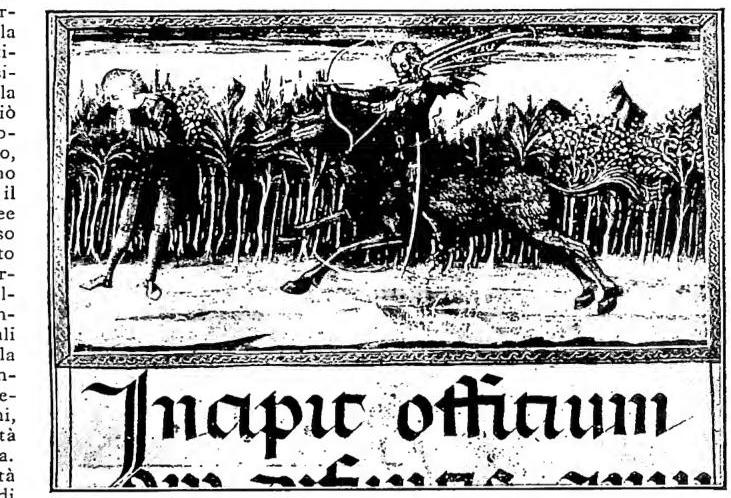
(courtesy of Dr. R. Degenhart)
DEATH - Death striking a man. Miniature by Giovanni di Paolo (15th century) - Siena, Biblioteca comunale.
It may also be admitted that the soul has not yet abandoned that body upon which death now rapidly marks its stages (and even on this point, as is known, philosophers' opinions are not unanimous, as it is possible to admit, with Mercier, the existence of inferior vital principles, animators of partial compounds and lower organizations that form in the corpse); but this "extreme presence" of the soul cannot suffice to revive elements now rendered incapable of life.
Finally, regarding the question of ascertaining death, it is true that there exists no single and unequivocal sign of its occurrence, except for the putrefaction of the body; but it is equally true that a complex of signs can always be observed from the various organs and functions, capable, in their entirety, of providing certainty of real death. It is well understood that ascertaining this remains a matter of grave importance and represents a delicate act of medical competence, not to be entrusted to just anyone; the law wisely and sufficiently prescribes that burial should not take place before 24 hours from the moment of presumed death (48 hours in cases of sudden death or if there are doubts of apparent death), in any case not before the decease has been verified by a physician acting as "necroscopist." If these measures are not followed, the case of the buried alive—or even of a multitude of buried-alive individuals—may well occur, particularly when (in wars, catastrophes, epidemics, etc.) a large number of people are struck simultaneously, and ignorance, carelessness, or the practical impossibility of examining individuals leads to an erroneous presumption that conflates the truly dead with those merely believed to be so. This "erroneous presumption of death" appears to be the greatest responsible for the incredible statistics of buried-alive cases.
Furthermore, the existence of individuals who present a state so closely simulating death that they appear truly lifeless even upon examination by a reasonably skilled person cannot be denied. There undoubtedly exist certain diseases—far fewer than commonly believed—which can lead to a state more or less completely simulating real death, from which it is sometimes possible to revive the individual through lengthy and complex procedures. Such cases include syncope, asphyxia, cessation of breathing and cardiac activity due to lightning or electric current, freezing, anesthesia accidents, the algid state of cholera, conditions of extreme congenital weakness or atrophy or athrepsia in newborns or infants, etc. However, in every case, these are very serious incidents, a true prelude to death, from which the individual can rarely and not easily be saved—and even then, only through the timely, skilled, and prolonged intervention of a physician. Spontaneous resolution is excluded in these cases, and subsequent awakening in the tomb is fantastical; the persistence of respiratory and cardiac arrest, the futility of prolonged resuscitation attempts, reliably indicate the occurrence of absolute death. Particular attention and the imagination of laypeople often focus on cases of apparent death linked to certain neuro-psychotic states (catalepsy, lethargy, etc.). It must be said that such cases are truly very rare; moreover, in this domain, the misconception of death is easily revealed by proper examination.
One can therefore affirm that an ascertainment of death providing full certainty is always possible, provided it is conducted by a skilled person and utilizing a complex of signs observable from the different functions of the organism. Below is a simple presentation of the most easily verifiable signs: a) From respiration: total and lasting cessation (invisibility or inaudibility of respiratory movements, absence of in-expiratory current verified by the old candle or mirror test or by a small tuft of cotton placed before the nostrils). b) From circulation: silence of the heartbeat upon prolonged auscultation or direct palpation through the abdominal wall, particularly in newborns; the failure of blisters to form in relation to burns applied to the skin; the lack of green coloration of the sclerae after injection of fluorescein; the absence of venous turgor after limb ligation; cadaveric hypostases, bruise-like spots appearing in the most dependent parts 3-6 hours after death; the failure of the eye to redden, swell, or tear after instillation of irritating substances (ether, 5% dionine). c) From nervous system activity: absence of various reflexes carefully tested (sneezing, patellar, abdominal, cremasteric, plantar); in particular, the corneal reflex, highly sensitive and easy to elicit by lightly stimulating the anterior part of the eyeball (the response consists of eyelid contraction or blinking). d) The eye, in particular, becomes rich in signs indicative of death: dilation of the pupil and its immobility under the action of a light beam; deformability of the pupil, which in the living is constantly circular, by pressing on the contour of the sclera (this is a sign of high value, as it is early and reliable); clouding and drying of the cornea, which becomes wrinkled and presents black spots. e) Various signs: cooling of the body (approx. one degree per hour); cadaveric rigidity, which begins to manifest no earlier than 3-6 hours after death (thus rendering the common haste to rearrange the corpse useless); the lack of response to mechanical, thermal, or electrical muscle stimulation; finally, greenish skin spots (a combination of putrefactive hydrogen sulfide and blood hemoglobin), which appear between the 48th and 62nd hour, first in the region of the lower right quadrant of the abdomen; the putrefactive development of hydrogen sulfide can also be detected by the blackening of strips of test paper with neutral lead acetate left for a certain time in the nasal cavity (though this method is unreliable). f) Particularly in cases of apparent death due to electrocution, anesthesia accidents, asphyxia, drowning, etc., the futility of various attempts (various stimulations, artificial respiration, rhythmic traction of the tongue, stimulating injections, intracardiac adrenaline injection, and, if possible, heart massage) aimed at reviving temporarily suspended respiratory and circulatory activity—and which should be prolonged for several hours if there are signs or some presumption suggesting the possibility of restoring vitality in the individual—may serve as a sign of real death.
From a medico-pastoral perspective, given the difficulty for laypeople in securely ascertaining death at its first appearance and the possibility of an extreme union of the soul with the body during that period in which, after the last breath has been exhaled and the heartbeat has ceased, the complete "cadaverization" of the individual is taking place, it is permissible to administer, conditionally, absolution and Extreme Unction up to approximately half an hour after the apparent occurrence of death, if the death follows consumption, and up to about two hours if it is a sudden death (v. VERMEERSCH, ARTHUR, Theologiae moralis, etc., III, p. 536; V. Heylen, De poenitentia, Malines 1946, p. 319).
From a moral perspective, it is not lawful for a physician, or anyone else, to inflict upon an individual believed to be dead, with the aim of obtaining certainty of death, injuries that in themselves are capable of causing death (severe mutilations, dagger blows to the heart, etc.), even if the person acting is convinced that death has truly occurred; nor would it be lawful, out of condescension and to provide reassurance...
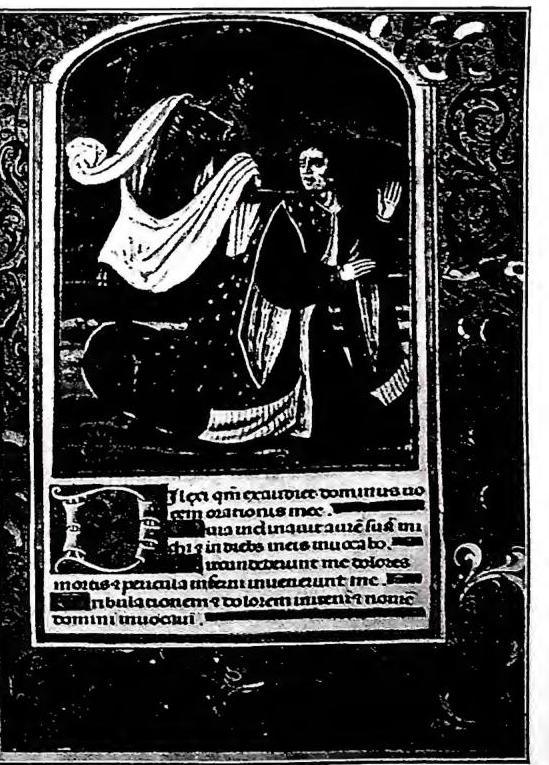
(photo: Biblioteca Vaticana)
MORTE - La m. colpisce un potente. Ufficio della B. Vergine. Biblioteca Vaticana, cod. Berghes. 183, f. 91° (fine sec. XV).
a chi lo richiede, simulare l'esecuzione di tali atti, salvo gravissime ragioni e rimosso il pericolo di scandalo. La puntura del cuore, con iniezione intracardiaca di sostanze eccitanti (particolarmente adrenalina), è moralmente lecita, indicando esplicitamente lo scopo dell'eventuale rianimazione cui si tende, perché non lesiva e capace di risvegliare l'individuo nei casi di m. apparente.
IV. ICONOGRAPHY
Many of the iconographic themes in Christian art concerning death have distant precedents in classical examples, not always forgotten by medieval artists. According to Herodotus, during banquets in wealthy households, especially in Egypt, as an invitation to enjoy life, wooden or metal statuettes representing a mummy or a skeleton were presented to the guests. The von Bissing collection in Berlin preserves an interesting specimen, accompanied by its respective case shaped like a cusped stele. Roman art produced numerous convivial larvae and bronze figurines depicting skeletons; some of these, in the Antiquarium of Dresden and the Museum of Naples, are rendered with precise anatomical details. Death is identified with the skeleton also in a Hellenistic cup from the Schliemann collection in Berlin. The frescoes of Boscoreale, Pella, and the Louvre feature a true dance of the dead. The connections between literary culture and figurative arts regarding these macabre representations are attested by the reliefs on a funerary stele in the British Museum (ca. 3rd century A.D.), illustrating a scene from Lucian’s Dialogues of the Dead. However, most often, macabre representations assumed a satirical character. Skeletons are also depicted in interesting fragments of a mosaic floor, now in the Museum of the Baths in Rome.In funerary monuments, however, death was replaced by allegories, such as the inverted torch, the theatrical mask, the head of Medusa, or, in the reliefs of sarcophagi, by cockfights, sphinxes, scenes of grape harvesting, and hunting. This symbolism precisely passed into the early Christian art, which left, for example, one of the most solemn monuments in this sense in the mosaic ring of the mausoleum of Costanza in Rome (4th century). Representations of death are extremely rare in Byzantine art. In the miniatures of Cosmas Indicopleustes’ Christian Topography in the Vatican Library, it is symbolized by a demon with dark complexion. On an ivory plaque in the British Museum, probably from the early 4th century, the personifications of sleep and death appear, welcoming the soul of a deceased. Both are winged, but sleep is rendered as a youthful figure, death as an old, bearded man of hideous appearance.
Macabre characteristics become more pronounced in the West and with the advance of the Middle Ages. In a Danish ivory cross from 1075 (Copenhagen Museum), the Contrast of Life and Death is depicted: death, in female form, plunges into a coffin bearing her name at the feet of Life, dressed in regal attire. Generally, however, death is identified with the devil or the witch (depending on the gender of the term indicating it in different languages) or with the corpse. Demonic forms, in the act of devouring human beings, must have been its characteristics in a series of miniatures from 1122, part of the Funeral Office of St. Vitale, in the French National Archives. As a witch, it is presented in the famous fresco of the Triumph of Death in the Camposanto of Pisa. As a skeleton, it appears perhaps for the first time in the miniatures of Herrade of Landsberg’s Hortus Deliciarum; on the western façade of the cathedral of Strasbourg, by a sculptor of the late 13th century who knew Byzantine anatomical drawings; in a relief of the baptismal font of Tryde, in Germany, illustrating the legend of St. Stanislaus; and in various Last Judgments, the most interesting example of which, concerning death, is found in the cathedral of Fribourg. This form of representation spread widely throughout Europe: a pupil of Giotto, in the vaults of the Lower Church of Assisi, introduces it into the allegory of Chastity; skeletons are depicted on tomb slabs. Three examples from the 14th century are known: one on a tomb from 1362 in La Sarraz, Switzerland; another from 1388 in Davenescourt; and a third in Laon (France) from 1393. From the 15th century, a dozen examples are known; already in these, death, personified by a decomposing corpse, acquires realistic and revolting characteristics, as in the relief of the tomb of Cardinal Lagrange, who died in Avignon in 1402, now in the local museum. These traits are accentuated in the countless representations of the 16th century. Sculptors took care to present all the most repugnant phases of corpse decomposition, with burst and worm-infested bellies (tomb of Jeanne de Bourlon, Countess of Auvergne, now in the Louvre; tomb of René de Châlons in Bar-le-Duc, by L. Richier, etc.). Painters also developed this theme: Memling in five panels of the Strasbourg polyptych, Jacopo Bellini in a drawing. It is also found in countless miniatures, illustrations, engravings, and woodcuts. The skull is a reduced representation of death; in the famous pulpits of Nicola and Giovanni Pisano, as already in crucifixes and panels from the 1200s, it appears at the foot of the Cross. In the Renaissance, it became widespread in German and Flemish art, also in engravings and prints, eventually becoming, with Dürer, a heraldic motif. In Italy, notable examples in the 17th century include decorative sculptures for funerary monuments, some by Bernini.
However, the macabre and fantastical spirit of the late Middle Ages manifested more clearly in true pictorial legends, inspired by death and sometimes consisting of several themes. The principal among these cycles are the Dance of the Dead or Danse Macabre, the Encounter of the Three Living and the Three Dead, and the Triumph of Death or Death Triumphant.
The Danse Macabre (v. DANZA MACABRA) is typically French and is linked to literary precedents dating back to the 12th century, but it continued until the 18th century, leaving behind celebrated monuments. In Germany, it took on pronounced satirical characteristics, from which derived individual themes: Death and the Soldier, Death and the Maiden, Death and the Lover, etc., collected also in kinds of breviaries and reproduced in prints and engravings, by great masters: Dürer, N. M. Deutsch, Holbein, Baldung Grien, and Beham. In Italy, the Dance of the Dead has few representations: the first, datable to around 1475, in S. Lazzaro outside Como, shows French influence, while in Clusone, Carisolo, and Pinzolo (the last dating to 1539), it imitates German models; the only example of an illuminated manuscript seems to be the Ballo della Morte in the Biblioteca Riccardiana in Florence.
Far more widespread in Italy is the theme of the Encounter of the Three Living and the Three Dead, the origin of which is much debated. The oldest representation of the Encounter is found in S. Margherita near Melfi: three young men returning from the hunt seem to converse with three skeletons. In Abruzzo, in the cathedral of Atri, in addition to the skeletons and the hunters, a page and a hermit appear, a figure that would become typical of Italian iconography and was sometimes identified with the holy monk Macherio (ca. 1260). In the church of S. Paolo, in the Old Camposanto of Poggio Mirteto (Sabina), from the second half of the 13th century, the knights are replaced by a king, who covers his mouth with his hand and appears horrified before the corpse. Similar is the older fresco in the cloister of S. Maria di Vezzolano, near Castelnuovo d’Asti, in Piedmont. A hermit, from atop a rock, unfurls a scroll toward three knights, terrified by the skeletons, in a fine fresco of S. Flaviano in Montefiascone (early 14th century). This iconography is also found in Subiaco,
in a panel at the University of Göttingen by Jacopo del Casentino, in a diptych at the Accademia in Florence attributed to Bernardo Daddi, in the Breviary of Bianca of Savoy, in the second cloister of S. Maria di Vezzolano, etc. (14th century), and in the 15th century in a fresco attributed to Martino di Alberto di Pontepietra in S. Fermo in Verona, in a panel from the Crawford collection in London, in a fresco in the sacristy of S. Luca in Cremona, etc., up to the drawings of Jacopo Bellini, one in the Louvre and one in the British Museum.
BIBL.:
E. Mâle, L'art religieux de la fin du moyen âge en France, Paris 1908; id., L'art religieux du XIIIe siècle en France, Paris 1923; J. Baltrušaitis, Le moyen âge fantastique, Paris 1955; A. Tenenti, La vie et la mort à travers l'art du XVe siècle, Paris 1952; H. Rosenfeld, Der mittelalterliche Totentanz, Münster 1954; R. Hammerstein, Tanz und Musik des Todes, Bern 1980; L. Réau, Iconographie de l'art chrétien, III, Paris 1958, pp. 1045-1070; G. Schiller, Ikonographie der christlichen Kunst, Gütersloh 1966-1980, I, pp. 190-195; II, pp. 612-620; K. Künstle, Ikonographie der christlichen Kunst, Freiburg im Br. 1928, I, pp. 453-460; A. Grabar, Les voies de la création en iconographie chrétienne, Paris 1979; M. Meiss, Painting in Florence and Siena after the Black Death, Princeton 1951; E. Panofsky, Tomb Sculpture, London 1964; G. Kaftal, Iconography of the Saints in Tuscan Painting, Florence 1952; id., Iconography of the Saints in Central and Northern Italian Schools of Painting, Florence 1965; L. von Wilckens, Die textilen Künste, München 1991, pp. 142-145; M. Levi D'Ancona, The Garden of the Renaissance, Firenze 1977; C. R. Dodwell, Painting in Europe: 800-1200, Harmondsworth 1971; J. Hubert, J. Porcher, W. F. Volbach, L'Europe des invasions, Paris 1967; H. Belting, Bild und Kult, München 1990; A. Lipinsky, L'iconografia della morte nell'arte italiana, Roma 1950; G. Fallani, L'iconografia della morte nell'arte italiana, Firenze 1957; G. De Francovich, L'iconografia della morte nell'arte italiana, Roma 1952.
G. MATTEUCCI.
Sometimes the «Dance of Death» and the «Encounter of the Living and the Dead» merge: perhaps they inspired the canvases by Poussin (Louvre and the Duke of Devonshire collection at Chatsworth) and Guercino (in the Galleria Corsini in Rome), which depict, against an Arcadian backdrop, meditation on death: «Et in Arcadia ego».
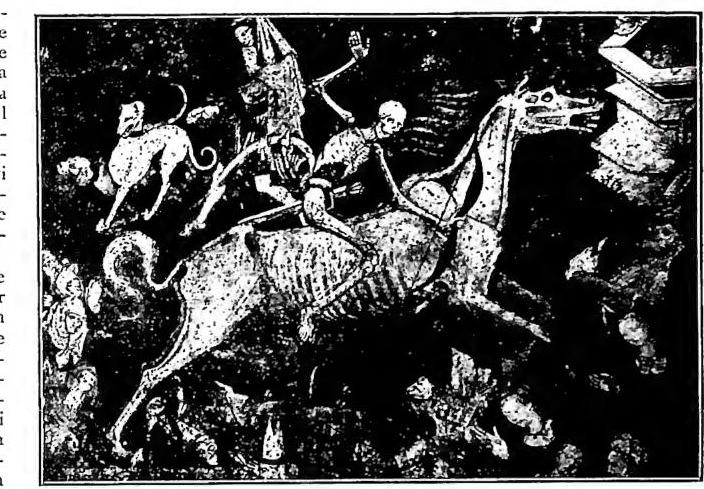
But most notable, at least in Italian art, is the representation of the «Triumphant Death», which combines and summarizes the most important elements of the preceding themes. The oldest illustration of this theme is a small panel in the Pinacoteca of Siena, formerly belonging to the monastery of Monnagnese, and attributed, not unanimously, to Pietro Lorenzetti. It also presents significant analogies with the famous fresco in the Camposanto of Pisa. Slightly later must be the Triumph of Death frescoed in the Holy Stairs of the Sacro Speco in Subiaco. The greatest representations of this Triumph are the fragmentary one in Santa Croce, Florence, that of the Camposanto of Pisa, and that of Palazzo Sclafani in Palermo. The Triumph of Death in the Camposanto of Pisa is iconographically linked to that of Florence but presents greater complexity. It is connected to the representation of the happy eremitic life in the Thebaid, derived from the Vite dei SS. Padri by Domenico Cavalca. In the mid-fifteenth century, another representation of the Triumph of Death, inspired by Petrarch’s allegories, spread from Florence. Pietro de’ Medici commissioned Matteo de’ Pasti in 1441 to illustrate the «Triumphs»: surviving examples include chests, panels at the Museo Horne, the Pinacoteca of Siena, the Gardner Collection in Boston, the Landau Collection in Florence, the Biblioteca Rossettiana in Trieste, the Albert Museum, etc. As in the ancient «triumphs», Death, generally depicted as a skeleton with a scythe, dominates from atop a chariot, over a procession intended to present various images, allegories, and literary symbols. Sometimes the chariot is drawn by skeletons or apocalyptic knights, with elements symmetrical to those of the other «triumphs» to which this scene was most often joined. The theme, especially in Italy, rapidly spread through dozens of illuminated manuscripts and sometimes became the subject of large frescoes, such as that by Lorenzo Costa in the Bentivoglio Chapel in San Giacomo Maggiore in Bologna (1490), which also includes a theophany.
V. BIOLOGY
1. Death of the individual and the perpetuity of the species
The definition of death presents the same difficulties as the definition of life, since stating that it is «the cessation of the vital process» raises the question of what life is (v. LIFE). In any case, death is the inevitable conclusion of every vital process, and the so-called cases of immortality in certain unicellular organisms (protozoa, protophytes) do not refute this assertion, as they merely reproduce by successively dividing into two, thus transferring—
DEATH - Triumph of Death. Spanish School (15th century) - Palermo, Palazzo Sclafani.
Even the conception of the perpetuity and continuity of the germ plasm in higher, multicellular forms, according to Weissmann's views (idioplasm), is subject to the same critique; that is, very little or nothing materially remains of the plasm of the first germ cells after the innumerable series of generations that have led to the current generation of living beings. The mechanism of continuous cellular reproduction in the germ line, while on the one hand allowing the transmission of a portion of the old material, on the other leads to the continuous production of new material with the same characteristics as that directly transmitted to descendant cells; the old protoplasm is thus progressively replaced by new, specifically similar material. Thus, through a paradoxical mechanism, life perpetuates and renews itself through a slow and progressive demise.
In metazoans and metaphytes, that is, in multicellular organisms, the germ line is joined by the soma, which represents the most conspicuous part of the body. In the soma, cells, following different paths, differentiate into various tissues with specific functions to carry out, through the division of labor, a particular activity. However, with specialization, cells lose the ability to reproduce: histological differentiation condemns cells to death, and in those tissues where there is great functional wear and elements are rapidly destroyed, reserves of undifferentiated cells must remain for continuous tissue renewal through their reproduction.
Based on many observations in experimental embryology (isolation of blastomeres), experimental morphology (regenerative phenomena), and cytogenetics (value of cell nuclei), every cell of an individual can be considered potentially capable of reproducing an entire organism as if it were an egg cell, because each cell contains the entire hereditary patrimony (excluding, naturally, those cases in which degradation of nuclear chromatin or the entire nucleus has occurred). The conditions of monozygotic twins (polyembryony) and the numerous cases of somatic or vegetative reproduction in many plants and animals (coelenterates, worms, tunicates, etc.) support this concept. The difference between the somatic line and the germ line would therefore not be essential, but would consist only in the loss by somatic cells of the current ability to reproduce with total effect due to the limitations imposed by differentiation. The soma can thus be considered as a part of the cells of a single line that sacrifices itself through differentiation to enable the existence, through the differentiation of a superior individuality, of the relatively few cells of the gonads that retain, along with germinative properties, totipotency, thus allowing the perpetuation of the species through successive generations. If one considers the perpetuation of life as the supreme problem of living beings, since such perpetuation occurs, as has been said, in unicellular organisms as in the germ line of multicellular organisms through a mechanism of renewal without an effective, ponderable material demise, the phenomenon, linked to multicellular organisms, of the death of the soma, that is, of the corpse, would be, paradoxically speaking, secondary. From this point of view, the mortal soma of animals and plants would have no other function than to be the support and guardian of the elements of the germ line, such as sperm and eggs, the only elements necessary for the conservation of the species; the death of the soma would testify to its uselessness for the purposes of the immortality of the species, once its mission has been fulfilled. Thus, always paradoxically, one could say with Butler that "the hen is merely the means by which one egg makes another egg"!
It is evident that such a way of seeing is far from acceptable; if it is true that the supreme end of living beings is the conservation of the species, the vital phenomenon would have little value if it were exhausted in the vicious circle of living to live. And it is precisely linked to the mortal, and therefore intermittent, somatic line that the manifestation of vital properties finds its greatest expression in man with the phenomena of intelligence and the psyche. Human spiritual progress and evolution are certainly not presented by the germ line, but are the fruit of the daily labor of the mortal soma, which is transmitted as a legacy to offspring through education and perhaps (it will be the task of genetics to demonstrate this) through a hereditary process due to the influence of the soma on germ cells.
Leaving aside this last problem, which, though of extreme importance, still lacks sufficient experimental basis, one sees in the death of the soma a biological phenomenon of great importance in the mechanism of conservation and evolution of life on Earth.
2. Death of germinal elements
It is observed that nature, to safeguard against the possibility of species extinction, is prodigal in the production of germinal cells: spermatozoa and eggs. For every animal and plant species, their number is far greater than the individuals that normally reach maturity, far greater than the number that cannot be exceeded without causing an unfavorable imbalance in individual biocenoses and in the biosphere. It is also observed that the greater the dangers threatening the young of a species due to particular ecological conditions, the greater the number of germinal elements produced.Thus, taking the case of vertebrates, far more eggs are produced in species that disseminate them in water than in those that gather them in a nest and care for them; and the number is even smaller in those vertebrates in which the eggs develop within the maternal body.
Considering the human species, which is certainly not among the most prolific in nature, the possible maturation of approximately 450 eggs is calculated, with a production, according to Henle, in the ovary of approximately 72,000 oocytes. The male, in turn, can produce many billions of spermatozoa in his lifetime. Of all these gametes, which are potentially suitable for the production of an individual, only a few units reach their goal.
3. Death of the individual
Every plant or animal dies once its life cycle, which has a characteristic duration for each species, is completed. Research conducted to clarify the factors determining the lifespan, and that aimed at identifying means to prolong it, has shown that, as a general phenomenon—albeit with some exceptions—the more rapid the maturation of germinal elements in animals, the shorter the lifespan across different species. The death of the soma is preceded by the phenomenon of senescence, which manifests from birth. The gradual loss of water, the accumulation of catabolites, the production of irreversible colloidal structures, and the general colloidal changes in the protoplasm are among the most evident intrinsic causes within the protoplasm itself that determine aging. To these causes, in multicellular organisms, must be added the aging of organic systems and the gradual mineralization of the body.However, death does not exhaust its purpose—aimed at maintaining and evolving life through continuous renewal—merely with the demise of individuals. The very cadavers serve as the substrate for the life of an innumerable host of necrophilous organisms (bacteria, protozoa, worms, insects, etc.). Furthermore, it must be considered that, except for green plants—which can synthesize the organic substances necessary for existence with the aid of chlorophyll and solar energy—and organisms that feed on their detritus, the vast majority of living beings nourish themselves on parts of animals and plants (without necessarily killing them) or on entire organisms that are killed and devoured. Thus, the premature death of the prey enables the life of predatory species.
4. Death of cells in the development and life of the individual
But if the death of the organism at the end of its life cycle is an inevitable fact, no less important is the cellular death that occurs continuously during its existence. Cellular death is not only evident in the adult or elderly individual but even in the embryo; indeed, this process represents a morphogenetic mechanism of capital importance.It can be affirmed that the embryo develops not only through a continuous process of cellular multiplication but also through one of cellular destruction that accompanies the former. Phenomena of schisis (cytolysis) allow the formation of openings, cavities, and canals in developing organs. Thus, it is evident that not everything constructed during embryogenesis is preserved: many organs form through successive stages of complication, useful and sufficient for the individual stages of development, but which are gradually demolished in whole or in part and replaced. For example, three kidneys succeed one another in the organogenesis of the excretory system of higher vertebrates. In many animals, there is a succession of larval stages, and during metamorphosis, between one stage and the next, many tissues and organs are sacrificed to construct new organs and systems suited to the subsequent larval stage or the adult condition. Particularly notable are the conditions in insects, where the larva transforms into a perfect insect through pupation, and those in batrachians. In fish, reptiles, birds, and mammals, organs form in the embryo that serve embryonic life but are abandoned at birth and destroyed (embryonic annexes: chorion, yolk sac, amnion, allantois, etc.).
Even in the adult, mortal processes affecting the cells of many tissues continue. It was the merit of Bizzozero and his school to establish the renewal properties of various tissues in mammals and humans. This renewal, which occurs through processes of cellular division in elements with a juvenile character preserved in various tissues (germinative tissues), serves to replace those elements that gradually die due to functional wear and are, precisely in relation to this process, endowed with a short life cycle. There are tissues in which this turnover of cellular elements is continuous throughout life (tissues with labile elements), such as, for example, the epidermis, which continuously cornifies on the surface and desquamates while being renewed by the deep germinative layer, and the blood, whose red blood cells, constructed without a nucleus for functional perfection as oxygen transporters, are condemned to a few weeks of life. In other tissues, multiplication occurs only during the individual’s growth period, but the reproductive potential is preserved throughout life, as in the liver and other glands. Only in tissues with permanent elements, of which nervous tissue is the typical example, do cells live as long as the organism. However, even for this tissue, in animals with metamorphosis (such as anuran amphibians), differentiated nerve cells that have completed a functional cycle are destroyed; thus, in other species, there is a reproductive possibility for nerve cells (in the regeneration of the tail and spinal cord of urodelan amphibians).
For a deeper examination of senescence, reference is made to the monograph by Levi, and to those by Minor and Lepeschkin, respectively on cytomorphosis and cellular necrobiosis (v. BIBLICA).
According to calculations by C. Franke, the human body contains approximately 4,000,000,000,000 fixed cells and 22,000 billion mobile cells, totaling 26,500 billion. According to Moleschott and Buchner, within seven years, the complete chemical renewal of this multitude of cells is achieved, either through their replacement or through the renewal of their protoplasm. According to Ona (1924), 500 billion red blood cells die every day (that is, those contained in 100 cm³ of blood), and an equal number are reconstructed daily.
The importance of cellular death during development should not be seen only in the continuous renewal of living matter and in morphogenetic processes but also in the direct utilization, in vital phenomena, of the products of cellular destruction (pigments, etc.). Consider, for example, as demonstrated by Baglioni, that for the heartbeat (experiments on cartilaginous fish) the presence of small percentages of urea in the blood is necessary—a substance that is a direct derivative of the disintegration of protein substances. Similarly, bile pigments, produced through the destruction of red blood cells, play a fundamental role in the saponification of fats and the regulation of intestinal flora. The very dead cells, which in animals have undergone fatty or keratinous degeneration and in plants have been lignified or suberized, perform extremely important functions for the life of the whole.
But the phenomena of cytolysis also have another direct importance in biological processes: indeed, during the agony of cells (necrobiosis), and thus with their destruction, substances are released that have a stimulating effect on the reproduction of other living cells. Haberlandt was able to demonstrate how, in plants, the multiplication of wound tissues was stimulated by damaged and dying cells, and he spoke of wound hormones or necrohormones. Banner, Haagen, and Smith were able to isolate a protein substance endowed with such activity (traumatic acid). Similar phenomena have been observed in animals in cells undergoing agony. According to J. Brachet, the nucleic acid released during cytolysis plays a major role in embryonic evocation phenomena (organizer). The inductions obtained in embryos through transplants of fragments of dead or cytolyzing tissues, or otherwise damaged and in an agonal phase, can be interpreted as due to the released nucleic acid and other substances. Thus, for example, if a fragment of tissue irradiated with X-rays is transplanted into the limb field (Perri in amphibians), numerous inductions of supernumerary limbs are obtained, stimulated by the slowly dying cells of the transplanted fragment.
Important in this regard are Filatov's experiments on the subcutaneous transplantation of fragments of damaged tissues (with low temperature, darkness) that produce a general biological stimulating effect in the treated organism. The effect of Cerletti and Bini's electroshock is probably to be interpreted within the same order of phenomena; with this treatment, the organism is brought to the extreme limit of resistance, and cells release what Cerletti calls acroagenins, with a general beneficial stimulating effect.
In conclusion of these briefly presented facts, death should not be considered an accident in antagonism with life. Its finality, already evident in the mortality of gametes, its importance in the mechanism of embryonic development, its necessity for the unfolding of physiological phenomena, all suggest—with apparent paradox—that it is an essential factor in the life of an individual. With the death of the individual, the continuity of life is ensured, but with a material substrate that is continuously renewed, and thus death comes to be the fundamental process of every mechanism of biological improvement and evolution, however considered, including that of the intellectual evolution and the spirit of the human species. - Vedi tav. XCVII.
BIBL.:
C. S. Minor, The problem of age, growth and death, New York 1908; A. Lumière, Théorie colloïdale de la biologie et de la vie, Paris 1922; P. Pearl, The biology of death, Philadelphia-London 1922; H. Varingy, La mort et la biologie, Paris 1926; N. S. Jennings, Vie et mort. Hérédité et évolution chez les organismes unicellulaires, ibid. 1927; W. W. Lepeschkin, Zell-Neurobiose und Protoplasma-Tod, Berlin 1927; G. Levi, Accrescimento e senescenza, Florence 1946; A. Stefanelli, Cicli vitali e citomorfosi delle cellule nervose dei Vertebrati, in Rendiconti Ass. Naz. Lincei, 8th series, 10 (1921), pp. 159-64. Alberto Stefanelli
MORTE DI GESÙ CRISTO: for the history, V. GESÙ CRISTO; for the soteriological value, V. MERITO DI GESÙ CRISTO; REDEZIONE; SODDISFAZIONE.