LAON

Image from page 554
Image from page 554

LAON. - An ancient diocese and chief city of the Aisne department and former capital of Laonnois in northern France. Only the catalogue of bishops preserved by Robert of Torigni (Paris, Bibliothèque nationale, cod. n. 6042, p. 121v.) is known, accurate from the 6th to the 9th centuries and after the mid-10th century, but confused for the first half of the same century, for which instead Flodoard’s chronicle is preferable.

The first bishop of L. appointed by St Remigius was St Genobaudus of the mid-6th century; among his successors are recalled Cainoladus, a disciple of St Columbanus, first half of the 7th century; Attelanus, his successor; Genebaudus II, to whom Pope Zachary wrote in 748 (Jaffé-Wattenbach, no. 2287); Simeon who signed the privilege of Corbie in 846; Edmulphus of the second half of the 9th century; Diddo (886–95); Rudolf (d. 921); Bartholomew of Jura (1113–1151); Robert Le Cocq (1352–58); Peter of Montaigu (1371–86), created cardinal in 1383; Louis of Bourbon Vendôme (1512–52), cardinal from 1517; Caesar d’Estrées (1653–81), cardinal from 1672; G. de Rochechouart de Fonvudous (1741–77), cardinal from 1761. The diocese was suppressed on 12 July 1790 by the French Revolution; the Concordat of 1802 reunited it with the see of Soissons.

The primitive cathedral of Notre-Dame, destroyed on 25 April 1112, was restored and consecrated by Bartholomew of Jura on 29 August 1114; the new building arose between 1160 and 1220, contemporary with Notre-Dame of Paris; between 1160 and 1180 the apse and choir were completed by Gautier de Mortagne, and by 1220 also the transept, the main façade, the bell towers, the cloister and the chapter hall. The ensemble inspired the architects of the abbeys of Braine (Aisne) and Mouzon (Ardennes). Between 1220 and 1350 the side chapels and the south façade were added; in 1853 notable restorations were completed. Impressive is the scene of the Last Judgment on the central portal.

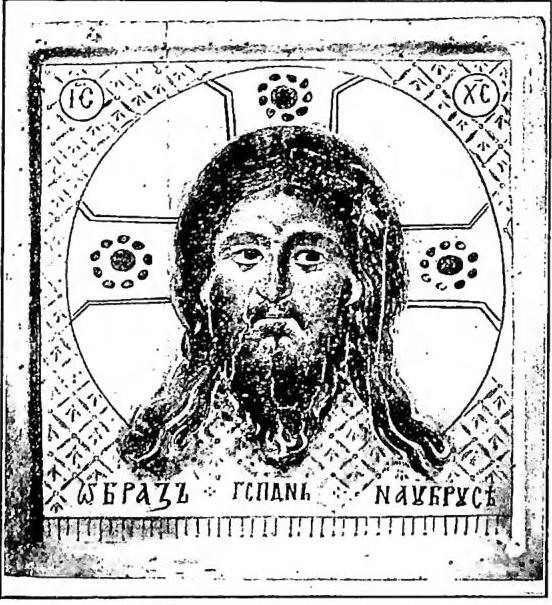
In the Treasury of the cathedral of L. is preserved a precious icon of Our Lord on two thin pine boards. It was sent from Rome in 1249 by James Pantaleon of Troyes, papal chaplain and former archdeacon of L., later Pope Urban IV, to the nuns of the monastery of Montreuil-les-Dames where his sister Sibylla was superior.

Article illustration
(from L. Broche, *La cathédrale de L.*, Paris 1926, plate outside text)
LAON – Plan of the cathedral (1160–1200) according to the surveys of E. Boeswillwald.

For apostolic work, the fathers of the Tuscan province of the Holy Stigmata.

It has an area of 30,000 sq km. On 30 June 1947, out of a population of about 2,500,000, Catholics numbered 20,509 and catechumens 5,434. Besides the bishop, there were 23 Franciscan Fathers, of whom 7 were indigenous, and 10 Chinese secular priests. In the preparatory seminary 12 students were enrolled, 35 in the minor seminary and 4 in the regional seminary of Hankow. Auxiliary personnel included 3 foreign Franciscan lay brothers and 1 indigenous, 35 Chinese sisters and 13 Italian, 36 catechists, 23 teachers, 38 baptizers. The territory, divided into 14 primary stations and 157 secondary ones, had 24 churches and 40 oratories. Works included a hospital with 120 beds, 12 dispensaries, 3 orphanages with 236 girls, 2 old people’s homes with 38 residents. The 11 elementary schools enrolled 591 boys, the 3 vocational schools 50 pupils, and the 12 prayer and first-elements schools 484 listeners.

The Christian origins of L. date from the first half of the 17th century through the work of the Jesuits, who also traversed this part of China to establish nuclei of the faithful. After the suppression of the Society (1773), the Lazarists took over; their two martyrs, Blessed Francis Regis Clet and Blessed John Gabriel Perboyre, were missionaries at Kucheng in the diocese of L., and Clet spent 28 years at Chayuankow, where the minor seminary of L. is located and where there is a flourishing Christian community. Even in recent decades the mission of L. suffered from political and social upheavals; several priests were killed, others deported or imprisoned or died from violence, among them the Vicar Apostolic Msgr Ermenegildo Ricci (1931).

Bibl.: AAS, 28 (1936), pp. 436–37; GM, p. 201; G. B. Tragella, *Italia missionaria*, Rome–Milan 1939, pp. 113–118.

(from A. Grabar, *La sainte Face de L.*, Prague 1931, plate no.)
LAON – Face of Jesus Christ (12th century), icon on panel – Laon, Cathedral Treasury.

The icon had been brought to Rome from the East either by envoys of Orthodox princes or by legates sent from Rome (perhaps by Innocent IV) to Slavic lands. The icon is a 12th-century Russian copy of a 12th-century Byzantine original, as indicated by the Slavic inscription: “Image of the Lord on the handkerchief” (A. Grabar, *La Sainte Face de Laon. Le Mandylion dans l'art orthodoxe*, Prague 1931).

Near L., a medieval funerary mausoleum of central plan became in the Middle Ages a church of the Templars (E. Lambert, *L'église des Templiers de Laon*, in *Revue archéologique*, 24 [1926], pp. 224–26).

Among the ancient abbeys of the diocese are recalled the Benedictine abbey of St Martin and that of St Vincent founded by Brunhilda, widow of Sigebert I of Austrasia.

BIBL.: Eubel, I, p. 290; II, p. 173; III, p. 220; IV, p. 216; G. Goyau, *Soissons*, in *Cath. Enc.*, XIV, p. 131; L. Duchesne, *Fastes épiscopaux de l'ancienne Gaule*, III, Paris 1915, pp. 137–41; E. Mâle, *L'art religieux du XIIe siècle en France*, Paris 1922, pp. 410, 431; id., *L'art religieux du XIIIe siècle en France*, 1912, pp. 276–87; S. B. B. B. B. B. B. B. B. B. B. B. B. B. B. 1867–78. In 1874 he published the *Statuts du Vic. Ap. de Pondichéry*, which in 1879 were revised under the title *Directoire*. He took an active part in the studies for the establishment of the hierarchy in India and in 1884 was consulted on the matter by Leo XIII who, in recompense, appointed him assistant at the Holy See. After the erection of the hierarchy, on 7 June 1887 L. became the first archbishop of Pondichéry.
BIBL.: A. Launay, *Hist. de la mission de l'Inde*, III, Paris 1898, p. 668; S. S. S. S. S. S. S. S. S. S. S. S. S. S.