
MERIT OF JESUS CHRIST. — Since all the conditions of supernatural merit were present in Jesus Christ (freedom, the state of a wayfarer, notwithstanding the beatific vision, fullness of Grace, holy activity in the perfect observance of the law and of the divine will, especially in obedience to the command to undergo the passion and death on the cross), there can be no doubt whatever that he was capable of meriting in general. But this possibility is confirmed by the fact—an article of faith—because it is explicitly affirmed in Sacred Scripture and in the documents of the Church’s magisterium. St. Paul (Phil. 2) affirms that the Father exalted the Son because of his obedience unto death on the cross. The Council of Trent (sess. VI, chap. 7) teaches that Christ is the meritorious cause of human sanctification because “by his most holy passion on the wood of the cross he merited justification for us” (sua sanctissima passione in ligno crucis nobis iustificationem meruit) (Denz-U, 799).
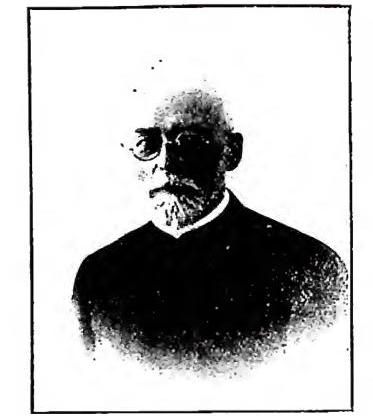
(courtesy of the Pont. Biblical Institute)
MERK, AUGUSTIN — Portrait.
his dignity as the Incarnate Word. Therefore he did not merit either Divinity or Grace or knowledge or beatitude, because from the first moment of his conception, by virtue of the hypostatic union, he always possessed these prerogatives, and their absence would be more inconsistent with his dignity than meriting them would be appropriate to II. But Christ could merit for himself, and in fact did merit, as Revelation teaches, the glorification of his body in the Resurrection and ascension into heaven, and the exaltation and veneration of his name, insofar as he is man (Sum. Theol., ibid., a. 3).
b) Christ could merit, and in fact did merit, sanctification and eternal life for man through his theandric activity, from the first moment of his conception and especially during the tragic hours of his passion and death, freely accepted with loving obedience (v. LIBERTÀ DI GESÙ CRISTO). The reason why the infinite merits of the life, passion, death, and even Resurrection of Jesus flow upon all humanity lies in the Mystical Body (v.), according to which Christ and the men united to him constitute a single organism of supernatural life, almost a single mystical person. It is the principle of solidarity arising from the very Incarnation of the Word: through it a vital communion is established between the Head and the members, extensively illustrated by s. Paul (especially: I Corinthians, Colossians, Ephesians, Romans). Christ’s redemptive work, therefore, and its effects become man’s and redound to his advantage (Sum. Theol., 3ª, q. 18, a. 4; q. 48, a. 1). This principle also applies to the satisfaction offered by the Redeemer for man to divine justice (v. SODDISFAZIONE VICARIA).
c) After his death and Resurrection, Christ can no longer merit. The question concerns Christ glorified in heaven and Christ hidden in the sacrament of the Eucharist. With regard to the former, a theological discussion arose concerning a text of Hebr. 7, 25: « Unde et salvare in perpetuum potest accedentes per semetipsum ad Deum; semper vivens ad interpellandum pro nobis ». For some theologians (e.g., Vásquez), the interpellatio is not prayer at all, since prayer is no longer fitting for Christ, not even insofar as he is man, after his passage into the glorified state. Others, however (Franzelin), do not hesitate to recognize a prayer in the interpellatio, provided that every idea of indigence is excluded. S. Thomas resolves the question with these clear words (In Eph. lect. 4): « Interpellat autem pro nobis primo humanitatem suam, quam pro nobis assumpsit, repraesentando; item sanctissimae animae suae desiderium, quod de salute nostra habet, exprimendo, cum quo interpellat pro nobis ». In other words, Jesus’ interpellatio in heaven is not the source of new merits, but is to be understood as prayer in the sense that his glorified soul continues to manifest to God the will to save men, that same will which accompanied him throughout his mortal life and carried him to immolation on the cross. The external sign of that loving will is the scars that Jesus chose to preserve in his pierced hands, ever ready to be raised in an act of prayer before the Father. Likewise, Jesus’ Eucharistic life, including the Sacrifice of the Mass, does not produce new merits, but applies to individual souls and to the entire Mystical Body, which is the Church, the infinite merits of his life, passion, death, and Resurrection. Every other opinion encounters serious theological difficulties.