Machine translation of the 1948–1954 Italian original. The original text is authoritative.
CURCI, CARLO MARIA. — Jesuit, orator, and polemicist, born in Naples on 4 September 1809, died at Careggi (Florence) on 19 June 1891. His name is linked to the strenuous defense of his Order, in extremely difficult and dangerous circumstances, against the calumnies spread lavishly in the works of V. Gioberti, and to the painful episode of his struggle against the Vatican and the temporal sovereignty of the Holy See.
Initially favorable to Gioberti (he had an edition of the Primato printed at Benevento), he later opposed him fiercely with Fatti ed argomenti in risposta alle molte parole di V. Gioberti intorno ai Gesuiti (Naples 1845), apropos of the Prolegomeni del Primato. The lash caused a stir; the abbot replied, and C. countered with Una divinazione sopra le tre ultime opere di V. Gioberti: «I prolegomeni», «Il Gesuita moderno» e l’«Apologia» (2 vols., Paris 1849). Convinced at that point of the necessity of temporal power for the Holy See, he defended it in La demagogia italiana e il Papa Re. Pensieri di un retrogrado (Paris 1849). Shortly afterward, in 1850, he founded La Civiltà Cattolica (v.) in Naples with the assistance of other Fathers, and assumed its direction, which did not last long, since as early as 1853 he returned to preaching in Rome and, from 1872, in Florence.
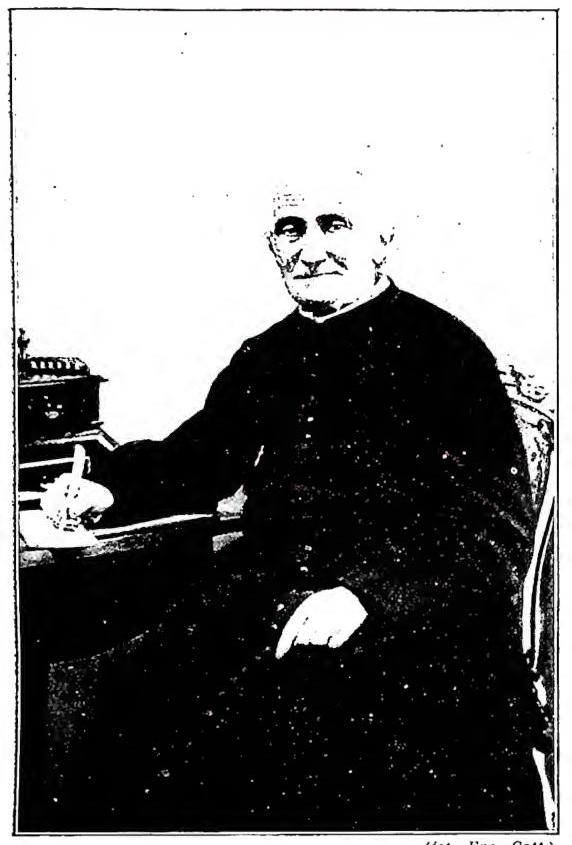
(phot. Ene. Catt.) CURCI, CARLO MARIA - Portrait - Rome, House of the writers of La Civiltà Cattolica.Meanwhile, his ideas were changing, and from being a defender of temporal power he passed to the opposite side, maintaining that its loss should be regarded as a stroke of good fortune and that the Church ought to attempt a reconciliation with the new Italy, even at the price of a complete renunciation (cf. the Ragione dell'opera, preface to his Lezioni esegetiche e morali sopra i quattro Evangeli [5 vols., Firenze 1874-76], which constitute his finest work and in which he expressed his ideas publicly for the first time, reaffirming them in a memorandum to the Pope). Since he refused to retract, he was dismissed from the Order (1877) and continued to write, now more freely, against the Pope and the Jesuits: « Il moderno dissidio tra la Chiesa e l'Italia per occasione di un fatto particolare (Firenze 1878); La nuova Italia ed i vecchi zelanti (ivi 1880); Il Vaticano regio, tarlo superstite della Chiesa cattolica (ivi 1883); Lo scandalo del « Vaticano regio », duce la Provvidenza, buono a qualchecosa (ivi 1884). The last three works were placed on the Index (1881 and 1884); the author was suspended and once again, by Leo XIII (letter of 28 Aug. 1884 to the archbishop of Florence, in P. Galletti, Memorie storiche del p. Luigi Ricasoli, Prato 1901, pp. 609-10), deplored and condemned. C. made a retraction of his errors, submitting himself to the judgment of the Church (1884), and from then on lived privately and obscurely. Ten days before his death, he was readmitted to the Society of Jesus.
In addition to the works mentioned, he wrote others worthy of remembrance: Il paganesimo antico e moderno (Roma 1862); Il cristianesimo antico e moderno (ivi 1862); La natura e la Grazia (ivi 1865); Lezioni sui due libri dei Maccabei (Roma 1872); Memorie utili di una vita disutile (Firenze 1881).
BIBL.: Sommervogel, II, coll. 1735-40; E. Polidori, Necrologio, in Civ. Catt., 14ª serie, 11 (1891, III), pp. 102-105.
Celestino Testore
Cite this article
“CURCI, CARLO MARIA.” Enciclopedia Cattolica, vol. IV (1950), p. 637. Azione Romana digital edition, https://azioneromana.com/article/curci-carlo-maria.