
MAZZINI, GIUSEPPE. –
I. LIFE
Born in Genoa on 22 June 1805, died in Pisa on 10 March 1872, son of Giacomo, professor of medical pathology at the University of Genoa, and of Maria Drago. He received a religious education under the guidance of the priests De Scalzi and De Gregori, well-known Jansenists, through whom his mother was directed; she cherished a special tenderness for her son and encouraged him in his initiatives and throughout the harsh circumstances of his life. He attended courses in philosophy, literature, and law; when he had just graduated in jurisprudence, on 6 Apr. 1827, he was inducted into the Carboneria by his fellow student Pietro Torre, and devoted himself ardently to an intense propaganda campaign, while also beginning his journalistic activity in the Indicatore genovese and, after that periodical was suppressed, in the Indicatore livornese, founded by Guerrazzi. On 13 Nov. 1830, on his return from a propaganda journey in Tuscany, he was arrested following a denunciation by a false conspirator, one Raimondo Doria, a police informer. Faced with the choice between confinement and exile, he chose the latter, and thus began a wandering life that he would spend entirely amid conspiracies, ambushes, and poverty, until his death.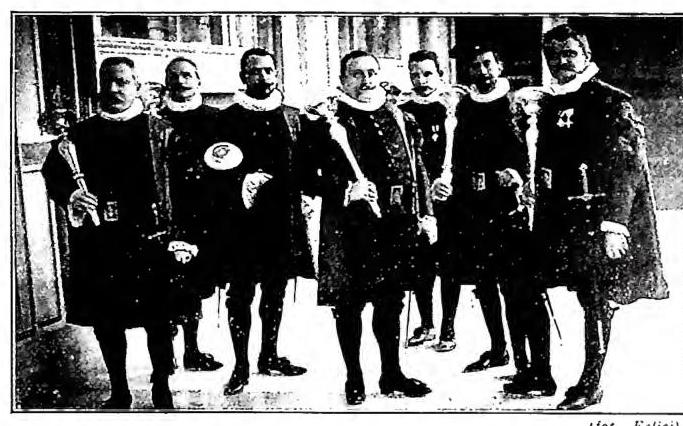
PAPAL BRIGANDS – Group of papal brigands.
(phot. Felici)
…minati, hoping to organize an incursion into central Italy there. But when the enterprise failed, he returned to Marseille, where in 1831 he founded the secret society «Giovine Italia» and the periodical of the same title, for the dissemination of its idea and programme. He succeeded in attracting to his following many of the most active elements operating in the Carboneria, so that Giovine Italia rapidly spread to many Italian cities; but when the police discovered the ranks of the Genoese branch, arrests and convictions followed (Jacopo Ruffini committed suicide in prison), and M. himself, forced to leave Marseille, once again had to take refuge in Geneva. Here he supported Antonio Gallenga’s idea of an attempt on the life of Carlo Alberto, and armed the hand of the young daredevil with a dagger, though without success. A new expedition to Savoy, organized by Giovine Italia in agreement with Polish exiles and the Carboneria (1834), likewise ended in disaster. Its principal cause was attributed to the treachery of the Niçard Gerolamo Ramorino, who had been entrusted with the command, but it was due above all to lack of preparation and to the negative, if not hostile, dispositions of the people. M., like Ramorino and Garibaldi, was tried and sentenced to death in absentia; and, having taken refuge in Bern, he launched the first idea of Giovine Europe (Apr. 1834). This movement, regarding nationality as not merely an Italian but a European problem, involved a plan for a secret organization extending to all nations subject to servitude, which were to unite, through concerted action, in a federal pact for their own independence. The periodical La jeune Suisse, founded in 1834, was the first spokesman for this idea, for which M. worked tirelessly until, expelled from Switzerland, he had to seek refuge in London, where he arrived on 13 Jan. 1837.
Fiercely devoted to his political and religious principles, M. viewed with suspicion the patriotic enthusiasm that arose around Pio IX at the beginning of his pontificate; nevertheless, he strove to direct it in harmony with his ideals. To this end, in 1846, he published in an English newspaper the article The Pope and the Italian question, indicating what Pio IX’s line of conduct ought to have been; and for the same purpose he wrote an open letter to the Pope, dated 7 Sept. 1847, which, through friends, he managed to place in his hands as he was passing by carriage through the streets of Rome. But, unable to hope that he could lead Pio IX along the desired path, he accepted the method of demonstrations and clamorous public manifestations, intended to bring papal political ideas into conformity with the programme of Giovine Italia. When the revolution of the Five Days broke out in Milan, M. hastened there, and for three months directed the daily newspaper L'Italia del popolo (20 May 1848), which was well received by the provisional government and brought him into conflict with Carlo Cattaneo, who accused him of treason. But as the fortunes of the war began to turn for the worse (Aug. 1848), he went to Lugano, then to Marseille, and from there, on 15 March 1849, arrived in Rome, where the Republic had been proclaimed on 12 Feb.
As a member of the Constituent Assembly, he took part in its proceedings and on 29 March, together with Saffi and Armellini, became a member of the governing triumvirate, becoming its mind and arm, resisting energetically
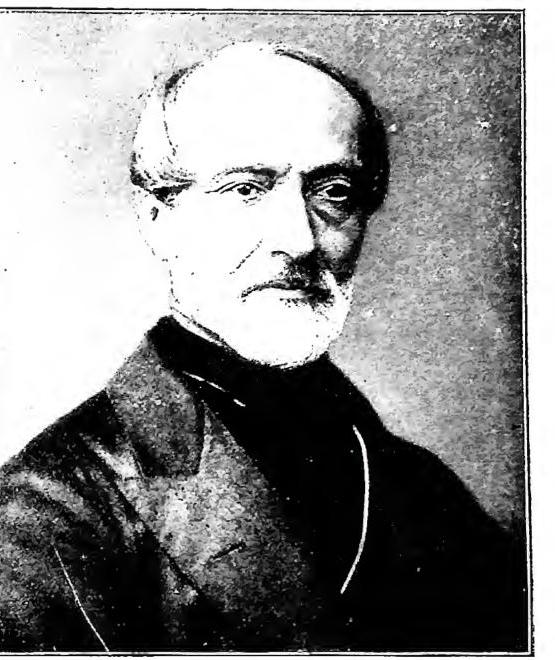
(phot. Alinari)
MAZZINI, GIUSEPPE - Portrait.
and moderation at the same time, against the more intemperate elements, which were steadily gaining ground. As far as the abnormal conditions of public affairs permitted, he strove to embody in the republican government the political and social ideas he had always tenaciously championed, once again coming into conflict with his own fellow believers, who regarded him as a hallucinated man, seeing no other way of salvation than that written in his own mind.
On 12 July, after protesting against the Assembly’s vote to cease resistance, he left the city; after stops in Marseille and Geneva, he returned to London and in July 1850 founded a European Democratic Committee, which included Ledru-Rollin for France, Ruge for Germany, Darasz for Poland, and others for other countries, but the initiative had little success. Invited by some Milanese agitators to take direction of the disturbances they wished to foment simultaneously in various Italian cities, he soon went to Switzerland in order to be present on the spot; but the movement, which broke out on 6 Apr. 1853 and was immediately suppressed, left a bitter aftermath of trials, hangings, and recriminations. Other similar attempts by the Mazzinian Party of Action in 1854 and 1855 had no better outcome, nor did the more ambitious one organized in the Neapolitan region in 1857, in agreement with Nicola Fabrizi and Carlo Pisacane, which cost the latter his life. All these failures decisively harmed personal confidence in M.’s organizational abilities, and he was consequently abandoned even by his most faithful friends, such as Bertani, Manin, and Bixio. Having returned to London and established his permanent residence there, he published a new periodical: Pensiero ed azione (1 Sept. 1858), taking a position against the policies of Cavour, Napoleon III, and Vittorio Emanuele II. After the Armistice of Villafranca, he made a clandestine appearance in Florence to organize a plan for the occupation of the Marche and Umbria and of all southern Italy, in order to proclaim the republic there; he attempted to carry out a similar plan in Genoa in June 1860, but again without success. Nevertheless, he viewed with great displeasure Garibaldi’s setting aside of the republican cause and placing his sword at the service of Vittorio Emanuele, thereby collaborating through concrete deeds in Italian unification. This created
a breach between the two agitators, which was healed only in 1864, on the occasion of the leader’s journey to London. There was a moment when M., seeing all his initiatives fail, would not have been averse to drawing closer to the monarchy and the king; but the contacts conducted through a third person with Vittorio Emanuele in 1863 led nowhere. M. continued in his uncompromising republicanism and, as long as his strength lasted, devoted himself to fomenting local disturbances, with ever less support and success. To this end, on 10 Aug. 1870, he left Genoa for Sicily, but was arrested in Naples and confined in the Forte di Gaeta. Once released, he returned to London and founded the periodical Roma del popolo (9 Feb. 1871); in Feb. 1872 he left England, and upon reaching Pisa was stricken by a fatal illness that carried him off within a few days, as the guest of Giovannetta Nathan Rossello. His remains were buried in the cemetery of Staglieno in Genoa.
II. M. AS A PUBLICIST. — M.’s activity as a publicist (dispersed among the many periodicals he founded, including also the few separate pamphlets, such as I doveri dell'uomo and I fratelli Bandiero, which likewise first appeared in periodicals in instalments) was entirely coordinated with the patriotic and humanitarian ideal that formed the supreme object of his whole life. In the history of the Risorgimento there is no other figure who served the national cause with a like ardour of dedication, an unshakable strength of faith, and a comparable contempt for personal advantage and tranquillity. Therefore, although from the Catholic point of view the broadest reservations must be made concerning M.’s doctrines, conduct, and work itself, one cannot fail to admire the man who served his ideal with a dedication that was heroic.
When his multifarious and feverish activity, carried out in such harsh and difficult conditions, is coordinated with the concepts that inspired him, as they now emerge fully from the abundant correspondence and writings diligently collected in the national edition, one sees a close connection and harmony running between M.’s thought and action. It cannot be said that he possessed a mind endowed with exceptional speculative and philosophical qualities, or that the philosophical concepts inspiring him were truly original and profound. What explains the powerful fascination exercised by his writings is to be sought above all in their warm, impassioned, compelling form, with imaginative accents characteristic of a visionary.
He began from the principle that Italy, not out of nationalistic pride but because of a mission entrusted to it by God, was assigned a civilizing function pre-eminent over the other nations: that of “transforming the social and political conditions of Europe and the entire world.” The three great peoples—Greek-Latin, Germanic, and Slavic—that inhabit Europe were destined to merge into a single family, forming a link of union on which the salvation and prosperity of the world depended. From this concept there arose in him the plan for Giovine Europa, which was ultimately to be divided into three branches, Giovine Germania, Giovine Polonia, and Giovine Italia, united in a central committee with “a federative organization” for coordinating their action. Giovine Svizzera, founded in 1834, was merely a first step toward influencing the other countries.
III. GOD AND THE PEOPLE
From the moment he launched the idea of Giovine Italia, he adopted as a synthesis of his program two formulas: «God and Humanity» and «God and the People», asserting that from these concepts the new society he envisioned was to draw and derive «all its religious, social, political, and individual beliefs». He rejected, as by then forbidden and outdated, the formula of the French Revolution, «Liberty, Equality, Fraternity», whereas the one he proposed was intended to represent a step forward and to encompass in a single concept all the manifestations of national life, harmonizing the achievements of the past with those of the future, illumined by the radiance of religious light.IV. GOD
It should be noted how M. establishes his fundamental conception upon transcendental foundations; he expressly protests that «the ideal is outside us, is supreme over us all; it is not a creation, but a discovery of the intellect»;and with equal energy he affirms his faith in the spirituality and immortality of the soul and consequently reacts both against the immanentist idealism fashionable since his own time and against pantheism. From the concept of God, the supreme legislator, deeply impressed upon his soul, M. deduces every law of progress. Therefore, «the cry God wills it, God wills it of the Crusades — he asserts — alone can transform the inert into the active, give courage to the fearful, enthusiasm to the calculating, and faith to those who reject every human concept through doubt». M. takes pride in having been the first to react against the philosophism of the eighteenth century by promoting the moral reconstruction of the values demolished by the French Revolution, by restoring to force the «holy authority», which had been extinguished in Europe, by endowing it with the power of «initiative», and by preaching the failure of Enlightenment philosophy and emancipation from French influence.
V. POPOLO
From the concept of God, M. derives the principle of the universal and immutable moral law. God informs our mode of existence and at the same time exercises over the universe, as over individual beings, both physical and moral, a continual inspiration, which they have the duty to follow, and from which the law of progress emanates as from its source. Between humanity (the people) and progress (God acting upon the world), he conceives such a necessary and perpetual interrelation as to affirm that “the only interpreter of divine law is the people, the one and indivisible people, which recognizes no castes or privileges, except those of genius and virtue”; and further that “humanity is the living word of God.” “The spirit of God fertilizes it and manifests itself in it ever purer, ever more active, from age to age.” “God successively becomes incarnate in humanity.” To express this intimate bond existing between God and the people, he finds no formula more suitable than that of the Qur’an, adapted to his purpose: “God is God and the people are his prophet.”VI. RELIGION
It can be understood from this how radically M. altered the traditional concept of religion. Religion is not founded upon an external code such as that of Revelation and ecclesiastical teaching. All positive religions, good in themselves insofar as, and limited to the time in which, they express the true sentiment of the human soul, represent only one stage of humanity in its perpetual evolution and progress under the breath of the spirit of God. «We have sects, not a Church, — he affirms — imperfect, contradictory philosophies, not religion, not a collective belief that unites the faithful under one sign and establishes harmony among their works».The idea that M. had formed of Christianity reveals him as the unconscious child of that Enlightenment against which he claimed to be reacting. Christianity is regarded by him as an individualistic, antisocial religion; a religion which, by the very fact that it makes «the salvation of the individual its end, belief in an intermediary being between God and the individual its means, Grace its condition, the Fall and Redemption through the work of another its dogma, cannot found a society which, while having the same end, would have belief in the collective life of humanity, the sole intermediary between God and the individual, its means; its condition, its own works accomplished on earth; and progress its dogma». These words express, in the most explicit form, the profound antithesis between the concept of religious society as taught by Catholic doctrine and that professed by M. Yet he drew from a theological truth—that of the mystical body of the Church and the action of Grace upon souls—the thought that forms the core of his doctrine. The close analogy cannot be overlooked «between the Mazzinian idea of the vivifying influence exercised by God upon humanity and the action of the Holy Spirit upon the Church; between the human divinization as M. conceives it and that which takes place through Grace; between the incarnation of God in humanity for its progressive elevation and salvation and the incarnation of the Divine Word for the redemption and salvation of mankind. This clearly demonstrates that M. never entirely divested himself of those fundamental principles which had been instilled into him through the Christian education he received in his youth (nor is the fascination he always felt for the figure and doctrines of Gioacchino da Fiore without significance). He confessed that he had been touched by scepticism and atheism only briefly, during his university studies. M.’s religious system is nothing other than Christianity disguised, humanized, and stripped of its positive, hierarchical, and supernatural character. Between the people and God there must be no mediator: «we have only one master in heaven, who is God; only one interpreter of his laws on earth, who is the people. Free the country from cardinals, primates, and all the traffickers in lies who form the aristocracy of the clergy!» Just as faith, so the priesthood must be humanized and secular; «the wisest and most virtuous among the believers» must be elected priest of the people, «under the auspices of freedom of conscience and election». The dogmas of the new faith will no longer be idols and phantoms, «but truth, virtue, genius»; the source of this new faith must not be sought in hierarchical teaching, in the Pope and the councils, but rather in the people themselves, who constitute «the living law of the world» and are invested with such authority that when «they declare that such is their belief, you must bow your head and refrain from every act of rebellion». The triumph of the Protestant revolution, in M.’s thought, marks the beginning of the agony of the papacy and the Church. Today it would be nothing but «a putrefied institution and a mask of religion»; and for at least three centuries it would have had no explicit mission other than to obstruct the divine mission entrusted by God to Humanity. He portrays the papacy and the monarchy as two spectres groping in the darkness, supporting each other so as not to plunge into the abyss; and, once Rome had been occupied, he urged his friends to act so as to «make any life for the papacy within its walls impossible»
VII. THE SOCIAL QUESTION
Social justice, as M. conceives it, should be attained through free associations of workers and through recognition of the worker’s full product of his labor. It should be the task of the State and of para-state or free bodies to provide the capital necessary for these associations through credit institutions and special national funds, to be established by absorbing ecclesiastical and state property and uncultivated lands, and to be supported by a wise tax reform, restricted to a single tax on income, with exemption for what is necessary for life. Social reforms should be accompanied by reforms in the other branches of public life, especially education, which M. conceived as a proper and inalienable function of the State, since the State had not merely the right but a precise duty to form citizens according to its own form and ideal. This, however, should not be implemented in a revolutionary manner, but rather through progressive and methodical reforms. Although throughout his life he remained an uncompromising republican and a convinced advocate of democratic reforms, he nevertheless openly opposed the Marxist system and the materialist conception of life on which it is based, and tenaciously advocated, as one of the State’s specific tasks, the prevention of class struggle through appropriate measures and reforms. For this very reason, in 1864, on the occasion of the founding in London of the first proletarian International, he came into open conflict with Marx, Bakunin, and their adherents, who consequently did everything in their power to exclude him from exercising any influence over the working class.VIII. LABOUR
M. regards labour as something that impresses upon its fruit an indelible personal imprint and renders property sacred and inviolable; at the same time, it is like a “symbol of the human vocation” with regard to progress and civilization. Labour, therefore, is subject to the moral law that governs the individual and society; and it constitutes a duty to which the individual and society must apply themselves, by making themselves capable through the perfection of their physical and moral faculties, which can render it easy and fruitful. Whoever, moreover, “is willing to give for the good of all whatever work he is capable of” has the right to remuneration sufficient to enable him
capable of developing his own existence «in the aspects that define it», that is, with the greatest possible productivity. The price of labor must not be assessed according to its material duration, but rather according to its difficulty, the expenditure of energy, its social usefulness, etc.; and on the basis of these factors it must ensure the worker a wage corresponding to his family needs.