
CHIABRERA, GABRIELLO. – Poet, born in Savona in 1552, died there in 1638. He was a student at the Collegio Romano; in Rome he also came into contact with the humanists Speroni, Manuzio, and Muret. Having entered the service of Cardinal Corner, he fought a duel over a matter of honour and had to return to his homeland, where another incident of the same kind forced him to leave for some time. At the age of fifty, he married the very young Leila Pavese. He undertook diplomatic missions on behalf of his city to the Genoese government and was associated with the Savoia, the Gonzaga, and Urban VIII (cf. the papal brief addressed to C. in Lettere di G. C. a B. Castello, Genoa 1838, p. 14), and especially with the Medici. In Mantua and Florence he staged performances on the occasion of solemn events at those courts.
He tried his hand at lyric poetry, with celebratory odes, love and bacchic canzonette, narrative poems, eclogues, sonnets, and satires; at heroic poetry with La Gotiade, La Firenze, L'Amadeide, Il Foresto e Il Ruggero; and at drama with tragedies on romantic subjects and several pastoral plays. C. wished to renew poetic language on Greek and Latin models, in accordance with the ideas set out in his prose writings (l'Autobiografia e i Dialoghi dell'arte poetica) and, sporadically, in his correspondence—ideas that he took up from the Speronian Hellenistic school and from sixteenth-century writers on poetics (Trissino, Daniello, Muzio, du Bellay, Minturno). He therefore set about seeking more agile metrical structures and chose subjects more closely attuned to the sensibility of his time, such as Christendom’s campaigns against the Ottomans and against Protestant heresy. He proved innovative in lyric poetry (Leopardi defined him as « solo veramente pindarico »), even though he worked in part from Latin translations of Pindar, Sappho, and Anacreon, and from the Gallo-Hellenic models of the French Pléiade. The Vendemmie di Parnaso, the Scherzi, the 30 Sermoni, in which he develops a satire of seventeenth-century customs, and especially the Poemetti, including several on biblical subjects, deserve mention: Il leone di David, La liberazione di s. Pietro, La conversione di Maria Maddalena. Parini, Monti, Foscolo, and Carducci also owed much to the new Chiabreresque technique, which was widely imitated in the Arcadia.
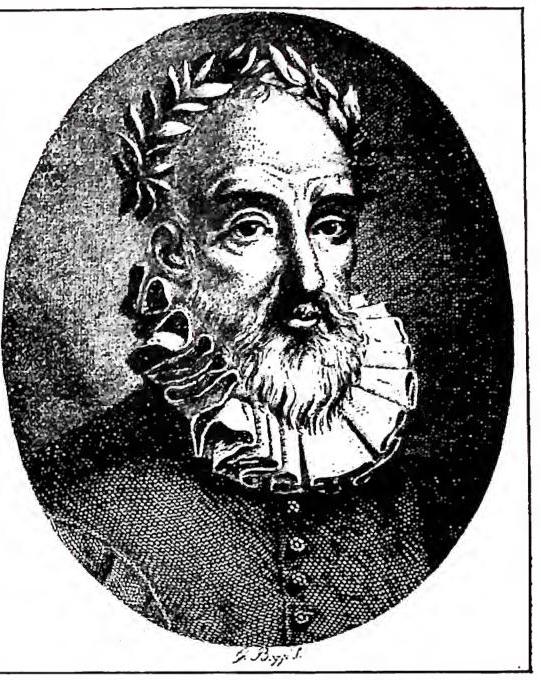
(from Rime di G. Chiabrera, Milan 1867)
CHIABRERA, GABRIELLO – Portrait. Engraving by G. Boggi.
414–70 (a supplementary note with the same title in Atti della Soc. stor. savonese, 2 [1889–90], pp. 425–57); S. Ferrari, G. C. e la Corona di Apollo, in Giornale ligustico di arch. storia e lett., 15 (1888), pp. 266–75; F. Neri, Il C. e la Pléiade francese, Torino 1920; F. L. Mannucci, La lirica di G. C., storia e caratteri, Napoli 1925; G. Maugain, Ronsard en Italie, Parigi 1926, chapters 3–4; G. Negri, G. C., Savona 1938; Tito da Ottone, G. C. Vita e arte, there 1940; A. Bianchi, C. e Cebà poeti pindarici, in Atti Accad. ligure scienze e lett., 1 (1941), pp. 239–61.
Enzo Noè Girardi