Machine translation of the 1948–1954 Italian original. The original text is authoritative.
MAURIZIO, ESUPERIO, CANDIDO, VITTORE, INNOCENZO and VITALE, saints, martyrs. — They are commemorated in the Hieronymian Martyrology on 22 September together with 6666 companions, all belonging to the Theban Legion. The history of their martyrdom is highly controversial. The first to speak of it was St Eucherius, bishop of Lyon (d. in 450), in a sermo in which Innocenzo and Vitale are not mentioned. During the persecution of Diocletian, an entire legion, composed wholly of Christians and called “Theban,” whose officers were M., Esuperio and Candido, Agauno (v.), after having twice been decimated for refusing to participate in the persecution against the Christians of Gaul. According to a Passio of the seventh century, however, the event would have taken place in 286 during the campaign conducted by Maximian against the Bagaudae: the Theban Legion, stationed at Agauno, was summoned to Octodurum before beginning the fighting, for sacrifices and to take a special oath; the soldiers refused; they were therefore first decimated and then all massacred.
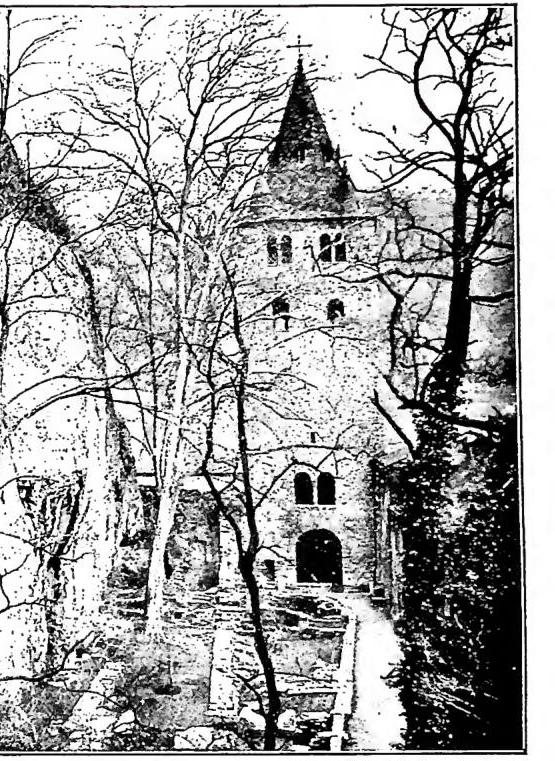
(courtesy of Canon Fleury)MAURIZIO, saint — Tower of the Abbey of S. M. In the foreground, the “Martolet,” with remains of the primitive basilicas, now completely excavated.
The two accounts certainly contain implausibilities and anachronisms.
Since the oldest source is St Eucherius, it is to this source that one must turn in order to reconstruct the events with the greatest plausibility. In the first half of the fifth century, St Eucherius visited, like so many other pilgrims of the period, the basilica of the martyrs, erected as early as the fourth century; and, since there was not yet any account of the martyrdom of the saints, he questioned local people about II. They said that they had heard it from Bishop Isaac of Geneva, who in turn had learned it from Bishop Theodore of Octodurum (d. after 381), founder of the basilica, and had thus handed it down to posterity. These were therefore oral traditions collected, approximately a century and a half after the events, by the man who had discovered the martyrs’ bodies and built the basilica in their honour. As happens in such cases, after a century and a half the oral tradition could very well have been altered by the addition of a wealth of details and clarifications unknown in the beginning, without in any way excluding alterations or false interpretations from the outset. It is therefore difficult to say how much truth there is in St Eucherius’s account, especially when one considers that it was a writing composed to make up for an absence. It thus seems necessary to reject the massacre of an entire legion at Agauno during the persecution of Diocletian; Gallo-Roman writers of the sixth century, such as Avitus of Vienne, Gregory of Tours and Fortunatus, although speaking of the Basilica and the veneration enjoyed there by the martyrs, know nothing of this legion, and their language is rather general and rhetorical. From the fact that St Eucherius mentions only four names, one might suspect that these alone were the authentic local martyrs, perhaps soldiers, whose discovery, occurring under unspecified circumstances, probably in an ancient Christian cemetery, may have given rise to the idea that all those bodies belonged to martyrs and soldiers, likewise slaughtered in the same per-
(Alinari photograph)
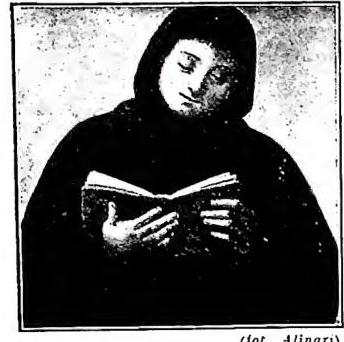
MAURO, saint — S. M. legends. Painting by P. Perugino — Perugia, church of S. Pietro.
Passio of the seventh century. This indeed has every appearance of correcting the inconsistencies of the Eucherian account, but it does not always succeed. It probably concerned a local episode, limited to a number of Christian soldiers, which occurred during the military phase of the persecution of Diocletian. Over their bodies, Bishop Theodore built the Basilica in the second half of the fourth century; it soon became famous throughout the region (v. AGAUNO).
In iconography he is represented as a horseman, sometimes under the appearance of a Moor. — Vedi tav. XXIX.
BIBL.: B. Krusch, Passio Acaunensium martyrum, in MGH, Script. rer. Merov., III, pp. 30-41; Tillemont, IV, pp. 421-31; Acta SS. Septembris, VI, Paris 1867, pp. 308-403, 895-926; A. Dufourcq, Etude sur les Gesta martyrum romains, II, there 1907, pp. 9-35; P. Allard, Storia critica delle persecuzioni, Italian trans., IV, Florence 1928, pp. 21-29; V, there 1428, pp. 315-49; Synax, Constantinop., p. 481; H. Leclercq, St Maurice d'Agaune, in DACL, X, cols. 2699-2729; H. Delebaye, Les origines du culte des martyrs, Brussels 1933, p. 355; A. J. Herzberg, Der heilige Mauritius, Düsseldorf 1936; M. Coens, Anciennes litanies des saints, in Anal. bolland., 62 (1944), pp. 140-42; Martyr, Hieronymianum, p. 522; Martyr. Romanum, p. 410. Agostino Amore
Cite this article
“MAURIZIO, ESUPERIO, CANDIDO, VITTORE, INNOCENZO E VITALE, SANTI, MARTIRI.” Enciclopedia Cattolica, vol. VIII (1952), p. 313. Azione Romana digital edition, https://azioneromana.com/article/maurizio-esuperio-candido-vittore-innocenzo-e-vitale-santi-martiri.