
AMEDEO VIII, duke of SAVOIA. — Son of Amedeo VII, count of Savoy, and of Bona di Berry, born at Chambéry on 4 September 1383. He succeeded his father on 1 November 1391. His minority fostered bitter conflicts among the court factions, which disputed the guardianship and the regency; and the reciprocal accusations concerning the causes of Amedeo VII’s death served to remove his mother and grandmother, Bona di Borbone, from the government and to ensure the triumph of the predominance of the duke of Burgundy. The young prince was governed by Oddone di Villars, with the title of governor, and Aimone di Aspremont, with the title of guardian. Having come of age in 1397, A. began only some years later to exert a direct influence on the government; Burgundian influence became firmly established through the prince’s marriage to Maria, daughter of Duke Filippo l’Ardito.
Not a warrior, but rather fond of a tranquil life, A. sought through the arts of diplomacy to intervene in the political life of his time, so as to increase the domains of his House. The granting of ducal dignity by the Emperor Sigismondo in 1416 demonstrated the prestige attained by the prince and the importance of the results achieved. In 1418, upon the death of Ludovico di Savoia, of the Acaia-Piemonte branch, A. inherited all his domains in Piemonte, giving the Savoyard state a new cohesion and strength. Moreover, the annexation of the county of Genevese, of several fiefs in the Vaud, of the county of Tenda, etc., greatly increased the extent of the Savoyard state. His political activity was certainly aided by the events taking place in France and Italy. The French civil wars not only freed the dynasty from the dangerous French primacy, but also enabled A. to intervene as a peacemaker with the secret intention of making territorial acquisitions on the Rhône: he succeeded in acquiring the Valentino, which his successor later lost. In Italy, the disintegration of the Milanese state after the death of Giangaleazzo Visconti facilitated his acquisition of many lands in the Biellese and, temporarily, also of the Val d’Ossola. In the conflict between Filippo Maria Visconti and the Venetian-Florentine League, he intervened by negotiating with both sides and succeeded in obtaining from Visconti the cession of Vercelli. It now seemed that Savoyard predominance had become firmly rooted throughout Upper Italy.
Continuing the ancestral policy, A. sought to subjugate the marquises of Saluzzo and Monferrato, binding them feudally and obtaining from the Paleologi of Monferrato the cession of Chivasso. Having become a widower, already in 1422 he inclined toward a solitary life; in 1434 he ceded the government of the duchy to his son Ludovico and withdrew to the hermitage of Ripaglia (Thonon), where he founded the chivalric order of S. Maurizio. The Council of Basel, in conflict with Pope Eugenio IV of Rome, turned its attention to him, and when the latter was deposed and excommunicated by that Council (1439), A. was elected pope (5 November
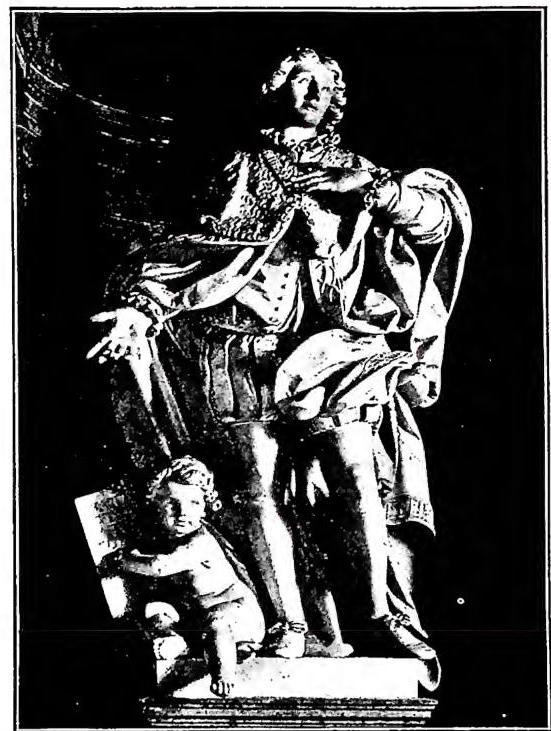
1439). The duke accepted (14 December 1439) and, under the name of Felice V, was crowned on 24 July 1440. (v. ANTIPAPA). Pope Niccolò V, after A. had renounced the tiara (7 April 1449), behaved magnanimously toward him by recognizing his cardinalitial dignity. A. died on 7 January 1451 at Geneva and was buried at Ripaglia; his ashes currently rest in Turin in the Chapel of the Holy Shroud, in the monument erected for him by Carlo Alberto.