
BIELLA, DIOCESI di. – City of Piedmont, province of Vercelli, called in documents Buiella or Bugella. It was erected as a diocese by Clement XIV, at the request of Carlo Emanuele III, by the brief Praecipua demandati nobis, of 1 June 1772, its territory being detached from the diocese of Vercelli. Suppressed by Pius VII, at Napoleon’s behest, on 1 June 1803, it was re-established by the same Pontiff by the brief Beati
The diocese of B. has 150,000 inhabitants, 123 parishes, 219 secular priests, 46 regular priests, 12 male and 122 female religious houses (1948). Its patron is St Stephen Protomartyr. Christianity must have spread throughout the Biellese through the direct activity of St Eusebius of Vercelli (ca. 340–370). From the region of the gold mines, already known to Strabo (V, 1, 12) and Pliny (Nat. Hist., XXXIII, 21), called Bessa, the priest Marcellinus, remembered in a Vercelli poem of the Palatine Anthology, is said to have originated. Certainly the priest «nomine Albinus», whose funerary inscription came to light in 1872, exercised his apostolate in B. (around the middle of the 6th century). B. passed to the episcopal see of Vercelli during the 10th century, through a donation by Berengar II and Adalbert, as appears from the diploma of Otto III dated 7 May 999, provided that the passage is not interpolated. No certain conclusions can be drawn from the donation of Charles the Fat, dated 16 March 882, since the diploma has been manipulated (cf. MGH, Diplomata, II, Berlin 1937, p. 92, edited by P. Kehr). The Chapter of the collegiate church of St Stephen, known as early as 1027, and the commune, dating from the beginning of the 13th century, were on several occasions in conflict with the bishop of Vercelli, culminating in the sensational imprisonment of Bishop Giovanni Fieschi (1377). Two years later B. freed itself from the bishop of Vercelli and gave itself to Amadeus VI of Savoy.
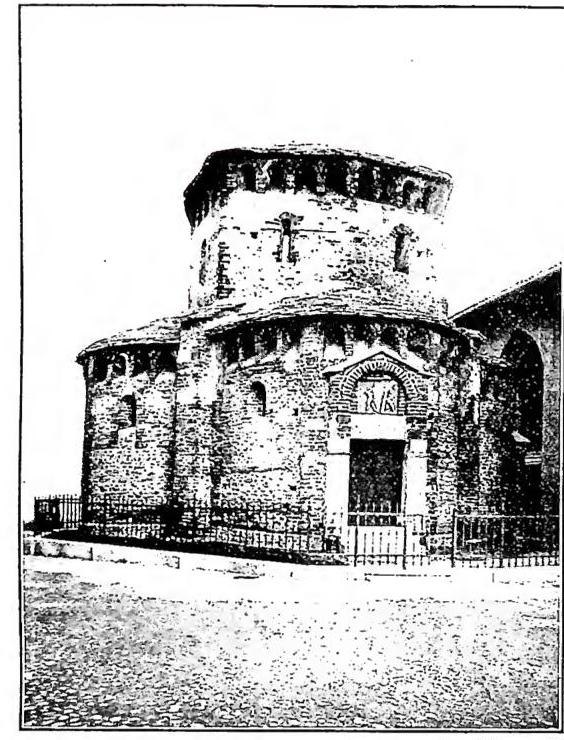
Among the principal monuments are to be remembered: in B. Piano, the oldest part of the city, the centrally planned baptistery with four small apses (10th–11th centuries), containing remains of paintings from the end of the 13th century; the bell tower (13th century) of the former collegiate church of St Stephen, demolished in 1872; the church of St Sebastian (1504); the Cathedral, called after 1772 St Mary Major and New St Stephen (15th century, with alterations from the end of the 18th to the beginning of the 19th century); in B. Piazzo (placium or plazium), founded in 1160 by the bishop of Vercelli Uguccione, the 13th-century Church of St James, partly rebuilt in the 16th century. The archives are rich: the chapter archive (documents from the 11th century onward), the municipal archive (partly catalogued, with documents from 882 onward), and the notarial archive, in addition to private collections. The library of the Major Seminary, founded by Bishop Canaveri (1797–1803), is also open to the public. The Abbey of SS. Salvatore and James of the Bessa, endowed by the bishop of Vercelli, Rainerio, in 1089, was of considerable importance. The sanctuaries to be mentioned include: Oropa (v.), Graglia (Madonna of Loreto), built in the 17th century, and St John the Baptist of Andorno. Particularly interesting is the «ricetto» of Candelo, a fortress and place of refuge (13th–14th centuries). The abbot Giovanni Gersen is said to have been born at Cavagli toward the end of the 12th century; some attribute to him the De imitatione Christi (v. IMITAZIONE DI CRISTO).