
RODI. –
I. GEOGRAPHY
The largest, after Lesbos (1440 sq. km), and the southernmost of the great Sporades, situated a short distance from the coast of Caria (Asia Minor).It is almost entirely mountainous, and its relief, which culminates in Mt. Attàiro (1215 m), is arranged like a long ridge descending with a certain regularity toward the two western and eastern coasts, the latter opening into a succession of more or less broad crescents, both of them cut into terraces. There are no true plains. The climate, Mediterranean in type, resembles that of eastern Sicily, with a long dry period (from April to October) and a rainy one (average 1000 mm, but with considerable variations); very mild winter temperatures and frequent, and not rarely violent, winds.
The population (61,791 inhabitants; 43 per sq. km) is overwhelmingly Greek, with a few Muslims and Jews; the Greek-rite Orthodox confession therefore predominates. The Island’s economy is typically agricultural; nevertheless, the rural population, still attached to backward systems of land management and technical procedures, constitutes only slightly more than half of the total number of inhabitants. Livestock raising is modest in scale, with a predominance of undemanding free-range animals (goats and sheep). The soil produces cereals, potatoes, legumes, and above all olives and grapes; fruit trees are also fairly widespread. Beekeeping (honey and wax) has a long tradition; sericulture has almost disappeared; fishing is far from negligible. There are no genuine industries, while a respectable handicraft sector persists (carpets in Rodi, ceramics in Lindo).
Of the inhabited centres, the largest is Rodi (51,000 inhabitants), still more like a medieval fortress in appearance than a centre of modern life, but whose commerce expanded considerably during the Italian occupation.
Giuseppe Caraci
II. HISTORY
R. appears in the history of the Mediterranean as early as the age of Aegean civilization. The Rhodian necropolises reveal the Mycenaean type, while the pottery bears the characteristic decoration of Cretan pottery. A later Dorian colonization is indicated by the close relationship between the Rhodian and Arcadian dialects; according to Homer, the Epolemius, a descendant of Heracles, set out from Argos to colonize R. At the beginning of the historical age, the Rhodians appear in close commercial relations with the various countries of the eastern Mediterranean, especially Egypt and Cyrenaica. In the 7th century, the colonists of Gela in Sicily set out from R.In the Greco-Persian wars, the Rhodians placed their fleet at the disposal of the Great King; in 480 B.C. they fought at Salamis with the Persian fleet. The formation of the Athenian maritime Confederation compelled the Rhodians to join it, but later economic disagreements drove them away. In opposition to Athenian hostility, around 408 B.C. the inhabitants of the island’s three principal centers united and founded the city of R., which they equipped with a great artificial harbor; with the decline of Athens, the new harbor became the principal port of call in the eastern Mediterranean. The struggles among the Greek cities in the 4th century brought prosperity to R. for about two centuries. With great care, the Rhodian fleets kept the seas free of pirates and guaranteed freedom of communication with Syria, Egypt, and Greece; the Rhodian coinage was highly esteemed throughout the Levant for the quality of its alloy and its constant value. As a result of their maritime activity, customs took shape at R. (Lex Rhodia) which became an authoritative body of law and later influenced Roman law as well. Commercial concerns led the Rhodians to pursue a policy of equilibrium amid the struggles of the 4th century. After the battle of the Granicus, the Rhodians submitted to Alexander. After his disappearance, amid the struggles among the Diadochi and subsequently among the Hellenistic monarchies, R. sought to remain neutral, supporting the Ptolemies of Egypt and the Seleucids of Syria against the kings of Macedonia: in 305 they repelled the siege of Demetrius Poliorcetes. The 3rd century B.C. was perhaps the period of the greatest flowering of Rhodian civilization. Artists and writers flocked to R. as the city best suited to their activities; its schools had distinguished teachers in the 3rd and 2nd centuries B.C. In the 3rd century, that colossal statue of the Sun, 33 meters high, was erected at the entrance to the harbor; it remained famous in antiquity, although it had already fallen in an earthquake around 225; its ruins survived until the Arab conquest. At the end of the 2nd century B.C., R.’s political crisis began. The Rhodian Republic judged it prudent to rely on Roman power, which skillfully exploited R.’s friendship and at first favored it; but when the Rhodians sought to continue their policy of equilibrium between Rome and Macedonia, Rome abandoned these dangerous friends and favored the port of Delos against them. R. nevertheless long remained renowned among Rome’s wealthy classes, the clara Rhodos, to which one had to travel in order to perfect one’s education. In the civil wars of the 1st century B.C., R. resumed its old policy: it supported Pompey against Caesar, and then Antony against Octavian. The declaration of autonomy and freedom granted to it by Antony was later withdrawn by Claudius; Nero granted it anew, and Vespasian withdrew II. R. was devastated by earthquakes on several occasions; after the last, in A.D. 155, it never recovered.
The island’s history in the Middle Ages begins with the repeated attempts of the Arab governors of Syria to seize it: in 654, in 807, and so forth. The island formed part of a special provincial governorship. The Crusades brought the island’s importance to the fore: a Venetian fleet wintered at R. in 1099; in 1123, the Venetians, in conflict with the basileus John II Comnenus, plundered II. The harbor became a stopping point for the Italian maritime powers. After the Fourth Crusade and the disintegration of the Byzantine Empire, the Byzantine governor Leo Gabalas established an independent lordship there; later, however, the authority of the basileus of Nicaea was recognized. In 1256 Michael VIII Palaiologos occupied the island, but neither he nor his successor Andronicus II managed to make their possession effective; meanwhile, Genoese, Greek, and Turkish merchants and pirates repeatedly found refuge at R. In 1306, the grand master of the Order of St. John, who wished to leave the Order’s provisional seat in Cyprus, accepted the proposal of the Genoese Vignolo de’ Vignoli to conquer the island of R.; an expedition set out from Limassol on 22 June 1306, occupied Castelrosso, and landed on the island. The occupation proceeded slowly. But after overcoming certain difficulties, the Order in practice regarded itself as the owner of R. The Order’s central administration, both for its military activity and for the construction of walls and castles on the island, had to draw upon the treasuries of the commanderies and priories of the West; financial transactions were conducted through the great Florentine banks—the Bardi, the Peruzzi, and the Acciaioli—as they were in the 15th century through the Medici.
The policy of the grand masters repeatedly aimed at making R. a true principality, but without ever succeeding; besides, the knights preferred residence in the houses of the West, where they lived freely, rather than at R., in the convent, where life was, despite many mitigations, conventual and disciplined. Nevertheless, during the two centuries of their residence at R., the knights displayed notable military activity against the Muslims, either through expeditions of their own in the seas and along the coasts of Egypt and Syria, or by participating in expeditions with other allied powers that caused the Muslims considerable concern.
Pope Clement VI would have liked the Order to abandon R. and move to Smyrna in order to undertake military action against the Turks. The knights refused. Attacks on R. were launched on several occasions, as in 1440 and 1444. When Mehmed II had occupied Constantinople, he began to turn his attention to the knights of R. Only in 1479, however, did he succeed in preparing a major expedition against the island: the first landings took place in December, and in May 1480 a fleet of 160 ships landed at R. with 100,000 men. The grand master, Pierre d’Aubusson, had strengthened the defenses. The number of knights present in the convent had been increased from 335 to 450.
The siege lasted from 23 May to 17 August 1480. The assaults were numerous, but in the end the Turkish generals, despairing of success, abandoned the enterprise. The Turkish sultan Bajazet and the sultan of Egypt agreed to peace treaties and commercial agreements. The grand master Fabrizio del Carretto (1513–21) devoted great attention to the fortification works at R.; he summoned Italian architects to R., including the Vicentine Basilio della Scola.
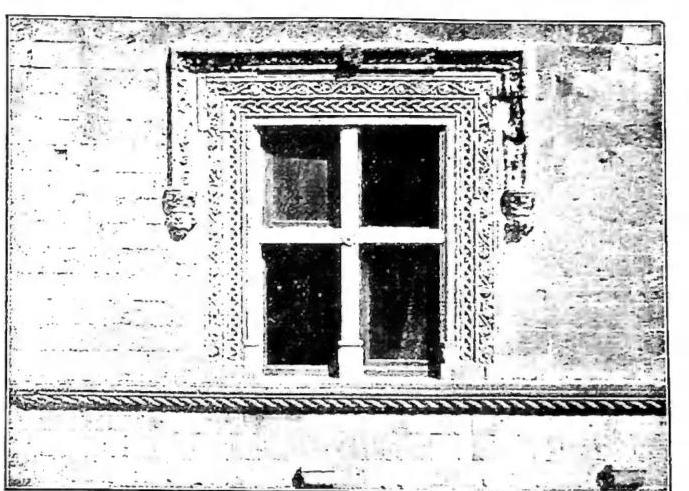
(Alinari photograph)
Francesco Cognasso
III. THE ARCHDIOCESE OF R
Already a bishopric at the end of the 3rd century, R. had become in the 7th century a metropolitan see with 11 suffragans, reduced in the 10th century to 10. The Latin archbishopric was founded in 1328 and lasted until 1546.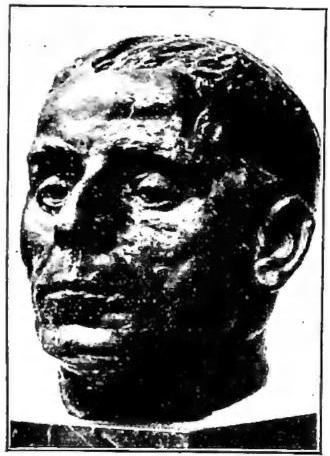
(from J. Charbonneaux, Les sculptures de R., Paris 1818, plate 79) RODIN, AUGUSTE – Pope Benedict XV (1915).