AOSTA, DIOCESE OF. - It comprises the entire territory of the Aosta Valley (Piedmont) and has 90,000 inhabitants, 88 parishes, 140 secular priests, 5 male religious orders and congregations and 7 female ones, a major and a minor seminary. Patron saint: St. Gratus, bishop, whose feast is celebrated on 7 September.
History. - A., the ancient Augusta Praetoria, was founded in the year 25 BC at the convergence of the two roads leading to the Graian Alps (Little St Bernard) and Pennine Alps (Great St Bernard); the colony Augusta Praetoria, composed of praetorians and the ancient inhabitants of the valley, the Salassi, was included in the 11th region of Italy under Augustus. With the fall of the empire, the Aosta Valley belonged to the Ostrogoths, the Byzantines, the Lombards and, from 575 until the advent of the Carolingians, to the Merovingian kingdom of Burgundy; after the fall of the Carolingians, it followed the fortunes of the kingdom of Italy and by the mid-10th century was again included in the territory of the kingdom of Burgundy. At the beginning of the 11th century the Aosta Valley begins to appear in the Alpine Burgundian group of domains of Humbert I of Savoy, and although it belonged to the empire, in practice it knew no other lords besides the House of Savoy, to which it remained most faithful until its annexation to Italy. A., raised to a duchy in 1238, governed itself with great liberties through the Assembly of the Three Estates—clergy, nobility and people—the Council of Commissioners, established in 1535–36, and its own laws, codified in 1586 (Constumes générales du Duché d'Aouste, Chambéry 1588); but Charles Emmanuel III abolished all of these between 1760 and 1770. The official language of the duchy was French. A. thus so well defended the integrity of its territory as to earn the title of Aoste la Pucelle.
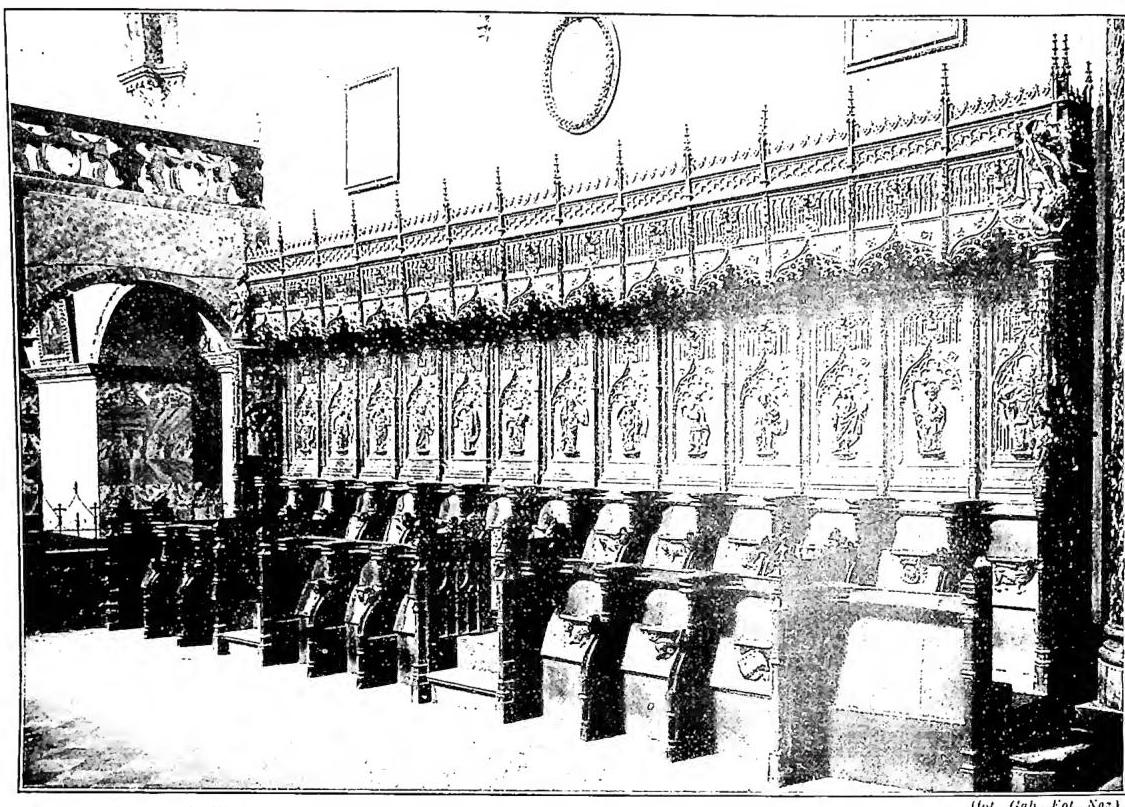
AOSTA — Carved wooden stalls (late 15th–early 16th century). Choir of the collegiate church of SS. Peter and Orso.
The diocese of A. was a suffragan of Milan until Charlemagne incorporated it into the ecclesiastical province of Tarentaise, which he created at the end of the 8th century; but by the mid-9th century A. returned to Milan for a century, then reverted to the Tarentaise province and remained there until 1802. The diocese was then suppressed and united to Ivrea; upon its restoration (1817) it was attached to the new ecclesiastical province of Chambéry and remained there until 1864, after which it passed to that of Turin. The diocese of A. had, like many others, a particular rite, suppressed on 4 Feb 1829 by Leo XII with the bull In Pedemontii Ecclesias.
Among the illustrious ecclesiastical figures worthy of mention are: St BERNARD (q.v.), restorer of the hospices of the Great and Little St Bernard; St ANSELM (q.v.); Cardinal Antonio of Challant (q.v.); Prior Giorgio of Challant (d. 1509), a patron of the arts; Fr Antonio Savio (a sapientibus), general of the Conventuals, who took part in the Council of Trent (d. 1566); Canon Antonio Gal, father of Valdostan history; Fr Lorenzo, a learned and zealous Capuchin (d. 1880).
There were no monasteries or abbeys in the diocese, but there were several Benedictine priories from the 11th century onward, and various houses of canons regular, including the Aosta residence of the canons regular of the Great St Bernard and the provostship of Verrès, dating from the late 10th century and transferred in 1911 to the canons regular of the Lateran. The principal institute of ecclesiastical culture is the Religious and Scientific Academy of St Anselm, founded in 1855 by Canon A. Gal, which has given a strong impulse to local historical studies, has published a bulletin since its inception, and possesses a fine library and a small museum. The main library of the diocese is that of the seminary, not yet catalogued. The archives of the bishopric, the cathedral, the collegiate church of St Orso (arranged chronologically) and the town hall are rich in codices (from the 9th century onward) and documents (parchments from the 11th century onward).
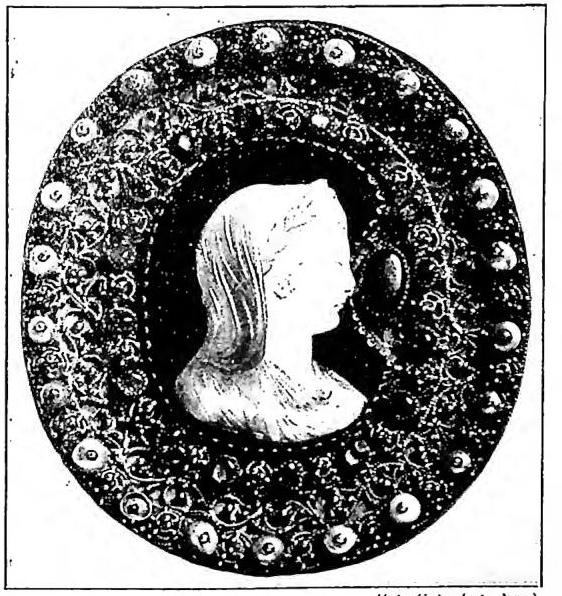
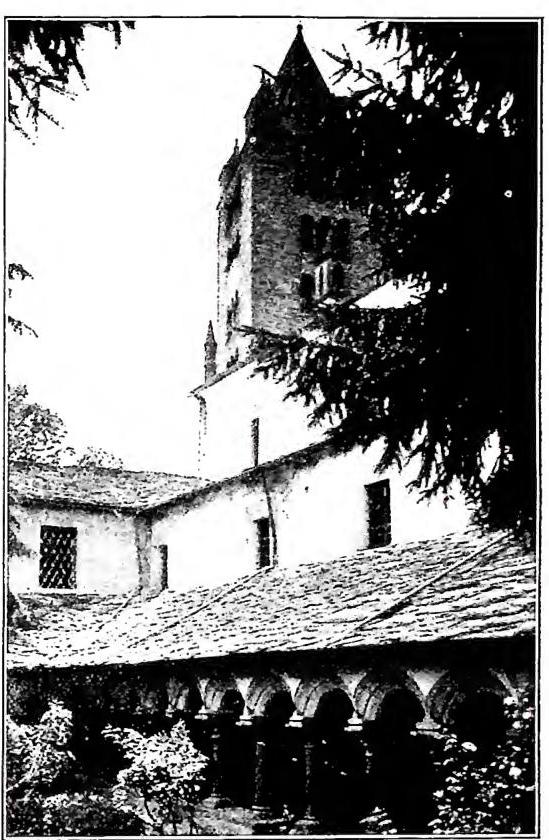
Monuments. — The city has many Roman monuments: the Arch of Augustus, Porta Pretoria, the theatre (now excavated), an amphitheatre, a cryptoporticus, etc.; the cathedral and the collegiate church of St Orso, reduced to their present state in the 15th century, have nothing noteworthy from an architectural point of view, except for the two ancient crypts; but they contain very fine and numerous works of art. The cathedral preserves the well-known ivory diptych of Honorius of 406, a fibula with a large Roman cameo set in 13th-century gold filigree, the artistic reliquary chests of St Gratus (1458) and St Jocundus (1615), richly ornamented vestments from the 15th century onward, illuminated missals and choir books, the carved wooden stalls in the choir of 1467, etc.; the collegiate church, besides the 10th-century paintings already noted, the 15th-century vault paintings and the carved wooden stalls in the 15th-century choir, possesses fine 15th-century illuminated missals, reliquaries, chalices, etc. Beside the church stands the majestic bell tower of the 12th–13th century; the Romanesque cloister of 1133; the priory, decorated externally with terracottas of the late 15th century; and the Roman museum. Several extra-urban parishes also possess notable monuments and works of art, which were displayed in the first exhibition of sacred art held in A. in 1936.