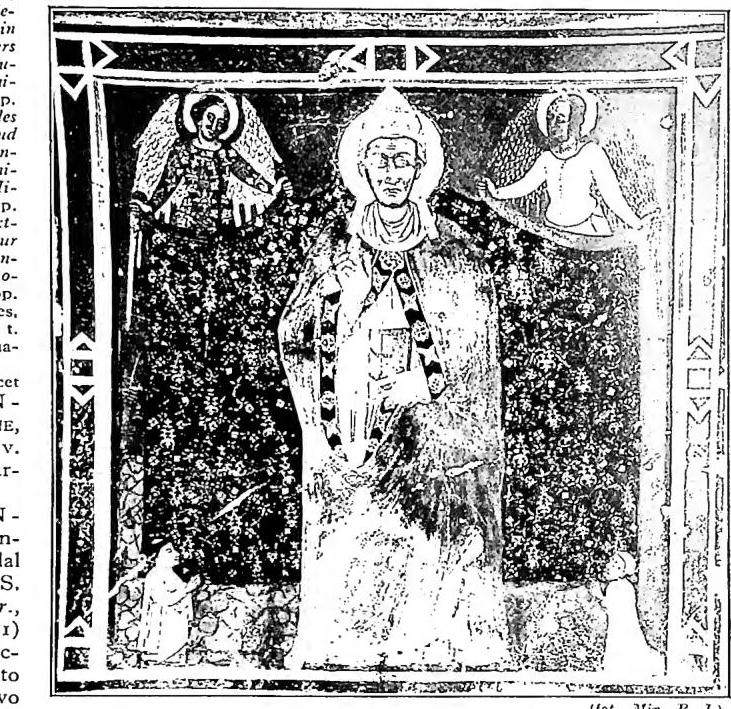
ALEXANDER II, POPE. — When Pope Nicholas II died in Florence on 27 July 1061, his successor could not be elected until 10 October of that year. The election took place outside the walls of Rome according to the rules established by Nicholas II, and the chosen candidate was Anselm of Baggio, Bishop of Lucca near Milan, who took the name of Alexander II. Anselm had been a fervent supporter of the Patarine movement and a close friend of the Tuscan house, and it is understandable why his election displeased the imperial party, which opposed all reform. The Roman nobility, excluded from participating in the election, quickly sent envoys to Germany to offer the young Henry IV the insignia of the patriciate, by which, according to custom, he acquired the right to intervene in the election of the Pope on behalf of the Roman people. A similar move was made by a group of bishops from northern Italy, incited by the chancellor Guibert, so that by the end of October at a diet in Basel, Henry IV considered himself justified in declaring Alexander’s election invalid and designating as the new Pope Cadalo, Bishop of Parma, who assumed the name Honorius II. Cadalo’s money played no small part in this election.
Meanwhile, Alexander had entered Rome with the help of the Normans and Beatrice of Tuscany; but Cadalo quickly sent to Rome Benzone, Bishop of Alba, a fanatical partisan of the German court and a dangerous opponent of the reform movement. Through the use of money, Cadalo managed to install himself on the Capitoline Hill and to draw part of the Romans to his side, paving the way for his own arrival. In March 1062, Cadalo succeeded in seizing by force the Vatican Basilica and the Leonine City. Alexander, however, managed to hold his ground in Rome, and the situation in the city became extremely critical. Godfrey of Lorraine, husband of Beatrice, intervened and persuaded the two rivals to return to their bishoprics until a council could decide on their rights and the king had made known his decision. Even in Germany opinions were divided; but St Peter Damian, in a pamphlet, defended the decisions made under Nicholas II and the election of Alexander. In April 1063, Alexander returned to Rome and at a council excommunicated Cadalo and confirmed the reform decrees promulgated in previous councils. Cadalo, in turn, from Parma excommunicated Alexander, accusing him of not being the choice of the Romans but of the Normans. Then, with an army, he marched against Rome and established himself in Castel Sant’Angelo, remaining there throughout that year. This time it was St Peter Damian
789
ALEXANDER II – ALEXANDER III
who, in 1907, left the Roman pontificate well prepared for the new struggles that awaited it in the cause of ecclesiastical freedom.