Machine translation of the 1948–1954 Italian original. The original text is authoritative.
LUBIANA (LJUBLIANA), DIOCESE of. — A diocese in Carniola (Yugoslavia) with 543,306 Catholics and 21,635 members of other religions; it comprises 285 parishes in 18 deaneries, with 486 secular and 175 religious priests. In the vicinity of present-day L., the city of Emona (Upper Pannonia), the seat of a bishop, already existed in the 4th century; the Avar-Slav invasions during the 7th century completely destroyed II. The work of evangelization in the country was resumed by Aquileia, and the entire region south of the Drava remained under the jurisdiction of its patriarchs.
To remedy the disadvantages of the distance, Patriarch Bertold of Andechs was already proposing in 1237
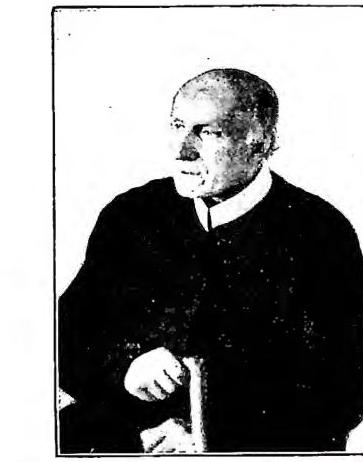
(courtesy of Fr. U. Serant) LUBIENSKI, BERNARDO — Portrait.parishes, to which thirteen others were added in fact: scattered throughout Carniola, Styria, and Carinthia. This arrangement endured through lengthy disputes until the end of the eighteenth century, when Emperor Joseph II wished to implement his programme that the boundaries of the dioceses should be the same as those of the provinces; the diocese of L. lost all the parishes in Carinthia and Styria, which were ceded to the dioceses of Krka (Gurk) and Lavant, and received in compensation from Gorizia those in Carniola, with the exception of some in Inner Carniola, which were incorporated later, in 1792. From 1788 to 1806 it was also a metropolitan see (v. GORGIA, ARCIDIOCESI di), then remained independent until 1830, when it was included in the ecclesiastical province of Illyria. At that time it obtained a group of parishes formerly dependent on Trieste. As a result of the vicissitudes of war, on 25 November 1923 it once again came under the direct jurisdiction of the Holy See, after having lost, following the Treaty of Rapallo of 1920, four deaneries in the Nostranjaka, which came to lie in Italian territory. According to the draft Concordat between the Holy See and Yugoslavia, the diocese of L. was to be raised once again to the rank of archdiocese.
In 1533 the bishop had been invested by Ferdinand I with the title of prince. After the period of Protestantism had ended, the bishops Sigismund Christopher, Count of Herberstein (1683–1701), and Ferdinand of Kuenburg (1701–11) undertook the construction of the Cathedral and the theological Seminary of L. The reaction against Jansenist rigorism and the State’s interference in Church affairs began during the second half of the episcopate of Antonio Luigi Wolf (1824–52), who had the minor Seminary built, commissioned a new Slovenian translation of the Holy Bible, and was a great patron of Slovenian culture. The true revival of Catholic life, however, was promoted by the bishops Giacomo Missia (1884–1898), later a cardinal, and Antonio Bonaventura Jeglic (1898–1930).
BIBL.: A. F. Schumi, Urkunden- und Regesten-Buch für das Herzogtum Krain, 3 vols., Laibach 1882–84; J. Grunden, Cerkvene razmere pri Slovencih in ustanoviten ljubljanske Božije, Lubiana 1908; J. R. Kusej, Josef II. und die äussere Kirchenverfassung Inner-Österreichs, Bonn 1908; J. Turk, O poletnih ljubljanske Božije (Casopis za zgodovino in narodopisje, 32 (1937), p. 73. Francesco Dolinar
Cite this article
“LUBIANA (LJUBLIANA), DIOCESI DI.” Enciclopedia Cattolica, vol. VII (1951), p. 957. Azione Romana digital edition, https://azioneromana.com/article/lubiana-ljubliana-diocesi-di.