
SIRLETO, GUGLIELMO. - Cardinal, b. at Guardavalle (Squillace in Calabria) to a certain Tommaso in
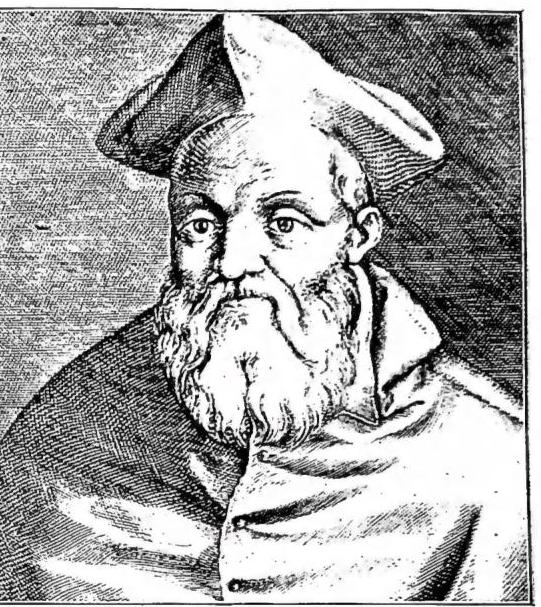
SIRLETO, GUGLIELMO - Portrait, engraving by T. Galleo (16th century), from Duodecim Cardinalium, imagines et elogia, Antwerp 1598, pl. 4 - Copy from the Biblioteca di archeologia e storia dell'arte - Rome.
1514. After a period of studies in Naples, around 1540 he is found in Rome, where he first met Girolamo Seripando and later also Marcello Cervini, with whom he became very close friends.
He immediately frequented the Vatican Library and from the study of the classics turned to that of sacred authors, benefiting from his good knowledge of the Greek language. During the first period of the Council of Trent, he remained in Rome, which he did not leave, in assiduous correspondence with Cervini who consulted him, while he also devoted himself to critical annotations on the text of the Vulgate and to preparing editions of the Fathers. He was custodian of the Vatican when Paul IV in Jan. 1557 appointed him apostolic protonotary. St. Charles Borromeo worked to have Pius IV create him a cardinal on March 12, 1565, also as a reward for the collaboration he gave to Card. Seripando during the third phase of Trent, and for his contributions to the publication of sacred texts. On Sept. 6, 1566, Pius V conferred upon him the see of San Marco in Calabria, and in Nov. S. went to take up residence, but was recalled by the Pope in March 1567 and never left Rome again, although on Feb. 27, 1568, he was transferred to the see of Squillace, his native diocese. He governed it through a vicar until April 15, 1573, when he resigned in favor of his nephew Marcello. S. continued to render precious assistance in everything related to the sciences and sacred erudition. Thus he collaborated in the edition of the Catechism of the Council of Trent, in the reform of the Missal and Breviary, in the edition of the Latin Bible and the Corpus iuris canonici, in the Congregation of the Index of Prohibited Books; he maintained an active correspondence with the most illustrious ecclesiasts of his time and gathered a precious library. He died in Rome on Oct. 7, 1585, and was buried in his titular church of S. Lorenzo in Panisperna. His rich correspondence is in the Vatican Library, together with his manuscripts.