
NEWMAN, JOHN HENRY. — Cardinal and distinguished writer, born in London on 22 February 1801, died in Birmingham on 11 August 1890.
I. LIFE
Of Protestant family (his father was an intelligent and prosperous banker; his mother descended from Huguenots who had emigrated after the revocation of the Edict of Nantes), he was educated in aristocratic fashion at the boarding school of Ealing (then outside London), where he revealed himself as a thoughtful young man, acutely sensitive, fond of solitude, and passionate about music. During the final months of his stay at Ealing, under the influence of Walter Mayer, an evangelical pastor and convinced Calvinist, he matured in his «conversion» to a clearly defined creed (the Trinity, the Incarnation, Predestination), which determined his religious orientation.In December 1816 he entered Trinity College, Oxford, and after four years (1820) obtained the degree of «Bachelor of Arts»; in 1822 he was promoted, with great distinction, to be a «fellow» of Oriel College.
Ordained an Anglican priest, for two years (1824-1826) he served as curate of the parish of S. Clement in Oxford. From 1826 to 1832, as «tutor» at Oriel College, he undertook the intellectual and moral formation of numerous university students (undergraduates). On 14 March 1828 he was appointed vicar of S. Mary’s, where until 1843 he preached with extraordinary success. Exhausted by intense intellectual work, from December 1832 to July 1833 he travelled in the Mediterranean, visiting Rome, Malta, Corfu, and Sicily. Having recovered from a serious illness contracted at Leonforte, on the return journey he composed the poem Lead, Kindly Light, in which his trust in Providence is expressed—Providence that would guide him toward the fulfilment of a particular mission: «I have a work to do». On his return to his homeland, the Oxford Movement began, of which he became the most representative figure: a small group of young men conceived the generous plan of combating theological liberalism, that is, the particular tendency to undervalue the rights of faith in the face of the growing claims of reason, which had manifested itself in the movement of the «evidential school». This became N.’s work, and throughout his life he remained committed to it with ever-increasing fidelity. Led by the logic of anti-liberal principles, which in his feverish historical research became increasingly clear both in themselves and in their applications, he concluded that Anglicanism’s claim to regard itself as the via media between the dogmatic amplifications of Romanism and the religious minimizations of Lutheranism was illegitimate; consequently, in the 90th tract for the times, he declared his open sympathies for Catholicism, in whose favor he attempted to interpret the 39 articles of the Anglican confession. Condemned by the «Hebdomadal Board» of the University of Oxford and repudiated by 42 bishops, N. resigned the parish of S. Mary’s and on 9 April 1842 withdrew, with some friends, to Littlemore, where, while drafting the celebrated Essay of development of christian doctrine, he matured his conversion to the Catholic Church, into which he was received on 9 October 1845 by the venerable Domenico della Madre di Dio, a Passionist.
Sent to Rome (1846) by Mons. Wiseman, with his faithful and inseparable friend Ambrose St. John, at the Col-
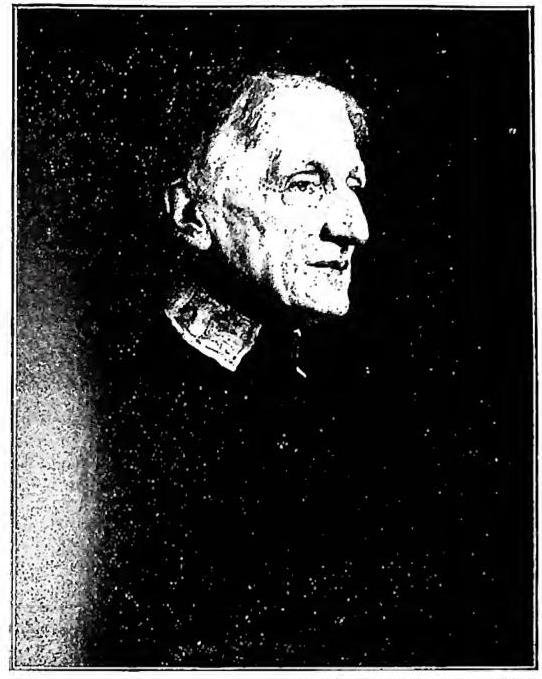
The years of his Catholic life were embittered by slights and misunderstandings. All the undertakings to which he devoted himself—the foundation of the University of Dublin, the English translation of the Bible, the direction of the periodical The Rambler, and the foundation of an Oratory at Oxford for Catholic young men attending the University—failed because of the opposition of that faction, which succeeded in portraying N. as a man dangerous to English Catholicism. Though bleeding under the persistent “war of the pinpricks” (as witnessed by the Diario spirituale, Italian translation by G. Barra, Pinerolo 1950, pp. 17–46), N. remained faithful to the Church and truly accomplished “his work”: the defense of truth through writings that won Catholicism the sympathy of Anglicans and earned him the admiration of his opponents.
Toward the end of his life, the shadows dissipated when Leo XIII, recognizing in him “genius and learning,” created him a cardinal (1879); the entire English-speaking world, from Britain to Australia, felt the magnificence of the gesture and expressed its joyful pride. In the address delivered at his appointment, the new prince of the Church demonstrated the unity of his life in the constant struggle waged against theological liberalism and, while declaring himself with complete sincerity an unprofitable servant, inwardly savored the joy of having fulfilled the mission Providence had assigned to him. In his final years, surrounded by universal admiration, he prepared himself devoutly for the passage “ex umbris et imaginibus in veritatem” (the inscription N. composed for his tomb).
II. WORKS
N. was a particularly prolific writer, because he felt obliged to take up his penwhenever the interests of faith were at stake. He never claimed to do anything great or admired by the world, but wished to express simply and with the cordiality of a friend (according to his cardinal motto: cor ad cor loquitur) whatever was required by the principle: Holiness first. It happened, however, that in his old age he found himself with an immense quantity of material on his hands, which he patiently organized into well-defined series of volumes (published in London between 1870 and 1879), thereby earning the right to occupy an honorable place in every branch of Christian culture. The principal works of the two periods may be noted:
1. Anglican period
Parochial and plain sermons (8 vols., Oxford 1834 ff.): austere and incisive, they stirred consciences by raising the deepest problems of the soul; Sermons on subject of the day (ibid. 1843): preached between 1831 and 1843; discourses 21–24, delivered on four successive Sundays (28 Nov.–18 Dec. 1841), have autobiographical value: subjective principles emerge in them, which the author shortly afterward definitively rejected; Sermons preached before the University of Oxford (ibid. 1843): in them he illustrates the relations between faith and reason; many themes, further refined, returned in the Grammar of Assent; The arians of the fourth century (ibid. 1833): a reconstruction of a historical period exceptionally important for the development of Christian thought; N. observes not so much the facts as the ethos of the Arians and the inner movements of the heresy; Lectures on the doctrine of justification (ibid. 1838): in them he refutes the theory of justification by faith alone. In the 13th lecture he thoroughly criticizes the religious subjectivism established by Luther; An essay on the development of christian doctrine (ibid. 1845): a vindication of the Church against the accusation that it had corrupted Christian doctrine by adding new dogmas. The essay, one of the most original works of the 19th century, begins by tracing a psychology of the masses, into which the evangelical message entered as a divine leaven. The one and manifold Christian idea, resplendent with light and surrounded by darkness, handed down in writings full of chiaroscuro and eloquent silences, is the true « granum sinapis » of the Gospel, destined to grow. Therefore ever-new developments of that idea and ever-wider resonances were to be expected. The slow and sure progress of the pope’s primacy and of devotion to Mary are facts that subsequently confirm what had been anticipated from the very nature of the Church, which has developed while preserving the same nature (conservation of types) and the same fundamental tendencies (continuation of the same principles), namely, the primacy of faith, and the biblical, dogmatic, theological, and sacramental principle. These immutable elements of Christianity possess an intrinsic assimilative power (faculty of assimilation), which, after eliminating harmful elements, welcomes and makes other elements its own, determining from within a homogeneous growth that harmonizes with what is immutably fixed (logical consequence) and is, as it were, foreshadowed by what has barely been sketched in the living organism (anticipation of the future), while adding an effective confirmation to what was already previously in operation (conservation of ancient things). This progress produces throughout the mystical body an ever-renewed vigor (perpetual vigour), which explains how, in the history of the Church, unlike what occurs in heresy, brief and harsh winters are always followed by new springs.2. Catholic period
Loss and gain: the story of a convert (written in Rome at the end of 1847, published anonymously at Oxford in 1848): N. draws on personal memories without, however, composing an autobiography. The various theological tendencies of England at the time are vividly described in it; Discours addressed to mixed congregations (1848): discourses reflecting the joy of conversion; Lectures on certain difficulties felt by Anglicans in submitting to the catholic Church (1851): he demonstrates to the followers of the Oxford Movement that the concept of an established Church conflicts with their own principles; they have no option but to draw the logical conclusion: to submit to thethe Catholic Church; Lectures on Catholicism in England (1851: in the definitive edition the title is different: Present position of catholics in England); a satire on the deep-rooted prejudices of Anglicanism against Rome; with this book N. secured for Catholicism the right of citizenship in his country; Discours on the scope and nature of university education (1852: in the definitive edition they form the first part of the volume: The idea of university defined and illustrated); a series of 10 lectures (of which only 5 were delivered) intended to illustrate the nature and purpose of the Catholic University of Dublin: with this work N. ranks among the finest modern educational theorists; Callisto, a sketch of the third century (1856): a novel set against the background of Christian Africa in the time of St. Cyprian; Sermons preached on various occasions (1857: the definitive edition contains three additional discourses): the fifth, on dispositions toward faith, is important; the tenth, The second spring, delivered at Oscott on the occasion of the First Provincial Council of Westminster, is among the most celebrated; Apologia pro vita sua (1863): a moving and candid account of his journey toward the full light; written to vindicate the sincerity of his conversion, it became a compelling apology for the Church, valid for all times; A letter to the Rev. E. B. Pusey on his recent Eirenican (1866): an apology for Marian devotion, founded on the truths of the Divine Maternity and Co-redemption (the new Eve), which are presented as the two patristic cornerstones from which all subsequent Mariology developed. He also demonstrates therein that the excesses of popular devotion cannot be attributed to theology and the Church; Verses on various occasions (1868): a collection of 30 poems, composed at different times, of which the best known is The Dream of Gerontius, the song of the Communion of Saints, which in its Dantesque grandeur fascinates and moves. An assay in Aid of grammar of assent (1870): the apologetic masterpiece. In the first part he demonstrates, in opposition to theological liberalism, that it is not useless to give religious assent to a series of mysterious propositions, such as those contained in the Athanasian Creed, since in man, beyond notional apprehension (the theoretical, purely abstract knowledge of a truth), there operates real apprehension (concrete and individual knowledge, based on direct contact with the perceived object); therefore, to give the propositions of the Athanasian Creed a real assent (founded on real knowledge) is to believe (to believe), that is, to perform a religious act rich in emotional potential; whereas to offer the same propositions a notional assent (based on notional knowledge) is to do theology, no less legitimate than faith, of which it is an extension along the theoretical and abstract line. In the second part he addresses the problem of the contrast between the unshakable firmness of the act of faith and the apparent fragility of the proofs on which it is based. He begins by distinguishing assent from inference: the former is unconditional adherence to a proposition, regardless of the premises on which it depends; the latter is assent to the conclusion of a syllogism. Religious truths cannot be accepted by inference; indeed, a rigorous demonstration founded on formal logic is impossible in this order of knowledge, since faith is not a notional assent but a real assent to concrete facts, which elude abstract reasoning, through which certainty is attained only in the purely theoretical order. Therefore, the religious fact can be established only through a complex of indications, too numerous and too subtle to be syllogized, each of which, taken separately, offers only a probability, whereas in their convergent totality they eliminate every doubt. This convergence (or synthesis of probabilities), which generates certainty, is produced by the illative sense, a true facultas iudicandi, a kind of judgment concerning the concrete, comparable to Aristotle’s phronesis, which, although rooted in the depths of human nature, develops and becomes more acute with man’s moral perfection; therefore the evangelical saying: «beati mundo corde quoniam ipsi Deum videbunt» indicates the surest path to attaining religious truth. It was inevitable that so ingenious and daring a work should expose itself to the most disparate evaluations; A Letter addressed to His Grace the Duke of Norfolk on
occasion of Mr. Gladstone's recent Expostulation (1875): while rejecting the positions of the integralists (Ward, Manning, Veuillot), N. loyally defends the definitions of the First Vatican Council, elucidating their inner significance with acumen, even though some qualification is not entirely accurate.
III. EVALUATION
N., as a thinker, has met with the most varied and bewildering fate; while, during his lifetime, his writings were eagerly awaited and brought serenity to public opinion, reassuring friends and calming opponents, for professional scholars they remained for many decades a sign of contradiction.As early as 1846, the American Catholic Browson claimed to discern in N.’s writings a subtle Protestant virus, extremely dangerous to the Catholic organism into which an attempt was being made to inject II. On the Anglican side, Mozley (1878), Fairbairn (1885), and Abbot (1897) saw in N.’s intellectual activity nothing but a sinister maneuver of dogmatic obscurantism, with a fideistic basis, against the growing achievements of reason and science. In 1870 T. Harper believed that he had definitively disposed of the ambiguous writer from Birmingham by demonstrating a profound antinomy between Newman’s thought and scholastic thought (either s. Thomas or N.). More equitable judgments, issued by men superior in intellect and position, such as Cardinal Wiseman and the Scottish bishop Gillis, were neutralized by the modernist interpretation. A mask of a theologian of feeling and immanence was hastily imposed upon N. by A. Sabatier (1890) and fitted to him ever more closely by Loisy and Tyrrell, while Bremond and Dimnet sought, with excessive zeal, ideological affinities with Schleiermacher and Hegel, with James and Bergson. Excellent men such as De Grandmaison and Boudin were unable entirely to escape this widespread tendency. But against the modernist appropriation, the Jesuit Toohey (1907), Bishop O’Dwyer (1908), and the layman W. Ward (1912) reacted effectively, obtaining at a particularly delicate moment from b. Pius X the historic verdict of orthodoxy: «Profecto in tanta locubrationum copia, quidpiam reperiri potest, quod ab usitata theologorum ratione alienum videatur, nihil potest quod de ipsius fide suspicionem afferat» (Epist. ad epist. E. T. O'Dwyer, in Acta Sanctae Sedis, 41 [1908], p. 200). Only after the First World War was the work of vindication begun in Germany by the Jesuit Perywara (1922) continued in France by Guitton (1933) and Nédoncelle (1945), in America by Cronin (1935), in England by Tristram (1945), Harrold (1945), and other scholars, in Belgium by Janssens (1937), in Holland by Fr. Zeno (1943) and Walgrave (1946), and in Italy by De Luca (1949).
The long fluctuation of human judgment concerning the thought of Cardinal N., besides being due to partisan passions and suspicions, is attributable to an error of perspective. Having engaged in an all-out struggle against religious liberalism, which in the nineteenth-century Anglican milieu bore predominantly rationalistic overtones, N. appeared to be an anti-intellectual; when the same movement then shifted, through its intrinsic evolution, into modernist voluntarism, it seemed logically to many that he was one of its fervent advocates. Thus each person drew him toward himself or rejected him according to his theological sympathies or antipathies, and no one noticed that it was unhistorical to push toward any shore a thinker who throughout his life wished, and succeeded, in remaining distant from every extremism. Today N. is viewed in a perspective of equilibrium, which cannot be shaken even though something transient, inaccurate, or unorthodox may be detected in his multifaceted production, since in a sower of ideas such as N. what matters is the general orientation of his spirit and thought: the new and substantially sound paths he marked out in the history of dogma, apologetics, the concept of doctrinal development, the assessment of Protestantism, the idea of the Church’s prophetic (theological) mission, pedagogy, and spirituality show him to have been a great precursor of the new age. It is therefore through the immanent power of truth that justice has been done to this man, and the true face of the convert of Oxford now appears in its noble features as those of an authentic Catholic thinker. No longer the antithesis: either s. Thomas or N., but the synthesis: s. Thomas and N. Around the tall, spare, and gentle old man of Birmingham there has by now formed that consensus which he foresaw and which the Church, with maternal solicitude, prepared and confirmed in the judgment of three Pontiffs (Leo XIII, Pius X, Pius XII).
blino 1945; A. Janssens, N. Introduz. al suo spirito e alla sua opera, trad. e note a cura di U. Smeets, Roma 1945 (opera suggestiva); P. Fumasoni Biondi, N. missionario, in Alma Mater, Roma 1946, pp. 147-53; H. Tristram, The living Thoughts of Card. N., Londra 1948; G. De Luca, Forza e fortuna di N., in Fides, 40 (1949), pp. 293-96; G. Martini, Cattolicesimo e storici-smo. Momenti di una crisi del pensiero religioso moderno, Napoli 1951 (a pp. 63-140 sulla teoria newmaniana dell'evoluzione del dogma : l'autore, bene informato e di tendenza lalcista, ritorna alla interpretazione superata del Bremond).
Antonio Piolanti
(da Enc. Ital., AAIP, p. 78)