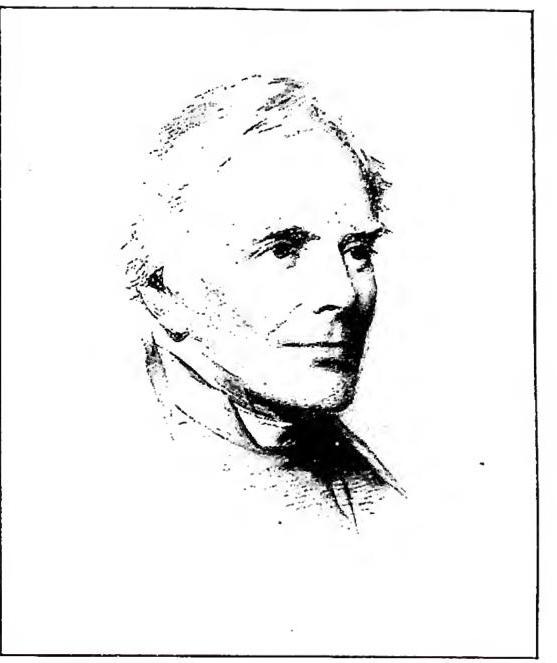
**KEBLE, John.** Theologian, preacher, and Anglican poet, b. at Fairford in Gloucestershire on 25 Apr. 1792, d. at Bournemouth on 29 Mar. 1866. After his early education under his father, an Anglican pastor, he won a scholarship to Corpus Christi College, Oxford. In 1811 he became a tutor at Oriel College and began to exercise a great intellectual influence within the Oxford academic milieu. Ordained deacon (1815) and then priest (1816) by the Anglican bishop of Oxford, he was sent to serve in small parishes and later as vicar at Southrop. In 1819 he began writing his hymns, published in 1827 under the title *The Christian Year*. The success was extraordinary; suffice it to say that in the year following his death the 109th edition appeared and that editions had reached 3,000 and 5,000 copies. In 1831 he became Professor of Poetry at Oxford. On 14 July 1833, in St. Mary’s, Oxford, he delivered the famous sermon on “National Apostasy”; twenty-four years later he could write to Newman: “I have always regarded and celebrated that day as the starting point of the religious movement.” In fact, Keble was always considered by Newman as “the true initiator of the Oxford Movement.” His collaboration with the famous *Tracts for the Times* was intense: he authored nos. 4, 12, 52, 54, 57, 60, and 89. When, in 1841, the famous Tract 90 appeared, Keble confessed to having read and approved II. On 9 Mar. 1836 he accepted the benefice of Hursley, which had become vacant, and shortly thereafter published the works of Hooker. His reputation as a spiritual director then grew day by day. In 1838, in collaboration with Newman and Pusey, he began work on the publication of the series of volumes entitled *The Library of the Fathers*. Newman’s conversion in 1845 greatly disturbed him; yet he does not seem ever to have considered abandoning, as his illustrious friend did, the Anglican Church for which, on the other hand, he had worked so much.
Keble’s works, apart from those already mentioned, are as follows: *Catholic Subscription to the XXXIX Articles, considered in reference to Tract XC* (printed in 1865 with a new edition of Tract XC); *The Psalter, or Psalms of David in English verse, by a Member of the University of Oxford, adapted for the most part to Tunes in common use* (1839); *De poeticae vi medica praelectiones Oxonii habitae annis 1832-41* (1841); *Lyra Innocentium* (1846); (courtesy of G. de Bivort de la Saude)
**KEBLE, John – Portrait.** After a chalk drawing of 1863. Reproduced by permission of the National Portrait Gallery, London.
*Academic and occasional sermons* (1847); *Pastoral tracts on the Gorham question* (1850); *An argument against repealing the laws which treat the nuptial bond as indissoluble* (1857); *The life of Thomas, bishop of Sodor and Man* (1863); *A litany of our Lord’s warnings* (1864). Posthumous publications: *Sermons occasional and parochial* (1867); *Village sermons on the Baptismal service* (1868); *Sermons for the Christian Year* (11 vols., 1875–80); *Outlines of the instructions or meditations for the Church seasons* (1880); *Miscellaneous Poems* (1869); 45 hymns in *Lyra Apostolica*; *Letters of spiritual counsel and guidance* (1870); *Occasional papers and reviews*, with a preface by Pusey (1877); *Studia Sacra* (1877).
Giacomo de Bivort de la Saude
---
**KEETMANSHOOP, Apostolic Vicariate of.** The territory of this vicariate was part of German South-West Africa, which after the First World War (17 Dec. 1920) was placed under mandate to the Union of South Africa. In 1888 the Sacred Congregation for the Propagation of the Faith entrusted it to the care of the Apostolic Vicariate of the Orange River, now Keimoes. In 1898 the first mission was established at Rietfontein, followed by those at Warmbad (1906) and Gibeon (1907). On 7 July 1909 the territory was detached from the Apostolic Vicariate of the Orange River and erected as the Apostolic Prefecture of Great Namaqualand. On 2 June 1913 the boundaries were adjusted with the Apostolic Prefecture of Lower Cimbebasia, now the Apostolic Vicariate of Windhoek.
The First World War completely destroyed the work accomplished up to that time, and moreover the opposition of Protestants allowed the resumption of apostolic work only after 1922. On 14 July 1930 it was elevated to a vicariate, and on 13 Jan. 1949 its name was changed to that of Keetmanshoop. The terrain, owing to the scarcity of rainfall, is very poor and has few means of communication. The indigenous population belongs predominantly to the Nama or Ovatue, Bastards, Dama or Damara, and Herero tribes. If they are not Protestants, they do not profess any true religion but follow only superstitious customs and usages. The most widely used languages are Afrikaans and Nama.
It has an area of 284,102 sq. km with a population of about 56,000 inhabitants, of whom: Catholics 8,400, catechumens 320, Protestants about 33,000, Jews 300, pagans about 13,000. It is entrusted to the Fathers of the Congregation of the Oblates of St. Francis de Sales. There are 15 missionaries, 4 brothers, 61 sisters, 16 catechists, almost-parishes 3, primary stations 18, secondary stations 8, chapels 18. There are 2 hospitals with 36 beds, 14 dispensaries, 15 orphanages with 30 boys, 13 elementary schools with 762 pupils, 10 middle schools with 598 pupils. Catholic Action is in the process of development.

In the western part of the vicariate lies the oldest mission in north-western Canada, that of Île-à-la-Crosse, founded in 1846 by Fr. Alexandre-A. Taché (1823–94), Abbot Flèche, two future bishops, who devoted all their energies to the conversion of the Métis, Cree, Montagnais, and Canadian trappers. The eastern part, however, was completely abandoned until the erection of the vicariate because of the hostility shown by agents of the Hudson’s Bay Company, who did not wish any religion other than Protestantism to be preached. As the power of that Company gradually declined, the Oblates of Mary Immaculate, to whom the mission was entrusted, were able to found at Chesterfield Inlet the first mission station, and within a few years administered the first baptisms, to which others were later added upon the arrival of the first Apostolic Vicar (1912). Progress was steady, and today, out of a population of 29,305 inhabitants, there are 10,000 Catholics grouped in 27 primary and 26 secondary stations, each with its own church or chapel. The OMI Fathers number 41, assisted by 30 brothers and 130 sisters. Charitable works are distributed as follows: 3 hospitals with 185 beds, 2 orphanages with 154 places, and 6 pharmacies with an average of 3,500 consultations annually. Apostolic work is arduous because of the vast extent of the territory (550,000 sq. km), the harsh climate, and the intense Protestant propaganda; yet the zeal of the missionaries continues to win new converts to the Catholic faith.
---
**el-KEF: V. SICCA VENERIA.**