
PUSEY, EDWARD BOUVERIE, so called. — Anglican theologian, born at P. (Berkshire, southwest of Oxford) on 12 August 1800, died at the priory of Ascot (Oxford) on 16 September 1882. The second son of Giacomo Bouverie, a descendant of the ancient Huguenot family called Bouverie, in 1819 he entered Christ Church College, Oxford; in 1824 he was elected a fellow of Oriel College, where he Newman (v.) Keble (v.). From 1825 to 1827, at the wish of Bishop Lloyd, he attended the Universities of Göttingen, Berlin, and Bonn, where he heard Ewald, Tholuck, Schleiermacher, and Eichhorn; on his return to Oxford, he devoted himself to the Oriental languages. In 1828 he married Maria Barber. His work Enquiry into the probable causes of rationalistic character lately predominant in the theology of Germany (2 vols., London 1828) earned him appointment as Regius Professor of Hebrew and canon of Christ Church.
It was toward the end of 1834 that P. explicitly entered into relationship with the Oxford movement (v.) through his Scriptural views of Holy Baptism (Tracts of the Times, nos. 67–69, published in 1835). These tracts, owing to their erudition, acquired great authority and were, as Church put it, the heavy artillery on the battlefield. It was at this time that, together with Keble, Newman, and Marriott, he published A library of the Fathers of the Holy Catholic Church, anterior to the division of the East and West, translated by members of the English Church (51 vols., Oxford 1838–85).
Beginning in 1840, the Oxford movement was called Puseyism, to indicate that P. was its guiding spirit. In 1843, after a sermon on the Eucharist, P. was denounced to the vice-chancellor as a supporter of doctrines that were excessively Roman and was therefore suspended for two years from the right to preach within the University. The measure moved all Oxford; P.’s authority increased.
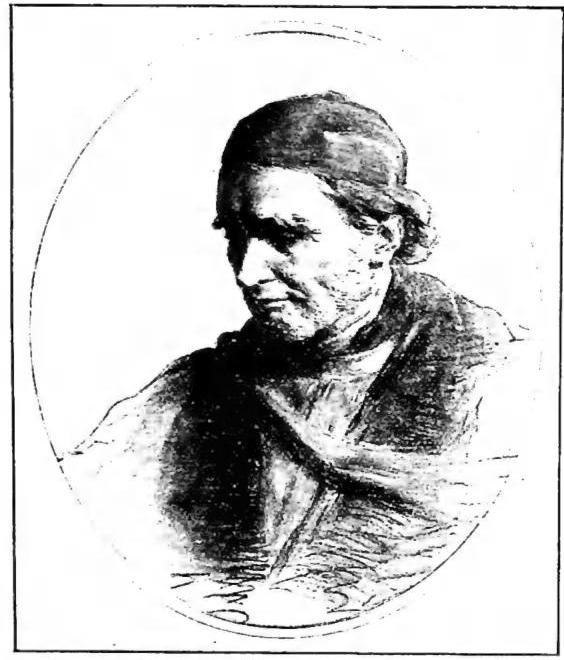
From 1843 onward P. devoted himself to restoring the interior life among his fellow believers; he also sought to restore religious life at the very heart of Anglicanism, assisted by Miss Sellon, setting an example of a spirit of charity, industriousness, and penance, which showed through despite his efforts to keep them concealed.
Union with the Church of Rome was one of the last great concerns of his life. In 1865 a writing of his appeared entitled Eirenicon. Newman himself replied to his friend and showed him the illogicality of his position. On the Continent, however, interest was taken in P.’s effort; Dupanloup defended the unionist tendency at the First Vatican Council. In 1869, P., his heart filled with hope, published a second Eirenicon and a third in 1870. The definitions of the First Vatican Council, presented to the Anglicans in an exaggerated and inaccurate manner, caused P. to abandon any intention of union. He later wrote: « The Vatican Council was the greatest sorrow of my long life ».
A list of P.’s works was published by Madan (Falconer) in A bibliographical list of the printed works of dr. P. (1897). In addition to those already mentioned, the most important are: The doctrine of the Real Presence as contained in the Fathers (Oxford 1855); The Real Presence... the doctrine of the English Church (there 1857); The minor prophets with commentary (there 1860; 2nd ed. London 1906); The councils of the Church (Oxford 1857); Daniel the prophet (there 1864); On the clause « and the Son » (there 1876); Habitual Confession not discouraged (there 1878); What is the Faith as to Everlasting Punishment? (there 1880). He also wrote numerous sermons: Parochial sermons (4 vols., there 1832–50); University sermons (3 vols., there 1864–79); Lenten sermons (there 1858–74).
London 1893–97; G. W. E. Russell, Dr. P., there 1913 (v. BIBLICA. di OXFORD, movimento di). Giacomo de Bivort de la Saudée