
WISEMAN, NICHOLAS PATRICK. — Cardinal and apologist, b. on 2 August 1802 in Seville, d. on 15 February 1865 in Westminster.
Of an English and Irish family that had emigrated to Spain many years earlier, he was orphaned of his father at the age of four and was taken by his mother to Waterford (in southern Ireland). He entered (1810) the Catholic College of Ushaw (near Durham), where he was a favorite pupil of the distinguished historian J. LINGARD, JOHN (v.). A student at the English College in Rome from its reopening (1818), he obtained there, with brilliant success, a degree in theology (1824), and, three years after his ordination (received on 10 March 1825), was appointed its rector by Leo XII. In 1828 he was appointed to the chair of Oriental languages at the Sapienza, which he made famous through the Horae syriacae seu commentationes et anecdotes ad res vel litteras syriacae spectantia (2 vols., Rome 1848).
An open spirit, sensitive to all the problems of religious culture, he engaged in an intense and highly esteemed apologetic activity. During Lent of 1835, in the salon of Cardinal Weld, he delivered the important Lectures on the connection between Science and Revealed Religion (London 1836, also in Migne, Démonstrations évangéliques, XVI, cols. 1843–53). Particularly noteworthy for their philological and theological erudition were the Lectures on the real presence of Jesus Christ in the Blessed Eucharist (London 1836); he also treated various subjects (St. Peter’s coming to Rome, the Johannine comma, the parables and miracles of Jesus, the Anglican Church, Boniface VIII, etc.), which subsequently
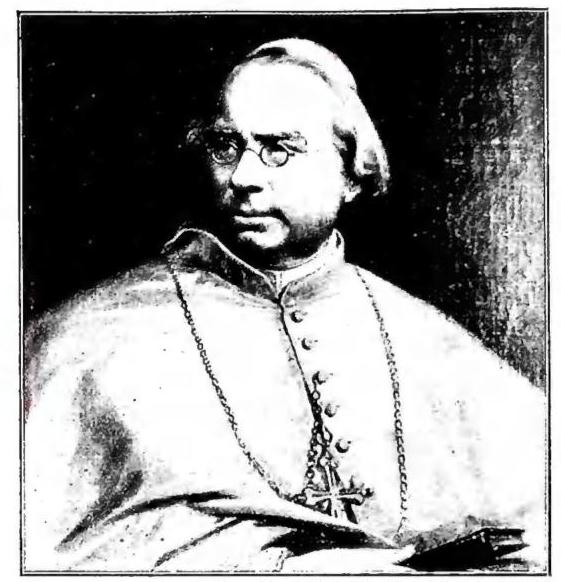
As rector of the English College, in 1830 he received the last son of Lord Spencer, who had converted; from this noble spirit he received the first invitation to devote himself exclusively to the conversion of England, which determined his future. In 1833 Froude (v.), who were on the eve of the Oxford movement (v.). Lacordaire (v.), Montalembert (v.), ROSMINIANI (v.), Döllinger (v.), he harmonized the most varied tendencies of culture, which he knew how to assess and bend to the needs of his apologetics. He was now ready for the work that Providence had reserved for him: on 8 June 1840 Cardinal Fransoni, prefect of the Congregation of Propaganda Fide, consecrated him titular bishop of Melipotamus, as coadjutor to Bishop Walsh, apostolic vicar of the Midland district, whom he succeeded in 1849 after Walsh had become apostolic vicar of the London district. During the decade 1840–50, difficult but decisive for Catholicism in England, W., guided by the ideal of raising the Church from the state of minority into which centuries of persecution had plunged it, endured conflicts and overcame difficulties arising from timid Catholics and Anglicans suspicious of “Roman” advances; he opened new churches, summoned religious congregations, organized public manifestations of Catholic worship, looked with sympathy upon the Oxford movement and welcomed its first converts with joy and patriarchal simplicity, and sent Newman to Rome, where he gave extensive support to his Oratorian foundation in Birmingham.
As a result of his accurate information (1857), Pius IX restored the Catholic hierarchy in England on 29 September 1850, with W. as archbishop of Westminster and cardinal
(30 September 1850), and he found himself obliged to confront Anglican fury against the “papal aggression.” The English world, from the Crown to Parliament, from the episcopate to the people, displayed its irreducible aversion to Catholicism. Returning from Rome, W., informed of the English agitation, and scorning human prudence, re-entered London on 11 November 1850 and three days later published the pamphlet Appeal to the reason and good feeling of the English People, in which he appealed to the traditional common sense and fairness of the English, demonstrating that the Pope’s act remained perfectly within the bounds of legality. The pamphlet, reproduced in the principal newspapers, enjoyed an extremely wide circulation and contributed effectively to restoring calm.
The fifteen years of his archiepiscopal administration were not easy: the tacit opposition of Catholics of the old school never slackened, culminating in the unfortunate episode of 1862, which led to the replacement of Bishop Errington, coadjutor cum iure successionis, Manning (v.). Although W.’s activity in the internal life of the Church was expressed above all in the provincial Councils of Oscott, it nevertheless had wide resonance throughout the country through his religious-apologetical conferences and numerous, timely articles, and also through the novel of worldwide fame, Fabiola (1854).
W. remains in history as the bishop who initiated the “second spring” of the Church in England.