
RABBINO. — A title belonging to the doctors of Jewish law: rabh, “master”; rabbî, “my master.” Rabbân was the title given to a highly eminent master; the same title of rabbî was originally reserved exclusively for heads of schools. Among the Sephardim, the r. is called ḥâkhâm, “wise man.” The Syriac translation of the New Testament renders rabbî as “archisynagogue,” the person entrusted with divine worship. The r.’s principal task is teaching and preaching; he also had the power to decide religious and sometimes civil questions, a task generally reserved for a specific official, called dajjân, “judge.” This prerogative ceased when the civil authorities assumed for themselves every decision-making power, including with respect to the Jews.
The r. originated within Pharisaism. In the Mishnaic tractate ’Abâth, 1, 1, the r. of the first period after Christ, down to Jôhânân ben Zakkaj, are linked through an unbroken tradition to Moses. The r. was not remunerated for his teaching; for this reason he practiced a profession, to which he generally devoted one third of the day. R. Gamaliel in ’Abâth, 2, 2 explicitly exhorts those who devote themselves to the study of the Law to work. The r. of our times is a layman, without hierarchical dignity. In former times, however, the title of r. was conferred through the sêmikhâh, the laying on of hands, a ceremony of a religious character. In A.D. 135 the Romans prohibited this ceremony and made R. Jêhûdhâh ben Babâ' pay with his life for having violated their order. About a century later, at the time of Judah “the prince,” who was on good terms with the Romans, the sêmikhâh was permitted once again, but Judah himself restricted it to Palestine and to scholars who promised not to leave II.
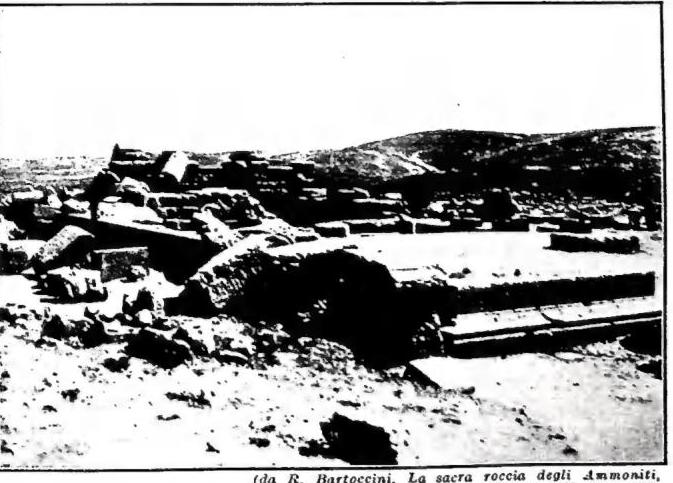
(from R. Bartoccini, La sacra roccia degli Ammoniti, Rome 1933, plate III)

(from G. d'Albenas, Les portraits de R., Montpellier 1880, p. 12) RABELAIS, FRANÇOIS - Portrait preserved in the Faculty of Medicine of Montpellier.
in Berlin, in 1872, the «Lehranstalt für die Wissenschaft
des Judentums» and, in 1873, the rabbinical seminary. Other
institutions of this kind subsequently followed in America.