
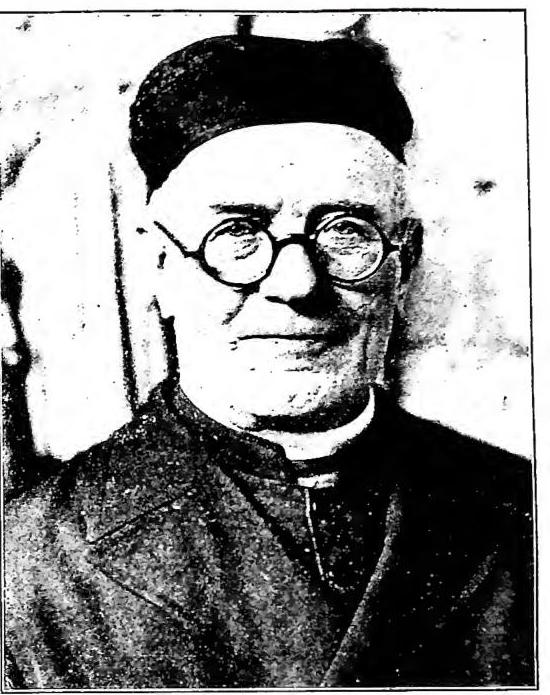
KIRSCH, JOHAN PETER. – Luxembourg prelate, archaeologist, and historian, born in Dippach on 3 November 1861 and died in Rome on 4 February 1941. He studied in Luxembourg, where he was ordained a priest on 25 August 1884; on 2 November of the same year he came to Rome, to the Camposanto teutonico, in order to specialize in Christian archaeology and ecclesiastical history. He enjoyed the friendship of G. B. De Rossi and A. De Waal and attended the School of Palaeography, Diplomatics, and Archival Studies established in 1885 at the Vatican Archives, receiving from Cardinal G. Hergenröther the diploma of palaeographer-archivist, the first ever awarded (1887).
He was the first director and organizer of the Historical Institute founded in Rome by the Görres-Gesellschaft in
Esordì la sua carriera scientifica con ricerche archivistiche sulla finanza pontificia dei secc. XIII e XV e sui redditi del Collegio cardinalizio dei secc. XIII e XIV. Il frutto delle sue pazienti e dotte investigazioni su questo argomento, soprattutto nell'Archivio Vaticano, è consegnato nei seguenti studi: Die päpstlichen Kollektorien in Deutschland während des XIV. Jahrhunderts (Paderborn 1894); Die Finanzverwaltung des Kardinalkollegiums im XIII. u. XIV. Jahrhundert (Münster in V. 1895); Die Rückkehr Urbans V. u. Gregors XI. von Avignon nach Rom (Paderborn 1898); L'administration des finances pontificales au XIVe siècle, in Revue d'hist. ecclés., 1 (1900), pp. 274-96; Die päpstlichen Annaten in Deutschland während des XIV. Jahrhunderts. I. Von Johann XXII. bis Innocenz VI. (Paderborn 1903, il secondo volume pronto per la stampa non è stato pubblicato); La fiscalité pontificale dans les diocèses de Lausanne, Genève et Sion, à la fin du XIIIe et au XIVe siècle, in Revue d'histoire ecclés. suisse, 2 (1908), pp. 31-44, 102-13, 190-204; Die Annatenbulle Klemens V. für England, Schottland u. Irland vom 1. Feb. 1906, in Römische Quartalschrift, 27 (1913), pp. 202-207.
Per quanto interessanti fossero i risultati acquisiti con le surricordate ricerche, il K. si sentiva attratto verso le antichità cristiane alle quali dedicò le sue doti di archeologo e di storico per un quarantennio. Rivolse il suo acume critico all'agiografia e alla liturgia romane: scrisse su s. Cecilia (Die heilige Cecilia in der römischen Kirche des Altertums, Paderborn 1910); sui ss. Quattro Coronati (Die Passio der hl. « Vier Gebrünten » in Rom, in Historisches Jahrbuch der Görengesellschaft, 38 [1917], pp. 72-97); sui martiri delle Vie Labicana, Aurelia e Cornelia (Die Märtyrer der Katakombe « ad duas Lauras » an der Via Labicana in Rom, in Ehrengabe zum 50. Geburtstag S.K.H. des Prinzen Johann Georg. V. Sachsen, Friburgo in Br. 1920, pp. 577-602; Le memorie dei martiri sulla Via Aurelia e Cornelia, in Miscellanea Ehre, II, Roma 1924, pp. 63-100; Die Grabstätte der « Felices du postifices et martyrer » an der Via Aurelia, in Römische Quartalschrift, 33 [1925], pp. 1-24); sulle feste dei ss. Pietro e Paolo (Le feste degli apostoli s. Pietro e s. Paolo nel Martirologio geronimiano, in Riv. di arch. cristiana, 2 [1925], pp. 54-83; Die beiden Apostelfeste Petri Stuhlfeier u. Pauli Bekehrung im Januar, in Jahrbuch f. Liturgiewissenschaft, 5 [1925], pp. 48-68); sulle Stazioni liturgiche romane (Origine e carattere primitivo delle Stazioni liturgiche di Roma, in Rendiconti Pont. Acc. rom. di archeol., 3 [1925], pp. 123-41; Die Stationskirchen des Missale Romanum, mit einer Untersuchung über Ursprung u. Entwicklung der liturgischen Stationsfeier, Friburgo in Br. 1926; L'origine des stations liturgiques du Missel Romain, in Ephemerides Lit., 41 [1927], pp. 137-50); sulle leggende e sul culto dei martiri romani (Römische Märtyrerlegenden u. altchristliche Kirchen Roms, in Festschrift Georg V. Hertling, Kempten 1913, pp. 49-64); L'origine del culto dei martiri della Chiesa romana, in La scuola cattolica, 6ª serie, 9 [1927], pp. 161-74; Die Grabstätten der römischen Märtyrer u. ihre Stellung im liturgischen Märtyrerkultus, in Römische Quartalschrift, 38 [1930], pp. 107-31; The veneration of Martyrs in the ancient Church, in The Clerus review, 3 [1932], pp. 249-313.
Però l'opera complessiva agiografica-liturgica più pregevole sui martiri romani è il Der stadtromische christliche Festkalender im Altertum (Münster in V. 1924), commento agiografico, archeologico e liturgico della Depositio martyrum, della Depositio episcoporum e delle notizie del Martirologio geronimiano relative ai martiri romani. Quest'opera ha fatto annoverare il K. fra i più profondi e sicuri conoscitori dell'intricato Martirologio geronimiano.
La sua attività di archeologo dopo alcuni saggi minori ebbe propriamente inizio con due articoli sul vecchio S. Pietro (Beiträge zur Baugeschichte der alten Peterskirche, e Der Altar des heiligen Kreuzes in der alten Peterskirche, in Römische Quartalschrift, 4 [1890], pp. 110-24, 273-77). Con il 1893 incominciò ad illustrare vari monumenti antichi del Cantone di Friburgo, tra i quali il cimitero burgundo di Fétigny (Le cimetière burgonde de Fétigny, Friburgo in Svizzera 1899) e a interessarsi degli scavi che misero in luce così preziosi monumenti a Roma (la « Memoria Apostolorum », 1916-23), in Svizzera (1923-25), nella Renania: Bonn e Xanten (1932, 1934) e a Dura Europa (1933, 1937). I suoi argomenti preferiti furono però gli edifici di culto paleocristiani (Die christlichen Kultusgebäude im Altertum, Colonia 1893; Die christlichen Kultusgebäude in der vorkonstantinischen Zeit, in Festschrift des deutschen Campo santo in Rom, Roma 1897, pp. 6-20; Der Ursprung der altchristlichen Basilika, in Revue Luxembourgeoise, 1 [1906], pp. 397-411; Die vorkonstantinischen christlichen Kultusgebäude im Lichte der neuesten Entdeckungen im Osten, in Römische Quartalschrift, 41 [1933], pp. 15-28; Die Entwicklung des Bautypus der altchristlichen römischen Basilika, ibid., 43 [1935], pp. 1-22; Il trappetto nella basilica cristiana antica, in Scritti in onore di B. Nogara, Città del Vaticano 1937, pp. 205-25; Gli edifici sacri cristiani nell'antichità, appendice a Fliche-Martin-Frutz, III, Torino 1939, pp. 537-63; Gli edifici sacri cristiani nei tre primi secoli della Chiesa, in Atti del IV Congresso internaz. di arch. crist., I, Città del Vaticano 1940, pp. 113-26). Di particolare interesse sono i suoi contributi sull'iconografia cristiana antica e l'esame di un gruppo di pitture
inedite del cimitero dei SS. Pietro e Marcellino (Sull'origine dei motivi iconografici nella pittura cimiteriale di Roma, in Riv. di arch. crist., 4 [1927], pp. 259-88; Pitture inedite di un arcosolio dei SS. Pietro e Marcellino e Un gruppo di cripte dipinte inedite del cimitero dei SS. Pietro e Marcellino, ibid., 7 [1930], pp. 31-46, 903-34; Cubicoli dipinti nel cimitero dei SS. Pietro e Marcellino sulla Via Labicana, ibid., 9 [1932], pp. 17-36; Un cubicolo con pitture profane inedite nella catacombe dei SS. Pietro e Marcellino, ibid., 10 [1933], pp. 263-85).
K. deserves the credit for having been the first to present a comprehensive critical study of the Roman Tituli. Although his theory concerning their origin may be revised, the fact remains that his contribution is the finest and most systematic work written on the subject (Die römischen Titelkirchen zur Zeit Konstantins des Grossen, in Konstantin der Grosse u. seine Zeit, Supplement XX to the Römische Quartalschrift, 1913, pp. 315–39; Die römischen Titelkirchen im Altertum, Paderborn 1918; I santuari domestici di martiri nei Titoli romani ed altri simili santuari nelle Chiese cristiane e nelle case private di fedeli, in Rendiconti Pont. Accad. rom. di archeol., 2 [1924], pp. 27–43; Origine e carattere degli antichi Titoli cristiani di Roma, in Atti del III Congresso nazionale di Studi romani, I, Bologna [1935], pp. 39–47). Particular mention should also be made of his studies on ancient Christian epigraphy (Die Acclamationen und Gebete der altchristlichen Grabinschriften, Cologne 1897; Die christliche Epigraphik und ihre Bedeutung für die kirchengeschichtliche Forschung, Freiburg im Breisgau 1898; Les acclamations des épitaphes chrétiennes de l'antiquité et les prières liturgiques pour les défunts, in Compte rendu du VIe Congrès scientifique international des catholiques tenu à Fribourg (Suïve), Freiburg 1898, pp. 113–22). He dealt with the ancient Christian cemeteries of Rome in general in two lucid volumes intended for a wider readership (Aus den römischen Katakomben, Paderborn 1926, and Le catacombe romane, Rome 1933).
In the field of positive theology, mention should be made of the work Die Lehre von der Gemeinschaft der Heiligen im christlichen Altertum. Eine dogmengeschichtliche Studie (Mainz 1900). For scholars of Christian antiquity, K. periodically provided, from 1893 to 1940, an exceptionally valuable aid in the form of the systematic bibliography on this subject, first presented in the Revue Hômit, 1 [1893], 2 [1894], 3 [1895], 4 [1896], then in the Römische Quartalschrift from 1900 to 1938, and especially in the Rivista di archeol. cristiana from 1929 to 1940.
K. took pleasure in disseminating the results achieved by sound criticism and by the investigations of scholars in his field of study, as is evident from his enthusiastic and productive collaboration with the great modern ecclesiastical encyclopedias (Realeucyklopädie der Christlichen Alterthümer of F. X. Kraus [4 articles], 1886; DACL, 1907, 1908 [4 articles]; DHG, 1909–24 [41 articles]; Cath. Enc., 1907–12 [258 articles]; LThK, 1930–38 [420 articles]). His articles are consistently distinguished by clarity, precision, and reliable information. He also had the opportunity to exercise his gifts as a historian in the revision of the 4th, 5th, and 6th editions of the Handbuch der allgemeinen Kirchengeschichte, in 4 volumes, by Cardinal G. Hergenröther, published under his direction in Freiburg im Breisgau in 1902–1909; 1911–16; 1924–25 (Italian translation of the 4th German edition by E. Rosa, 7 volumes, Florence 1904–23), which provided such valuable assistance to students of ecclesiastical history. After the 6th edition, K. thought it appropriate to present the public with a new Kirchengeschichte, in collaboration with A. Bigelmair, J. Greven, and A. Veit (5 volumes already published, 1930–50), reserving for himself the treatment of Christian antiquity (Die Kirche in der antiken griechisch-römischen Kulturwelt, Freiburg im Breisgau 1930).
A disciple and friend of the great historians and archaeologists of the late nineteenth and early twentieth centuries, Monsignor K., an utterly upright priest endowed with truly exceptional qualities of mind and heart, made a notable contribution to the renewal of advanced ecclesiastical studies, both through his scholarly production, only partially listed above, and by promoting numerous scholarly publications, especially at the Pontifical Institute of Christian Archaeology, but above all through his teaching, in which he revealed himself to be an authentic and generous master, always exceptionally balanced in his judgments. He gave himself entirely to his disciples with smiling kindness, encouraged them, and rejoiced in every success they achieved. Moving was the paternal embrace he gave a disciple after a brilliant thesis defense.