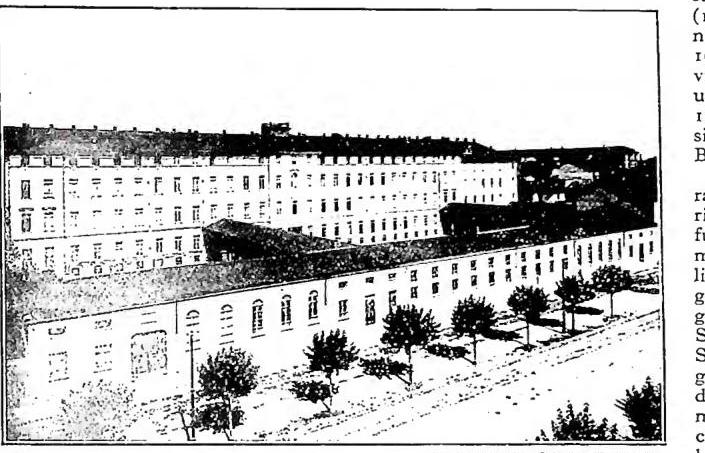
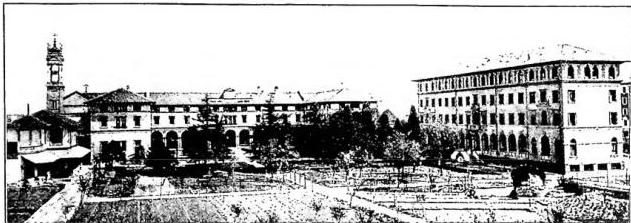
ISTITUTO MISSIONI CONSOLATA

### ISTITUTO MISSIONI CONSOLATA

In 1891, ALAMANNI (v.), nephew and continuer of the work and spirit of St. Giuseppe Cafasso, in response to the needs of numerous missionary vocations, particularly among the clergy of Piedmont, proposed to the Sacred Congregation of Propaganda Fide a plan for the establishment in Turin of a missionary institute. From Rome came encouragement for its implementation, but due to circumstances beyond Allamano’s control, the foundation of the I.M.C. had to be postponed until 1901. On 29 January of that year, after the collective approval of the foundation plan by the Piedmontese episcopate, which had already been granted on 9 September 1900, Cardinal Agostino Richelmy, Archbishop of Turin, issued the decree of erection of the Institute, appointing Allamano as its superior, a position he held until his death in 1926.

The members of the new Institute did not take religious vows but were bound by an oath to dedicate themselves to foreign missions for a specified period, after which they could return to their respective dioceses. In 1909, however, the Sacred Congregation of Religious, granting the decree of praise on 28 December, gave the Institute its current form as a religious congregation with simple vows. Thus constituted and with its exclusively missionary character, the Institute, by a decree of 8 January 1911 from the Sacred Consistorial Congregation, came under the jurisdiction of the Sacred Congregation of Propaganda Fide, which definitively approved it along with its Constitutions on 7 September 1923. These Constitutions were later modified by a decree of 17 January 1950 to adapt to the division of the Institute into delegations.

The first missionaries departed for British East Africa in 1902, establishing themselves around Mount Kenya under the jurisdiction of Monsignor Allgeyer, Vicar Apostolic of Northern Zanguebar. They were assisted in their apostolic work by the Vincentian Sisters of the Piccola Casa della Divina Provvidenza, later replaced by the Missionary Sisters of the Consolata, founded by Allamano in 1910. In 1905, the Sacred Congregation of Propaganda Fide detached the mission of Kenya from Zanguebar and entrusted it exclusively to the I.M.C., later elevating it to a vicariate apostolic in 1909. Subsequently, various other missions were entrusted to the I.M.C.: in 1913, the Apostolic Prefecture of Kaffa (later the Apostolic Vicariate of Gimma in 1937); in 1922, the Apostolic Prefecture of Iringa (now a vicariate apostolic); in 1924, the Apostolic Prefecture of Benadir (later the Apostolic Vicariate of Mogadiscio in 1927, later transferred to the Franciscan Fathers); in 1926, the Apostolic Prefecture of Meru (Kenya); in 1948, the *prelatura nullius* of Rio Branco (Brazil); and in 1951, the Apostolic Vicariate of Florencia (Colombia). The I.M.C. has also been present in Portuguese Mozambique since 1925 under the jurisdiction of the bishops of Lourenço Marques and Nampula, and since 1947 has sent groups of missionaries to assist bishops in the territories of Formosa in Argentina and Magdalena in Colombia.

The African missions generally require that strictly missionary activity be prepared and supported by extensive efforts to elevate the physical and social environment of the indigenous populations. For the Missionaries of the Consolata, this requirement became a constitutional characteristic of their existence (cf. C. Vanzin, *Nasce un missionario*, Parma 1943, p. 115). Following the directives of the Holy See, they combine apostolic work with intensive efforts at civilization (land reclamation, vocational training, schools). In line with this method and work program, and to make evangelization more effective, the Institute provides its members with theoretical and practical training in medicine, ethnology, anthropology, arts, and crafts.

Article illustration

In its first half-century of existence, the I.M.C., in addition to significant results in the field of apostolate—largely due to its strong spirit of unified action (notably, in the African missions, the foundation of seminaries and indigenous religious congregations)—has made a decisive contribution to the penetration and dissemination of the missionary idea in Italy, particularly in the dioceses of Piedmont, through widespread publications, its periodical, and other active forms of propaganda. To this end, the two associations founded by the I.M.C. in Italy and abroad are also directed: the *Unione Dame Missionarie della Consolata* (founded in 1923), with the specific purpose of providing for the cultural needs of mission churches, and the *Associazione Amici Missioni Consolata* (founded in 1947), a broad organization extending to every social class and condition of people, aimed at rallying the widest and most active interest around the missionary cause.

Among the most eminent figures of the I.M.C., Perlo (v.), first Vicar Apostolic of Kenya and first successor of Allamano, the following deserve mention: Gaudenzio Barlassina (b. 1880), who in 1913, as a merchant, accomplished the arduous and adventurous penetration into Kaffa, rapidly bringing the Apostolic Prefecture to unexpected development (cf. GIMMA, Apostolic Vicariate of), and later served as Superior General of the I.M.C. for two decades; Gabriele Perlo (1879–1948), first Vicar Apostolic of Mogadiscio; Francesco Cagliero (1875–1935), to whom is owed the reorganization of the Mission of Iringa after the First World War; Giuseppe Perrachon (1886–1944), Vicar Apostolic of Nyeri, known for his linguistic studies and the wise organization of schools in his vicariate; Giovanni Balbo (1887–1937), whose contributions to the natural sciences are appreciated, particularly the discovery of numerous new species of tropical flora (the genus *Jobalboa* of the family *Icacinaceae* is named after him); Giovanni Bisio (1903–47) and Domenico Fiorina (b. 1904), to whom is owed the broad expansion of the I.M.C. in Brazil over little more than a decade (1937–1948).

The General Curia is based in Turin, but the Institute is present not only in many dioceses of Italy but also in Portugal, Brazil, Argentina, Colombia, the United States, Canada, South America, and England. It is not divided into provinces but maintains a single general direction, though it has delegations erected by the Holy See according to a dual criterion of region and activity.

The official publication of the I.M.C. is the monthly periodical *Missioni Consolata*, founded by Allamano in collaboration with Canon G. Camisassa (original title: *La Consolata*) in 1899. The Institute now counts 440 priests, 102 lay coadjutors, 202 clerical students, and over 600 aspirants.

**

BIBL.:** In addition to the collection *Missioni Consolata*, rich in information, and the *Bollettino dell'I.M.C.* (official since 1939), L. Sales, *Il servo di Dio can. Giuseppe Allamano*, 3rd ed., Turin 1944; A. Saba, *Storia della Chiesa*, IV, ibid. 1943, pp. 450 ff.; Archivio della S. Congr. dei Religiosi, T. 54. For the scientific contributions of Fr. Balbo, see E. Chiovenda, *Raccolte botaniche fatte dai Missionari della Consolata nel Kenya*, Modena 1935; G. Cola, *Le Epatiche della regione del Kenya*, in *Memorie della R. Acc. delle Scienze di Torino*, 2nd ser., 65 (1941), pp. 1–11; F. Sappa and G. Piovano, *Le raccolte biologiche dei Missionari della Consolata nel Kenya e nel Tanganica*, in *Lavori di botanica*, 8 (1947), pp. 223–33, and F. Sappa, *ibid.*, 10 (1950), pp. 1–15.

---

### ISTITUTO PER LE OPERE DI RELIGIONE

Established by His Holiness Pius XII on 27 June 1942 in the Vatican City, for the purpose of safeguarding and administering capital and property transferred or entrusted to it and intended for works of religion and Christian piety.

Already Leo XIII, with the intention of safeguarding and administering the capital of pious foundations, had established on 1 Feb. 1887 a cardinalatial commission under the name of the Commission *ad pias causas*, and approved a particular regulation that remained in force until 1904, when Pius X, with a new regulation, gave the Commission *ad pias causas* the name of the Cardinalatial Commission for Religious Works. New changes and pressing administrative needs led H.H. Pius XII to erect the new Institute for Religious Works (*Istituto per le Opere di Religione*), with its own juridical personality, while preserving the purpose of the previous administration, which was thus absorbed by the Institute (cf. the chirograph of H.H. Pius XII, 27 June 1942, in AAS, 34 (1942), pp. 217-18; and 24 Jan. 1944, in AAS, 36 (1944), pp. 45-46). Celestino Testore

PONTIFICAL INSTITUTE OF THE HOLY APOSTLES PETER AND PAUL AND OF SS. AMBROSE AND CHARLES FOR FOREIGN MISSIONS — View — Milan

The Pontifical Institute for Foreign Missions of Milan, as it exists today, resulted from the union—effected in 1926—of the Institute for Foreign Missions of Milan, founded in 1850 at the wish of Pius IX and through the collective initiative of the bishops of the Lombard province, with the Seminary of the Holy Apostles Peter and Paul for Foreign Missions, founded in Rome in 1874 through the efforts of Fr. Pietro Avanzini (v.), founder of the *Acta Sanctae Sedis*.

In Milan the Institute was established with the character of a provincial institution, though entirely dependent on and at the disposal of the Holy See through the Congregation of Propaganda; it had a juridical status that was not religious but secular, almost as an implementation of the apostolic mandate inherent in episcopal dignity; it took the form, however, of a society bound by a permanent bond of unity and activity, expressed first by the “formal promise” and, from 1924, by an oath.

The Institute had an initial mission, entrusted by the Fathers of the Somascan Order, in Micronesia and Melanesia (1852-55), and a second—though under the jurisdiction of a Spanish apostolic prefect—in Labuan and Borneo (1855-60). The first mission had to be abandoned due to the death of two members (one massacred, Fr. Mazzucconi [v.]) and the illness of all the others; the two missionaries of the second mission, withdrawn, were directed to the prefecture of Hong Kong (1858); other missionaries were then sent to India, to the vicariates of Hyderabad and Calcutta (1855). In the second decade of the Institute, these three centers—Hong Kong, Hyderabad, and Central Bengal (developed from Calcutta)—formed the first truly autonomous missions of the Institute, each with its own ecclesiastical superior. Shortly before 1870, two new centers were entrusted to the Milan Institute: one in Burma and one in Honan (China).

The beginnings, laborious and slow, saw more marked development in the first decades of this century.

In 1911 the Institute began opening houses for vocations among high school and college students: Monza, Genoa, a center for missionary vocations in southern Italy.

After the union of the Milan Institute with that of Rome, the sphere of the new Pontifical Institute’s apostolate expanded to include another province of China, Shensi, where the Roman Seminary had suffered martyrdom during the Boxer Rebellion (1900) CRESCENTE (v.), beatified by Pius XII on 18 Feb. 1951. In other regions, however, where the Fathers from Rome had been sent—Australia and America—there were no longer autonomous missionary units.

After the Ethiopian War of 1935-36, the Institute had an apostolic prefecture, that of Neghelli, which later ceased to exist due to subsequent events, while the Second World War, with its repercussions in the Far East, caused great harm to the Institute’s missions (7 missionaries killed by communists or straggling soldiers in China, 1941-42). China and India were largely closed, a good number of its members moved to Brazil and Portuguese Guinea, and the Institute opened procuratorial houses in England and the United States.

At present the Institute has the following missions: in China, Hong Kong (v.), Hanchung (v.), HINAYANA (v.), Weihwei (v.), Kaifeng (v.); in India, Bezwada (v.), Dinajpur (v.), HYDERABAD, DIOCESI DI (v.); in Burma, the apostolic vicariate of Toungoo (v.) and the prefecture of Keng Tung (v.); in Africa, the missions of Portuguese Guinea; in America, the *prelatura nullius* of Amapá and missions in Paraná, Manaus, and São Paulo.

The Institute today has 479 priests, about a thousand students, and some seventy brothers. Its missions serve 260,000 Catholics and 43,000 catechumens; 2,000 indigenous catechists are employed in the missions, along with 1,030 schoolteachers.

A particular merit of the Institute has been its intense missionary propaganda in Italy, beginning from its earliest years, through the dissemination of missionary literature (reports from Oceania’s missionaries) and, from 1872 onward, regularly with *Le Missioni Cattoliche*; in the first two decades of this century, the work was developed especially by Fr. Paolo Manna through numerous periodical and occasional publications. Even greater impetus was given to the missionary movement with the establishment of the Missionary Union of the Clergy (v.), which also made the first attempt in Italy at a cultural journal (*Rivista di Studi Missionari*, 1919-22).

Prominent figures in the Institute can be found only in the field of its proper missionary activity, given its specific character as a missionary institute. Among them at least the following should be noted: Salerio, Mazzucconi, Raimondi among the first, and Marietti, Parietti, Barbero among their immediate successors; then again Biffi, Tornatore, Volonteri, Scarella, Pozzoni, to say nothing of more recent figures. All were missionaries—many also bishops—who left indelible marks where they worked, and almost all were founders of new centers of Christian life. Some also found time for cartographic work, such as Salerio, Reina, and Volonteri; or for literature in indigenous languages, like Fr. Goffredo Conti, who created the first indigenous Christian literature for the Kachin tribes of Burma, who had no writing; Marietti, who wrote in excellent Bengali a sacred history, an ecclesiastical history, polemical works against Protestants, and other minor works; Msgr. Taveggia, author of a good Bengali version of the New Testament. Good monographs on indigenous peoples were written by Salerio, Rocca, Macchi, Manna, Pezzoni, Monfrini, and others.

BIBL.: G. Brambilla, *Il Pontificio Istituto delle Missioni Estere e le sue missioni*, I, Milano 1940; *L’Istituto delle Missioni Estere di Milano e la sua opera di evangelizzazione* (single issue), ibid. 1945; *Le due forze* (single issue), ibid. 1950; G. B. Tragella, *Le Missioni Estere di Milano nel quadro degli avvenimenti contemporanei*, I, ibid. 1950.

PONTIFICAL INSTITUTE OF THE HOLY APOSTLES — ISTRIA

SPANISH INSTITUTE OF ST. FRANCIS XAVIER FOR FOREIGN MISSIONS

In 1899 Fr. Gerardo Villota founded in Burgos the *Colegio de Ultramar* with the aim of assisting the dioceses of Latin America and the missions. In 1919 Benedict XV transformed it into a *Seminario de Misiones*, which was inaugurated the following year.

In 1948 the Sacred Congregation of Propaganda assigned to it the above-mentioned name so that it might become a national institute for missions. At present it has the apostolic prefecture of San Jorge (Colombia), the apostolic vicariate of Los Ríos (Ecuador), and two other missions in Chiriquí (Panama) and in the apostolic vicariate of Bulawayo (Southern Rhodesia). In October 1949 a new building for 300 students was inaugurated. Since 1948 it has published a missionary journal, *Misiones Extranjeras*, and organizes weeks and courses on missionary culture.

BIBL.: C. Ruiz Izquierdo, *Temple de Apostol Fundador Villota. Del Colegio Eclesiástico de Ultramar y Propaganda Fide (1899) al Seminario Español de Misiones Extranjeras (1920)*, Burgos 1947.