
FIESOLE, DIOCESI di. — City of Tuscany, a suffragan of Florence since 1420. Its territory is varied, extensive, and articulated; it extends over part of the valleys of the Sieve, in its lower course, of the Arno, in its middle course, and of the Pesa; it reaches and crosses the passes of the Tuscan-Romagna Apennines, embraces part of the Casentino, and insinuates itself among the slopes of Chianti. In former times it was even more extensive; in 1502 some communities of Chianti and Valdelsa were separated from F. and assigned to the recently established diocese of Colle Valdelsa. Within its boundaries the diocese borders those of Florence, Modigliana, S. Sepolcro, Arezzo, Siena, and Colle Valdelsa. It has a population of 180,000 inhabitants, distributed among 256 parishes and 20 rural vicariates. Priests: 275. Religious houses: 19 male and 61 female. It possesses two seminaries: the major seminary, founded in F. in 1637 by Bishop Lorenzo Della Robbia. It was considerably enlarged through the efforts of Bishops F. M. Ginori, R. Mancini, and G. B. Parretti. The minor seminary was opened at Strada in 1828–29 by Bishop G. B. Parretti. The bishop bears the title of Count of Turicchi. Patron of the city and diocese: St. Romolo, bishop and martyr.
HISTORICAL NOTES. — 1. Civil history. — F. arose on the crescent-shaped hill, the strong acropolis of the Etruscans, overlooking the Arno and watching over the roads by which the Etruscan cities on this side of the Apennines communicated with those beyond them. It is difficult to determine the period of its origin; it perhaps dates back to the eighth or ninth century B.C. Yet it cannot be excluded that an ancient Italic municipium already existed on the site where F. later arose. It is equally difficult to establish what role it played in the confederation of the ancient cities of Etruria. The earliest mention of F. is found in writers of the Greco-Roman period: Φαίπουλαι in Dionysius of Halicarnassus, Φαπόλα in Polybius. Its name is first recalled at the time of the Gauls’ arrival in Italy; it contributed to the resistance of the Roman armies against Hannibal, who, after invading central Italy following the Ticino and the Trebbia, also advanced in the direction of F. At Cannae the troops of Fiesole, fighting alongside the Roman forces, withstood the Carthaginian assault; Silius Italicus recalls them in the Punica as skilled in haruspicy. Sulla sent a military colony to F.; when the conspiracy of Catiline broke out, the colonists rose against the Senate and welcomed the fugitive Catiline, who became their leader. Meanwhile, however, as Florence arose on the plain, the fortunes of F. were inevitably turning toward decline. Nevertheless, the name of F. reappears when Radagaisus, with his Goths, attempted the enterprise against Florence
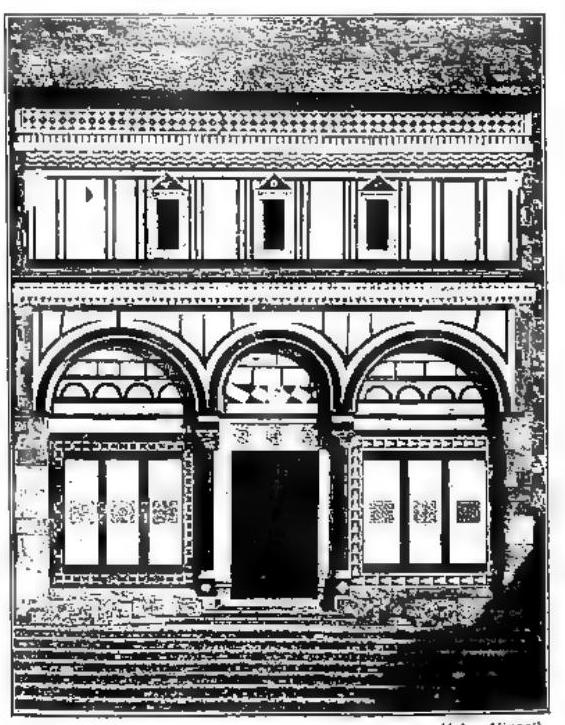
(photo Alizeri)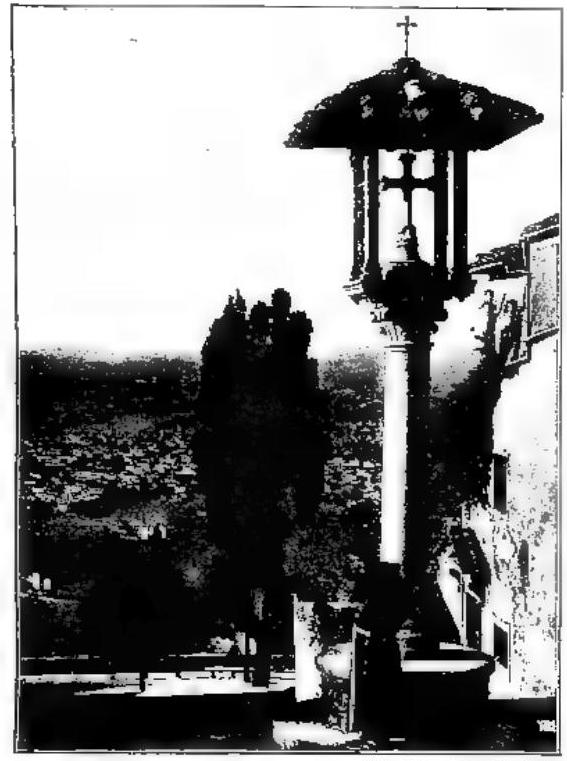
2. Religious history
Information concerning the spread of Christianity in F. is scant and uncertain, as is that concerning the other Tuscan dioceses. F. soon had its own bishop, notwithstanding the proximity of Florence; this was perhaps due to the autonomy of its civil institutions and to the extent of the territory over which it exercised jurisdiction. This also accounts for the breadth of the diocesan district, which still distinguishes it, notwithstanding the eccentric location of its episcopal see. A bishop of Fiesole is mentioned in a letter of Pope Gelasius. A bishop of Fiesole, named Rusticus, was present at the Council of Constantinople under Justinian. In the sixth century, the poverty of the Church of Fiesole was notorious; its possessions suffered spoliation and plunder during Lombard supremacy. Thus Bishop Alessandro, returning from the court of Autari, where he had defended the rights of his Church, was drowned in the Reno by the usurpers. It was then that the basilica of S. Pietro in Gerusalemme, already built upon the ruins of a pagan temple, received his remains and took the title of S. Alessandro. That this poverty continued thereafter as well is demonstrated by a petition from the priest Agrippino and the deacon Servando on behalf of their Church, which Pope Gregory the Great recommended to Venantius, bishop of Luni. Another bishop, Gesulfo, signed the acts of a Roman Council under Eugenius II (824–827). A learned and famous bishop was the Irishman Donatus, venerated as a saint, not only because he obtained recognition of ecclesiastical immunities even before Florence, attended in Rome the coronation of Lothair II and the Roman Council under Leo IV and the Lateran Council under Nicholas V, but also because, during the revival of learning after the capitulary of Olona, he taught his disciples grammata et schemata metrorum. Later, Teuzo, the primicerius, became famous as a teacher of grammar. It is reported that in the tenth century Bishop Zanobi donated certain possessions to the clergy of the cathedral and of S. Alessandro, on condition that they adopt a common life, and provided numerous priests for vacant ministries in his diocese; while an earlier predecessor and namesake had obtained for his benefit lands situated between Florence and F. Without doubt, however, the bishop who marks an important moment in the history of Fiesole is Jacopo Bavaro, because from the ancient cathedral situated where the Fiesolan Badia now stands, he transferred the relics of the patron saint, s. Romolo, to the new cathedral (eleventh century), which he himself had built in the upper part of the hill, since the old one now stood on the outskirts of the city, almost at the foot of the hill. And the new Duomo, thus established, became and always remained the centre and heart of civic life. Meanwhile, the wooded slopes of the diocese were being populated by illustrious monasteries, in which monastic life began and flourished; the abbeys of Vallombrosa, Passignano—which even today houses the body of s. Giovanni Gualberto—Coltibono, Montescalari, S. Godenzo in Alpe, and the Fiesolan Badia arose. The b. Carlo di Montegranello adopted a penitential life near the summit of the Fiesolan hill, giving rise to the religious order that came to be called that of s. Girolamo.In the Middle Ages, the Fiesolan clergy exercised considerable influence over municipal life. The podestà swore fidelity to the statutes in the church of S. Maria Primerana; the clergy, in turn, on Easter Monday drew lots for the gonfalonier from among the city’s prominent families. The bishop exercised feudal jurisdiction over many lands, including the county of Turicchi, which Paschal II confirmed to him by a bull, and whose confirmation was later also issued by Honorius III; this occurred amid frequent jurisdictional conflicts, first with the Florentine Republic and then with the Grand Duchy, until the bishop’s feudal jurisdiction was extinguished when Tuscany was incorporated into the French Empire. In the fourteenth century, the diocese was distinguished by the episcopal ministry of s. Andrea Corsini, during whose episcopate the cathedral was enlarged. By then, however, the bishops of Fiesole had abandoned the city of their see. As early as 1228, the Florentine Republic had ceded to them, with full jurisdiction, the church of S. Maria in Campo, located in the centre of Florence, so that they might reside there. From that date, this church has also constituted an oasis of Fiesolan ecclesiastical jurisdiction within Florentine diocesan territory. This also accounts for the many names of Florentine patricians in the roll of the bishops of Fiesole. In 1420
FIESOLE - FIGLI DELLA B. M. V. I. DI LUÇON
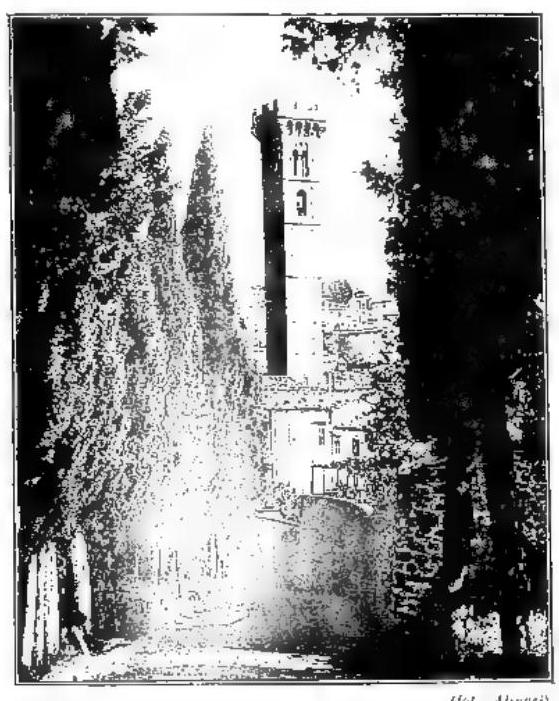
(fot. Alivati)
3. Personaggi illustri
Oltre i santi già ricordati si fa menzione dei vescovi: Braccio Martelli, che partecipò al Concilio di Trento e Francesco Cattani da Diacceto, già console dell'Accademia fiorentina, autore di opere agiografiche e teologiche e traduttore del De officiis di s. Ambrogio. Anche il vescovo Francesco M. Ginori fu noto per la sua cultura ed accademico della Crusca. Ma più noto ancora fu il canonico Angelo M. Bandini, nato a deceduto in diocesi fiesolana. Egli fu bibliotecario della Marucelliana a della Laurenziana in Firenze; oltre eruditissimi studi sui classici greci, fra i quali Callimaco e Nicandro, compose il famoso catalogo dei manoscritti greci e latini della Laurenziana, anche oggi apprezzatissimo. Morendo legò al Seminario di F. la sua ricca biblioteca. - Vedi tav. LXXXIII.Pontificia, III, Berlino 1908, pp. 73-80; E. Gelli, F., gli scavi ed il Museo civico, Milano 1914; Lanzoni, pp. 582-84; B. Quilici, La chiesa di Firenze nell'alto medioevo, Firenze 1918, p. 15 e passim; U. Dorini, La villa di Busini, ivi 1940, p. 1 e passim; M. Lombardi, Fiesolae, Istituto di studi romani 1941; M. Giusti e P. Guidi, Rationes decimorum Italiae nei secc. XIII e XIV, Città del Vaticano 1942, pp. 89-138. Emilio Sanesi