
BYRON, GEORGE GORDON. – English poet, born on 22 January 1788 in London, died on 19 April 1824 at Missolonghi, in Greece, where he had gone to fight for the liberation of that people.
Noble and wealthy, he embodied the figure of the “dandy,” then in vogue. The adventurous itinerary across all of Europe was transfigured in his imagination, resulting in Childe Harold’s Pilgrimage (1812-16-18), which essentially became a pictorial diary dominated by its hero, Aroldo, gloomy and disdainful: “a weak son of doubt and death, who rests his hope on fragile reeds” (Childe Harold’s Pilgr., II, st. 3).
This hero was repeated in the verse romances (1813-16): The Giaour, The Bride of Abydos, The Corsair, Lara, The Siege of Corint, Parisina. Manfred, a reflection of one of his turbid passions, dates from 1817; and Cain, the apocalyptic work published in 1821 during his stay in Italy, together with the other three dramas: Marin Faliero, Sardanapalus, The Tico Foscari. Rebelling against a punishment he does not feel to be his own, Cain, having abandoned God, gives himself over to Lucifer, in the vain hope of finding in him an answer to his anguished questions; and when he sees Abel increasingly bound to that God whom he hates, he kills him and, in despair, flees into exile. The work is imbued with the old myth of the God of evil.
In 1819 he began publishing his masterpiece, Don Juan, an epic satire. In this poem, in which comedy, tragedy, voluptuousness, and cynicism alternate, the protagonist’s adventures in Spain, Greece, and Russia are recounted, until he moves to England, where the poet uses him to satirize the customs and society of the time.
Rebellious against every morality, every law or social convention, yet incapable of proposing new values, B. made his existence a rebellion for its own sake, marked by the need for fatality.
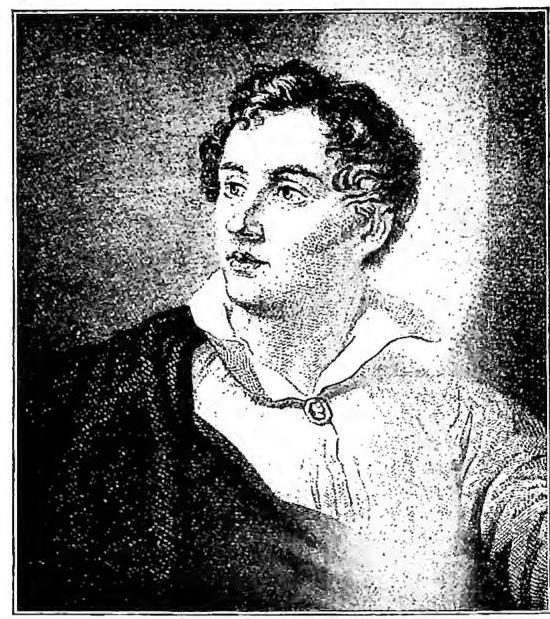
BYRON, GEORGE GORDON. — Portrait by F. Sieurac, engraved by J. T. Wedgwood.
of the priest who absolves the dying Ugo from his sins and restores his calm, and, in Don Juan (c. XV), the pure profile of a Catholic maiden; just as he succeeded in evoking, in the same poem (III, stanzas 101–103), the mystical suggestion of the Ave Maria, later echoed by Carducci. But these are isolated passages; nor should his declared “propensity toward Catholic doctrine” be regarded as anything more than a momentary aesthetic attitude (Th. Moore, Letters and journals of L. B. with notices of his life, 2 vols., New York 1830, letters 283, 482).