CORELLI, MARIA

CORELLI, Maria. - Scrittrice inglese, figlia adottiva di Ch. Mackay, n. a Bayswater il 1864, m. a Stradford-on-Avon nel 1924.

Article illustration

She wrote many works, including: A Romance of Two Worlds (1886); Barabbas (1893), a melodrama on the Passion of Christ; The Mighty Atom (1896), in which she protests against the religious education of children; The Master Christian (1900), an invective against the clergy and Churches, especially the Roman and Anglican: the Church should reform its creed on scientific bases and its ethics on socialist ones.

BIBL.: B. Vyer, Memoirs of M. C., London 1930; The Cambridge Bibliography of English Literature, ed. F. W. Bateson, III, New York 1941, p. 541.

---

COREA - Pagoda of Seoul (10th century A.D.).

Thus the formation of the native clergy progressed happily.

Until 1909 the missionaries of the Paris Foreign Missions Society were the only ones to evangelize Korea. In 1909 the Benedictines of St. Ottilien arrived, who established a normal and an industrial school in Seoul, and from 1920 onward also undertook the mission in northern Korea. In 1923 the Maryknoll missionaries arrived, and in 1933 those of St. Columban.

The Apostolic Vicariate of Korea was divided in 1911 into two vicariates: Seoul and Taiku, both entrusted to the Paris Foreign Missions Society. In 1920, northern Korea was detached from Seoul and entrusted to the Benedictines of St. Ottilien as the Apostolic Vicariate of Wonsan. For the Maryknoll missionaries, the Apostolic Prefecture of Hpyang-Yang was detached from Seoul in 1927, renamed Peng-Yang in 1929, and elevated to the Apostolic Vicariate of Heijō in 1939. In 1937, the Apostolic Prefecture of Kwoszu or Kōanju, detached from the Apostolic Vicariate of Seoul, was entrusted to the missionaries of St. Columban. In 1940, the Apostolic Vicariate of Wonsan was divided: the southern part remained with the Benedictines as an abbacy nullius of Tokugen or Tokwan, while the northern part passed as the Apostolic Vicariate of Kanto or Hancheung into the hands of the Korean clergy, to whom a part of the Apostolic Vicariate of Taiku had already been entrusted in 1937 as the Apostolic Prefecture of Zenshu or Chonju. In 1949 an Apostolic Delegation was established.

BIBL.: Ch. Dallet, Histoire de l'Église de Corée, 2 vols., Paris 1874; [Dalmen], Le Catholicisme en Corée. Son origine et ses progrès, Hong Kong 1924; Fl. Demange, Centenaire de l'ère-tion de la Corée en vicariat apostolique 1837-1937, in Revue d'histoire des missions, 8 (1931), pp. 387-432.

Giovanni Rommerskirchen

---

III. ART OF KOREA - Indebted to China, Korea was for many centuries tied to that artistic tradition, essentially centered on the currents of the T'ang dynasty (7th–10th centuries A.D.). It then became independent and developed original forms which later influenced Japanese art, largely derived from those influences.

The most significant constructions in Korea were the temples, many of the oldest dating to the 7th–8th centuries. Their characteristic forms are marked by a sumptuous yet graceful decorative style that distinguishes them from the Chinese models.

---

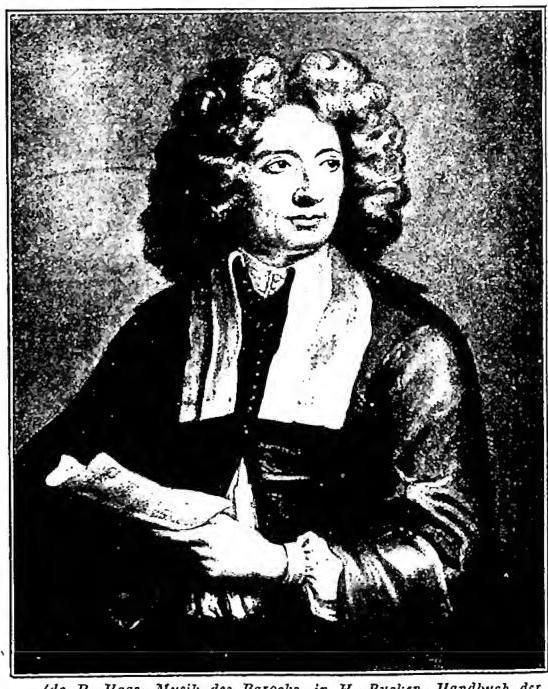
CORELLI, ARCANGELO - Portrait, Engraving by John Smith after H. Howard.
---

CORELLI MARIA - See COREPISCOPUS

---

COREPISCOPUS - The office of corepiscopus, held in 341 or perhaps between 330 and 332. While granting the corepiscopi in canon 8 the right to issue "letters of peace" or commendatory letters, canon 10 sternly warns them to remain within the limits of their authority: appointed by the bishop of the city, they must not, under penalty of deposition—even if they have received episcopal ordination—ordain priests or deacons without the prior permission of the bishop, but may only appoint within their jurisdiction readers, subdeacons, and exorcists. St. Basil was even more severe: in a letter to his corepiscopi (Letter LIV, To the Corepiscopi: PG 32, 400–401), he threatens to reduce to the lay state any inferior minister they had appointed without his consent. The final blow against the corepiscopi in the East was struck by canon 57 of the Council of Laodicea (between 347 and 381), which, ignoring the corepiscopi, prescribes that "periodic presbyters," a kind of missionary priests directly dependent on the bishop, be appointed in their place. The decline of the corepiscopi began early. Already at the Council of Seleucia (410), canon 14 no longer allows more than one corepiscopus per diocese. At the Ecumenical Council of Ephesus (431), only two corepiscopi subscribed to the acts. At that of Chalcedon (451), the corepiscopi appear only as procurators of their bishops. Their number, which should normally be at least equal to that of the bishops, dwindled day by day. Their last mention occurs in canon 14 of the Seventh Ecumenical Council of Nicaea II (787), where they, along with simple hegoumenoi or abbots of monasteries, are still recognized as having the right—with the bishop’s permission—to ordain readers. By now, the corepiscopate was merely an honorary dignity, so much so that the celebrated Byzantine canonist of the 12th century, Theodore Balsamon, found it pointless to speak further of an institution "completely obsolete" (On Canon 13 of the Council of Ancyra: PG 137, 1160).