
COMACCHIO, DIOCESI di. — Episcopal see of Emilia, in the province of Ferrara, suffragan of Ravenna. Its origin has often been traced back to the sixth century, assigning as the first holder of the diocese Bishop Pacaziano (502), who in fact belonged to Imola. Likewise, another anonymous bishop of 592 derives from a spurious diploma of Gregory the Great to Mariniano, bishop of Ravenna (Jaffé-Wattenbach, 1883 a.).
The first historically attested bishop of C. is Vincenzo, living in the eighth century, as attested by an inscription existing in the cathedral of C., which calls him con-
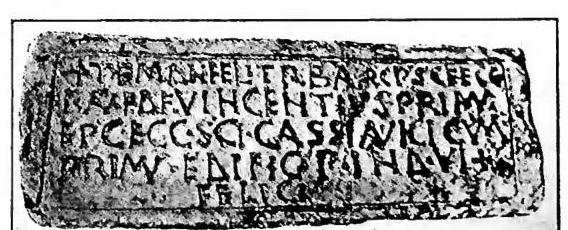
The situation was normalized with the elevation of Martin V to the throne. The popes first exercised authority over the duchy of C.; in the tenth century it was held by the empress Adelaide, after whose death Gregory V entrusted it to Gerberto, archbishop of Ravenna. In more recent times it was the object of lengthy disputes between the Holy See and Austria, and in the eighteenth century much ink was spilled concerning the rights of the Church and the Empire over the duchy.
Among the ancient abbeys in the territory of C. that exercised a notable influence on medieval Italian religious life, the following should be mentioned: S. Maria in Aula Regia (Benedictine), already flourishing in the tenth century, later fallen into neglect and restored in the fifteenth century by Bishop Mainardino; S. Giacomo de Cella Volana; Pomposa (v.), existing in 874 but of much more remote origins, and often the object of imperial and royal privileges.
It produced such representative figures as Pier Damiani and the musician Guido d'Arezzo. Having declined, partly because of the unhealthy climate, it was later converted into a secular provostry under Alexander VI and Innocent VIII.
The cathedral of C., dedicated to S. Cassiano, was rebuilt by Bishop Sigismondo Isei in 1659 and completed by his successor Nicolò Arcani.
The diocese, covering an area of 1,600 sq. km., has 27 parishes, with a population of 73,000 inhabitants, all Catholics, 27 diocesan priests, and 10 religious priests (1948).