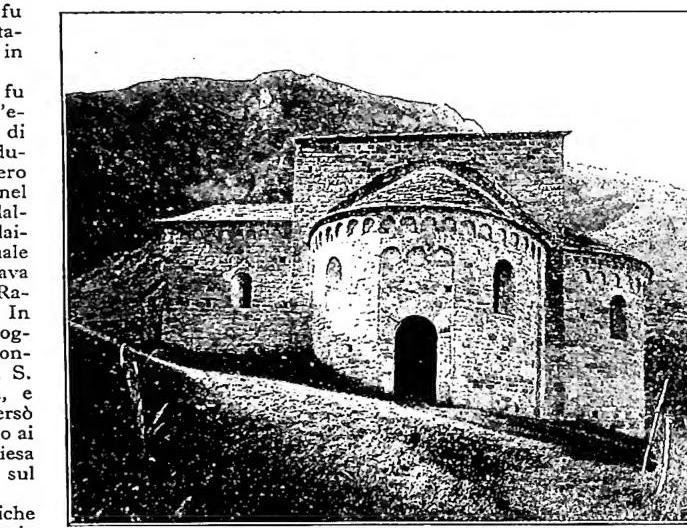
COMACINI, MAESTRI. – Builders originating from the ancient diocese of Como. The expression « Magister Comacinus cum colligantes[sic] suis » and « cum consortibus suis » appears for the first time in two articles of the Edict of Rotari (643); in 741 an appendix entitled « Memoratorio de mercede Comacinorum » was added to the Edict of Liutprand (713), consisting of seven articles containing rules and provisions concerning the activity of building workers. It is therefore reasonable to hold that the m. c., organized in corporations or associations such as those appearing in the aforementioned edicts, continued during the early Middle Ages the tradition of the craft « collegia » of classical antiquity: not « aldi » or « servi », but legally protected free citizens, both in their associations and in the practice of their art, no less than in their individual economic activities.
The Como or Comacino area was fertile in builders, architects, sculptors, and carpenters, whose names appear in Burgundy, Switzerland, the Rhine Valley, and almost all the regions of Italy; these migrations, which were collective in character and particularly intense during the Middle Ages up to the threshold of the fifteenth century, initially corresponded to the spread of certain building methods; it is nevertheless difficult to establish whether certain structural features and architectural elements should be regarded as genuine inventions of c. craftsmen or whether they were instead distant derivatives of Roman imperial buildings or Syrian monuments; hence it appears more prudent, rather than focusing on the analysis of individual elements, to recognize in the art of the c. a tendency in taste which, departing from the Byzantine manner and from the still-living