COSTANTINA, DIOCESE of. — This is ancient Cirta in Numidia (now Algeria), which had an episcopal see in the 3rd century, restored on 25 July 1866 by Pius IX, who assigned to it as its territory the present administrative department of C.
The diocese borders Tunisia to the east and the archdiocese of Algiers, of which it is a suffragan, to the west; to the south it borders the apostolic vicariate of Ghardaia in the Sahara. The bishop also bears the title of Hippo. The diocese comprises 7 vicariates or districts, has 89 parishes, 96 diocesan priests, 23 religious priests, and approximately 200,000 Catholics.
that of 6 May reported by the Martyrologium Hieronymianum and the calendar of Carthage.
In the Gesta apud Zenophilum (in CSEL, XXVI, pp. 185–97), from 320, there is a procès-verbal of what occurred in C. on 19 May 303, when the curator Munazio Felice, in order to comply with the imperial decrees, was to take possession of the books and the furnishings used for worship, and confiscate the damum ubi christiani conveniebant.
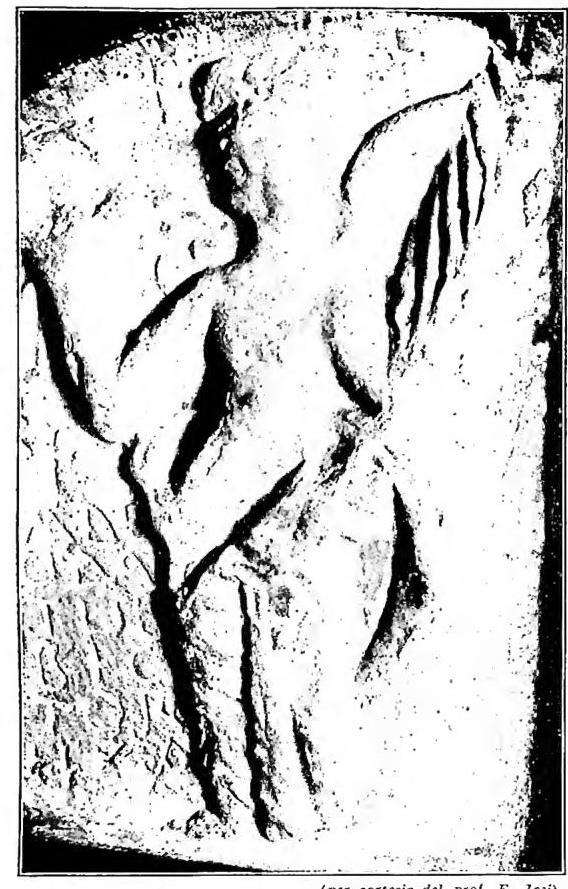
(courtesy of Prof. E. Jasi)
COSTANTINA – Inscription recalling various martyrs, including Giacomo and Mariano, carved into the rock near the Rummel stream.
From the record, one can reconstruct the importance of the community of Cirta at the beginning of the 4th century. It indeed mentions Bishop Paolo, four presbyters, two deacons, four subdeacons, as well as readers, fossores, etc. Of the Christian meeting house, the library and the hall for the agapai are mentioned; there is also a list of liturgical utensils, vestments and footwear, and food for the poor. Upon the death of Bishop Paolo in 305, the Christians gathered in the domus maior, located in the area martyrum, that is, in the cemetery where the martyrs were buried; it was equipped with an episcopal cathedra; at that time, the basilicae necdum fuerunt restitutae. From the above, it can be inferred that the Christian community of C. possessed more than one place of worship at that time, though unfortunately their locations are unknown. Remains of a Christian building from the Byzantine era, incorporated into a Roman temple, were reported in 1844 but were destroyed, as were the ruins found at Sidi-Mabrouk; in the great mosque, a capital with the so-called Constantinian monogram is reused. A mosaic, now destroyed, had at its center the inscription Iustus sibi lex est, which Monceaux considers Donatist. The Donatists were powerful in C. in the 4th century. They had seized the church built by Constantine for the Catholics. Constantine, in a letter from the year 330 (Pl. 8, 531-32), addressed to the finance officer (rationalis), orders him to construct a basilica at the expense of the fisc. Against the Donatist bishop of C., Petiliano, St. Augustine wrote Contra litteras Petiliani and De unico Baptismo contra Petilianum.
In a bas-relief preserved at Kroub, depicting a victory with a crown and palm, three Greek crosses and the inscription A Deo datur victoria were later added. Among the clay lamps found, one recalls the angel and the three youths in the furnace.
In the museum of C., a terracotta reliquary is preserved with an inscription recalling a memoria sancti Iuliani, deposited by the well-known Bishop Emiliano around the middle of the 6th century. (L. Leschi, Reliquaires chrétiens du VIe siècle)