
COSTA D'ORO (GOLD COAST). – A British Crown colony, consisting of a coastal strip along the northern edge of the Gulf of Guinea (Costa d’Oro in the strict sense), followed inland by the country of the Ashanti and the northern territories.
The region takes its name from the gold-bearing quartz deposits found there. Apart from the narrow coastal belt with its sands, lagoons, and a stretch of equatorial forest, nearly the entire colony is covered by savannas, parts of which have been converted to cultivation. Among these, cocoa is of great importance, and the Costa d’Oro is the world’s leading producer (2.2 million quintals annually); its value now surpasses that of mining (gold, manganese, diamonds), though the latter remains substantial. The capital is Accra (73,000 inhabitants). The three provinces of Costa d’Oro, Ashanti, and Northern Territory, into which the colony is divided, cover a total of 203,704 sq km. The population is about 4 million, of whom roughly one-eighth are Catholic. For the map, V. AFRICA, I, cols. 389–90.
There are at present 37 fathers, assisted by 8 indigenous priests, 4 brothers, and 28 sisters. The mission also has 190 catechists and 824 teachers. The territory covers
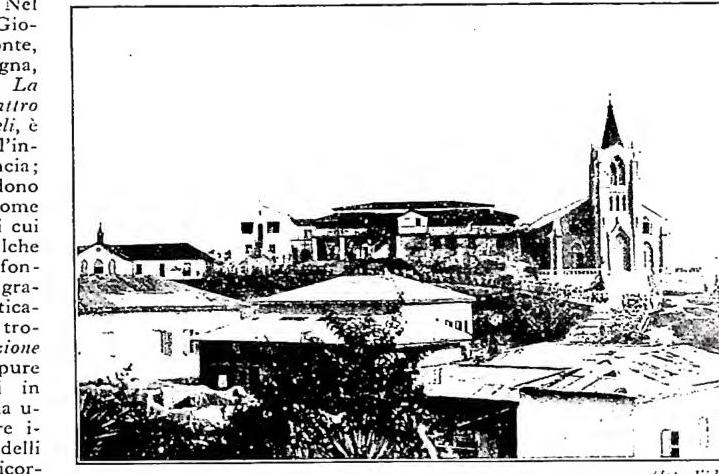
COSTA D'ORO — Episcopal see and cathedral.
Giovanni B. Tragella
(Flavius Iulius Constans), EMPEROR.
— Younger son of the Emperor Constantine and Fausta, b. ca. 323. At his father’s death in 337 he was acknowledged as Augustus together with his brothers and received the rule of Illyricum, Italy and Africa under the supervision of his elder brother Constantine II. This guardianship was ill borne and the two came to blows, but before their armies clashed the elder fell into an ambush (340) and thus his possessions passed to the other (Spain, Gaul, Britain).
He conducted several victorious campaigns against the Franks (342–43), but incurred popular displeasure through oppressive taxation. In religious policy he intensified his father’s anti-pagan stance and forbade the celebration of sacrifices. He took part in the dispute between Catholics and Donatists in Africa by sending an embassy to try to win over the popular party. Toward the Arians he showed marked hostility, while favouring St Athanasius and the orthodox; the convocation of the Council of Sardica (343) is likewise due to his intervention. Exploiting the discontent against the emperor, Flavius Magnentius had himself proclaimed Augustus at Autun; a widespread conspiracy was hatched against Constans, who, finding himself alone, attempted to flee to Spain. Reached at Illiberis, he took refuge in a church but was seized and killed (18 Jan. 350).