Machine translation of the 1948–1954 Italian original. The original text is authoritative.
FARGES, ALBERT. - Sulpician neo-scholastic philosopher, born in 1848 at Beaulieu, died on 9 June 1926. He taught in the seminaries of Bruges and Nantes, then became director of the Seminary of S. Sulpizio and of the Catholic Institute of Paris, and finally of the seminary of the Catholic Institute of Angers.
He devoted himself to the restoration of Thomism and to the refutation of opposing theories, especially through the series Etudes philosophiques pour vulgariser les théories d'Aristote et de St. Thomas et leur accord avec les sciences: I. Théorie fondamentale de l'acte et la puissance (Paris 1890); II. Matière et forme (ibid. 1890); III. La vie et l'évolution des espèces (ibid. 1890); IV. Le cerveau, l'âme et ses facultés (ibid. 1890); V. L'objectivité de la perception des sens externes (ibid. 1885); VI. L'idée du continu (ibid. 1892); VII. L'idée de Dieu (ibid. 1894); VIII. La liberté et le devoir (ibid. 1902); IX. La crise de la certitude (ibid. 1907); a work praised by the Académie française and by Leone XIII. Together with D. Barbedette, also a Sulpician, he published in French and Latin the compendium Philosophia scholastica, which went through very numerous editions. F. also contributed many articles to the Annales de la philosophie chrétienne, Revue de philosophie, Revue thomistique, and concerned himself with the philosophy of Cartesio and Bergson. On mystical phenomena he published: Les phénomènes mystiques, distingués de leurs contrefaçons humaines et diaboliques, Paris 1921.
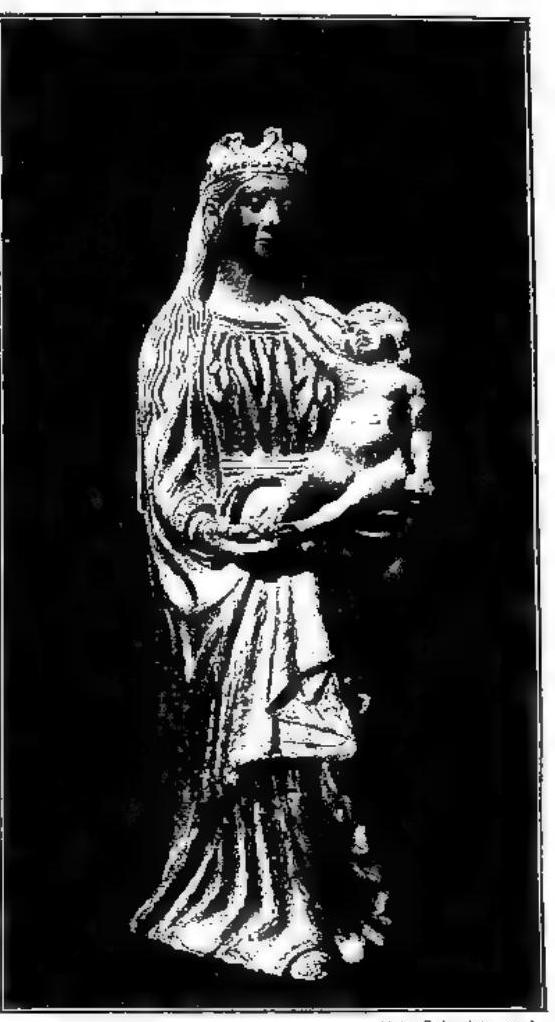
FARFA, DADIA di - Madonna and Child. Sixteenth-century wooden sculpture - Abbey of F.
BIBL.: Obituary, in Rev. des sciences philos. et théol., 4 (1926), p. 622.
Cite this article
“FARGES, ALBERT.” Enciclopedia Cattolica, vol. V (1950), p. 633. Azione Romana digital edition, https://azioneromana.com/article/farges-albert.