
SULPIZIANI. – They were founded in Paris in 1642 by J. J. Olier (v.), parish priest of S. Sulpizio, in order to restore the fortunes of the French clergy, which had fallen into a deplorable state. The remedy had already been indicated by the Council of Trent through the establishment of seminaries, but the attempts made had not succeeded.
Olier did not wish to found a religious congregation of broad diffusion, but rather a restricted society of secular priests intended to direct seminaries.
The S. have no vows and are bound solely by the bond of charity. They are secular priests for the formation of secular priests. Their educational system is based on the separation of the younger students (boarders and junior seminarians) from the older students (those studying philosophy) and from the theologians (major seminary), as well as on participation in all the offices and exercises of the seminary. Their method of government dispenses entirely, or almost entirely, with disciplinary measures: an appeal to duty is sufficient; ultimately, expulsion is resorted to. The S. act upon the young above all by cultivating the interior life: they attach great importance to spiritual reading, or the daily “conference” given by the superior to the entire community, and to the weekly individual spiritual direction provided by the spiritual father, independently of sacramental confession. The apostolate of the S. continues to be exercised among the clergy even after the seminary, both from the intellectual point of view (publications, conferences, etc.) and from the spiritual point of view (confessions, retreats, etc.).
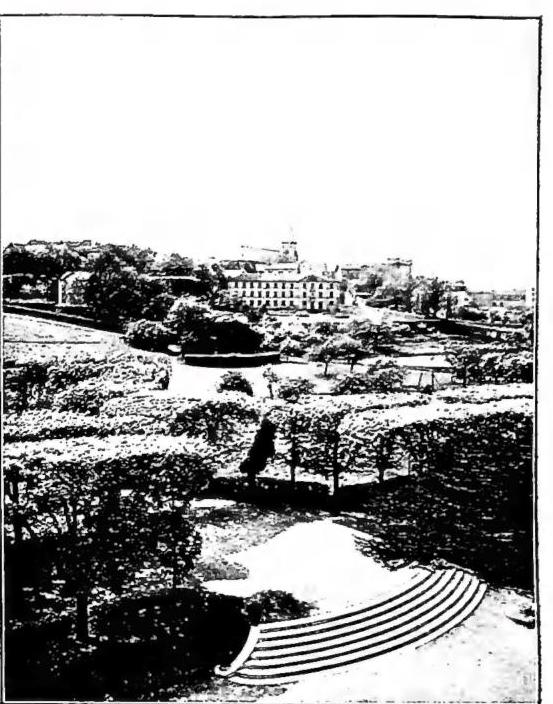
(phot. Jean Collar)
SULPIZIANI - The «Solitude» or novitiate of the Priests of S. Sulpizio. In the background, the bell tower of the parish church of Issy.
In the history of the Society, particular prominence should be given to A. de Bretonville, Olier’s successor, who opened the first houses; L. Tronson, rightly called the legislator of the Society; J. A. Emery, celebrated for his activity during the Revolution and the firmness he displayed toward Napoleon; H. Garriguet, restorer of the Society after the separation of 1904 and the war of 1915–18; and Cardinal Verdier, first superior general and subsequently archbishop of Paris (1864–1940). The Society is governed by its own constitutions, approved by Benedict XV in 1921 and by Pius XI in 1931. It has a superior general elected for life, assisted by four consultors. Divided into three provinces—France, Canada, and the United States—it numbers approximately 600 members and directs 48 seminaries in France, 9 in Canada, and 12 in the United States. The mother house is at S. Sulpizio, and the General Procuratorship is in Rome, with a college belonging to the Canadian province. - Vedi tav. CVI.