
VERDIER, JEAN. — Cardinal, born in La Croix-Barrez (diocese of Rodez) on 19 February 1864, died in Paris on 9 April 1940.
Having entered the Society of S. Sulpizio in 1886, he came to Rome the following year, where he obtained degrees in theology and canon law. Ordained a priest on 9 April 1887, he was sent to the Major Seminary of Périgueux, where he taught philosophy. Transferred to Lyon, he became rector of that Seminary in 1898. He then settled in Paris in 1905 and held the chair of moral theology at the Seminary of S. Sulpizio. Following the laws on separation, V. and his confrères were forced to leave the old building in Piazza S. Sulpizio. When the Seminary was installed in its new premises on Rue de Regard, V., who had meanwhile become director—that is, the actual superior under the supervision of the superior general—personally presided over the arrangements. Having assumed the direction of the Grande Seminario des Carmes in 1912, he also taught moral theology at the Institut catholique in 1910.
A theologian, professor, and spiritual director, he had a clear vision of the needs and opportunities of contemporary Catholic life and treated the various problems of his time with insight, paying particular attention to social questions. Vice superior general of S. Sulpizio in 1926, he was elected superior general on 16 July 1929. A few months later, on 18 November 1929, Pius XI appointed him archbishop of Paris, and on 16 December of the same year created him cardinal of the title of S. Balbina. In this capac-
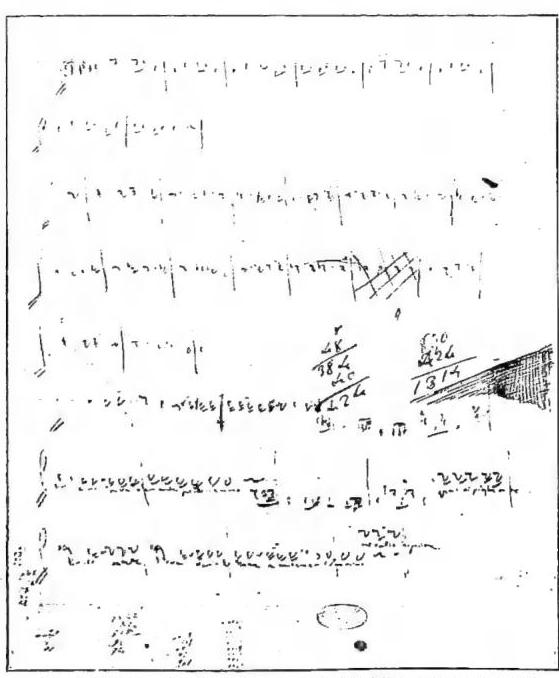
VERDI, GIUSEPPE — Introduction to Rigoletto, with various annotations, accounts, and autograph scribblings.
vigorously promoted the methodical organization of French Catholic Action. He strengthened Catholic sentiment in the country and, with his “Cardinal’s building sites,” initiated the construction of churches on the outskirts of Paris, with the aim both of contributing to an active missionary effort in the banlieue and of partly alleviating the difficult economic conditions of unemployed workers. An effective orator and writer, he contributed to the Revue pratique d’apologétique and published several works, among which are: Le problème de la natalité et la morale chrétienne (1917); Y a-t-il un droit de grève? (1923); La question scolaire (1934); Petit manuel des questions contemporaines (1937); Problèmes sociaux, réponses chrétiennes (1939).