
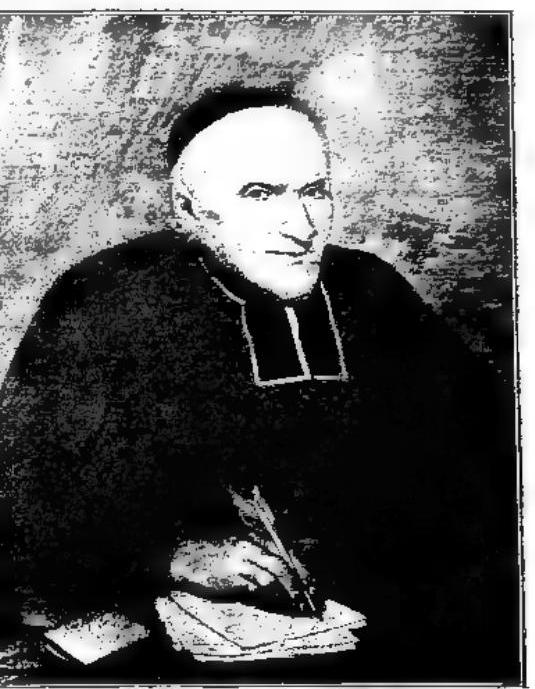
EMERY, JACQUES-ANDRÉ. — Superior General of the Sulpicians, born in Gex on 26 August 1732, died in Paris on 28 April 1811. Having entered the novitiate of S. Sulpizio in November 1757, he was ordained a priest on 11 March 1758. Professor of dogmatic theology at the Seminary of Orléans from 1759 to 1765, and of moral theology at Lyons from 1765 to 1775, he subsequently became superior of the Seminary of Angera (1776–82), and on 10 September 1782 was appointed Superior General of the Society of S. Sulpizio, following the resignation of M. Le Gallic. In this office, as well as in the work of reforming the seminaries, to which he devoted himself in particular, E. displayed wisdom, prudence, and firmness; these qualities characterized all his conduct during the turbulent period in which he lived.
During the Revolution and the Empire, he was truly “the conscience of the French clergy,” because of the counsels of moderation he lavished upon the bishops, especially the notorious Cardinal Maury and Cardinal Fesch, Napoleon’s uncle.
The question of the oaths required by the civil authorities gave rise to delicate problems that E. had to resolve in the absence of the bishops who had emigrated abroad. The oath to the Civil Constitution of the Clergy appeared to him to be an usurpation by the State; E. refused to take it, and all the members of the Society followed his example.
As for the oath of liberty and equality, imposed on 3 September 1792, which he regarded as purely civil and therefore unrelated to religious matters, E. authorized it to be taken and himself took it promptly as well, in the general interest of the Church, whereas the clergy, especially those who had emigrated, unaware of the condition of the Church in France, judged it illicit. On 15 March 1793, E. issued a declaration explaining the meaning he had attached to the oath he had taken. Nevertheless, on 16 July of the same year, the Holy See ordered that it not be taken, because it was ambiguous.
Meanwhile, E. had been imprisoned at Sainte-Pélagie and then released, thanks to the intervention of his cousin, Mme de Villèle (19–31 May 1793). He was arrested a second time on 16 July of the same year and remained in prison until 23 October 1794. Released from prison, he was forced to leave Paris because of attacks by the constitutional clergy in the Annales de la Religion. He withdrew to Gex, then to Nyon, in Switzerland, and wrote to Pope Pius VI to inform him of the condition of France; he returned to Paris in July 1795.
The coup d’état of Brumaire gave rise to new problems: Cardinal Maury, in agreement with the Count of Provence (Louis XVIII), was attempting to incite the Court of Rome against the Consulate, while the ecclesiastics who had taken refuge abroad thought they were serving the cause of religion through their attachment to the monarchy.
Meanwhile, the First Consul had already begun negotiations for the concordat, and E. contributed his prudence to them. He distrusted Bernier, an ambitious and compliant negotiator; he established relations with Spina, the envoy of Rome; he had audiences with the First Consul and warned him against those surrounding him, particularly Fouché. After the signing of the concordat, he frequently met with the nuncio Caprara, to whom he supplied information about the situation of the Church, and he exerted his influence on Portalis, while ensuring that the intriguing Bernier was kept at as great a distance as possible. Following the resignation of most of the bishops of the old regime and the reduction in the number of the ancient dioceses—measures sanctioned by Pius VII’s brief Tam suita—the episcopal see of Arras was offered to E.; but he refused II.
E.’s influence among the bishops meanwhile increased, and he assumed a role of capital importance in the history of the Church of France. He formally condemned the Organic Articles in the name of theology and canon law; and he gave very wise counsel concerning the recantation to be imposed on the ten constitutional bishops appointed as concordat bishops,
From September 1800, in order to resume the formation of the clergy, E. had reopened the Seminary of S. Sulpizio. He then reconstituted the Company of the priests of S. Sulpizio, and asked the old Sulpicians who had been obliged to abandon the seminaries in order to accept other positions to renounce those positions in order to devote themselves entirely to the service of the seminaries and thus resume the Sulpician tradition in all its rigor.
E. also devoted himself directly to the organization of the Church of France for the implementation of the concordat, and defended the Pope against Napoleon’s claims. He therefore criticized the Catéchisme impérial, and in the Nouveaux opuscules de M. l’abbé Fleury in 1807 set forth his doctrine concerning the liberties of the Gallican Church and the rights of the Holy See. Meanwhile, by the Emperor’s formal will, E. was appointed a member of the University Council. But he had a bitter enemy, Fouché, who brought about the imperial decree of 15 February 1810 suppressing the Company of S. Sulpizio. E. therefore had to retire to the country residence at Issy. It was in this year that the ecclesiastical tribunal of Paris issued its judgment on the invalidity of Napoleon’s marriage to Giuseppina di Beauharnais: a judgment that was recognized and approved by E.
The ecclesiastical Commission of 1811 raised delicate problems concerning the canonical institution of the bishops appointed by the Emperor. During the session of 17 March, while the members of the Council were hesitating, E., questioned by Napoleon, replied by defending the rights and authority of the Holy See; the Emperor congratulated him on the courage he had shown, and Talleyrand did the same. At this time E. was in very poor health: he died a few days later.
Among E.’s works, the following deserve mention:
Esprit de Leibnitz, 2 vols., Lyon 1778; L'esprit de s. Thérèse, there 1775, which went through very numerous editions; Pensées de Descartes sur la religion et la morale, there 1801; Nouveaux opuscules de M. l’abbé Fleury, there 1807 and 1809. All these works were collected in the volume Oeuvres complètes de M. E., edited by Migne, there 1857.