
GIOVANNI VIII, PAPA. — A Roman, elected on 14 December 872, died on 16 December 882. Archdeacon of the Roman Church for twenty years and a collaborator of Niccolò I, a friend of Ludovico II, he was elected already old and ailing, but gave proof of exceptional energy and prudence.
I. ECCLESIASTICAL ACTIVITY
A convinced supporter of the authority of the pontiff super gentes et super regna, he sought to strengthen the discipline of the clergy and the faithful, preserve ecclesiastical privileges and possessions intact, and consolidate the Roman primacy. He declared excommunicated anyone who abandoned his wife or, while she was still alive, took another woman, while nevertheless declaring invalid the marriage between nostrates et alienigenae. He asserted his authority against the usurpations of the Church of Ravenna and engaged in a fierce struggle with Giovanni X, archbishop of Ravenna; he was nevertheless able to hold a council in Ravenna itself (August 877).It was decided there that metropolitan archbishops should request their pallia from the Roman See; that bishops, clerics, nuns, and wards could not be brought before secular tribunals; that magistrates who neglected the complaints of ecclesiastics should be excommunicated; and that in the dwellings of churches no custom of placitum or hospitium could be claimed.
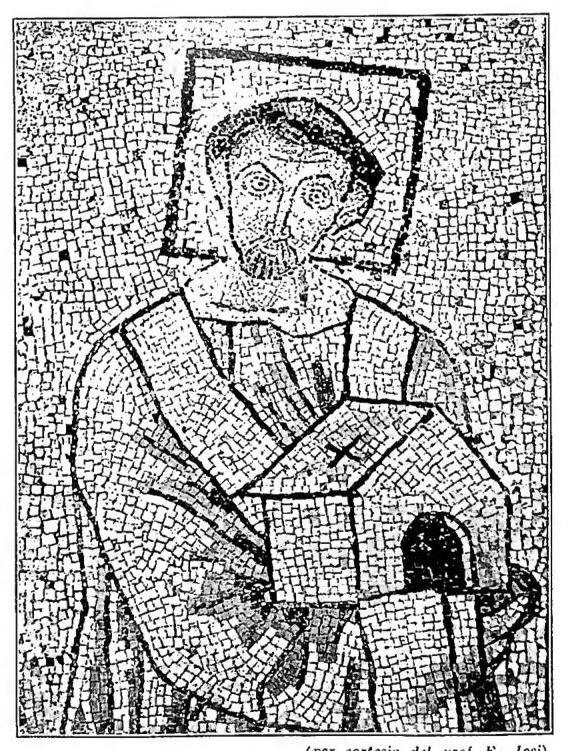
He attempted to establish in France and Germany a vicar of the Apostolic See, almost a secundus papa (876); but he was unable to overcome the opposition of Archbishop Inemaro of Reims and the French clergy. He nevertheless exercised broad authority in the appointment and condemnation of bishops. He affirmed the immediate dependence of the bishops and faithful of Dalmatia upon the Roman See, and saw the duke and people of Croatia return to obedience to Rome. He protested against the imprisonment of Methodius, the apostle of the Slavs, who had been incarcerated by the Germans, eager to preserve the predominance of their race over the Slavic lands; he excommunicated the bishops who had condemned him (873) and secured his liberation. And although, in his jealous defense of the Roman liturgy, he had initially condemned Methodius’s practice of celebrating Mass in the “barbarian” Slavic language and, prejudiced against him, had summoned him to Rome as suspected of heresy (June 879), when Methodius later came ad limina, he recognized his complete orthodoxy, reconfirmed his authority over the clergy of Moravia, and consented that the liturgy be celebrated in the Slavic language in that land, because “the Lord was to be praised not in three languages only—Hebrew, Greek, and Latin—but in all languages”; he merely wished, as an affirmation of unity, that the Gospel first be read in Latin (June 880).
II. G. AND THE EAST. — G. VIII’s conduct toward the East has been judged in various ways. Ignatius, restored, by the will of the Emperor Basil and with the support of Rome, to the patriarchal see of Constantinople after the removal of the intruder Photius (v.), attempted to withdraw the Bulgarians, wavering between Constantinople and Rome, from obedience to Rome. The death of Ignatius (23 Oct. 877) prevented an open break with the Pope; but the latter gradually distanced himself from the Ignatians. On the other hand, Photius, restored to the patriarchal throne with the support of most of the clergy of the East and with the at least tacit consent of the Emperor, sent deferential letters to the Roman See. The Pope’s foremost concern was to restore concord in the Church and obtain aid from the Emperor against the Saracens. He therefore sent legates to an Eastern Synod, convened for the reinstatement of Photius; the papal letter, preserved in the Vatican register, granted this, provided that Photius should ask for « mercy ». But another papal letter was presented at the Synod, one that highly praised Photius and annulled without conditions the measures taken against him. It is probable that this was a forgery, accepted out of weakness by the papal legates. Certainly, the Synod resulted in a glorification of Photius. Nevertheless, the Pope, satisfied by the restoration of unity, declared that he confirmed misericorditer the reinstatement. A letter attributed to G. VIII should be regarded as apocryphal, in which he is said to have condemned as corrupters of the doctrine of Christ and the Fathers those who inserted the word « Filioque » into the Creed. In any event, G. VIII succeeded not only in preventing the Greek schism for the time being, but also in having the rights of the Roman Church over the Bulgarians recognized—rights that the weakness of the succeeding popes was unable to preserve.
III. G. AND POLITICS. — During the pontificate of G. VIII, religious questions were intertwined with political ones. He was by now the only force attempting to hold together the ancient Empire of Charlemagne, the sole defense of Rome and of southern Italy against the threat of the Saracens. He provided for the city’s defense, establishing a “Ioannipolis” around S. Paolo; he personally led victorious campaigns against the infidels, attempting to detach from them the small southern states that, out of self-interest or fear, had joined them. He sought to strengthen the power of Ludovico II, arranging for Lorraine to be restored to him by Carlo il Calvo and Ludovico il Tedesco, who had divided it between themselves after the death of Lotario II.
When the Emperor died without male heirs, in the absence of any rule of succession, he arrogated to himself the right to designate the future emperor, in order to prevent the Empire from disintegrating completely. And he designated Carlo il Calvo, sovereign of the most Roman part of the Empire, praised for his piety, learning, and valor; he had him acclaimed by the clergy and people of Rome; he crowned him emperor (25 Dec. 875), and obtained from him confirmation of all the possessions and rights of the Church. But the people of Spoleto and the Saracens were devastating the very environs of Rome: in the city, at the instigation of Engelberga, widow of Ludovico II and favorable to the German Carolingians, a party hostile to the energetic Pontiff was taking shape. As they were not strong enough, the conspirators fled, followed by papal excommunication (30 June 876).
The Pope then turned to the undertaking against the Saracens: at Traetto on the Garigliano (June 877), he brought together the leaders of the Lombard states of Salerno and Capua and of the Latin states of Naples, Amalfi, and Gaeta; he gave money and received promises. And he hoped for the assistance of Carlo il Calvo, with whom he met at Vercelli and Pavia (Sept. 877). But Carlo died (6 Oct. 877); the promises of the southern states proved worthless; Lamberto di Spoleto and Adalberto di Toscana occupied the Leonine City (Apr. 878), brought the Pope’s enemies into Rome, and held him in their hands for a month, but failed to force him to swear allegiance to Carlomagno, king of Germany. Once liberated, G. excommunicated the aggressors; but, not feeling safe, he bought peace from the Muslims and went to France.
There he vainly attempted to gather at Troyes (Aug. 878) the Carolingian princes and their bishops for the salvation of the Church and the Empire. He then considered giving the imperial crown to Bosone, count of Vienne, and said that he wished, without worldly cares, to devote himself “to the things of God”; but Bosone, more intent on procuring a small kingdom (vamalmo), limited himself to bringing the Pontiff back to Italy (Nov. 878).
The latter once again attempted to gather the forces of the South and to ally himself with the Byzantines; he succeeded in persuading Atanasio, bishop and duke of Naples, to rid himself of the Saracens; but the hoped-for liberation from the threat of the infidels was not achieved; indeed, they established themselves within the papal domain of Traetto itself (882), an enduring threat to the southern lands and the Papal State. With the same hope of receiving aid against the Saracens, G. drew closer to the German Carolingians, who by then predominated in Italy; he recognized as king of Italy that Carlo who was later called the Fat: he crowned him emperor in Rome (12 Feb. 881), and took part with him in a solemn assembly at Ravenna (Feb. 882). But the weak Emperor once again disappointed his hopes. The old fighter came to an end, probably by a violent death inflicted by his own relatives.