
IGNATIUS, patriarch of CONSTANTINOPLE, saint. — Nicetas (I. is the later name), born in Constantinople in 797; he was patriarch in 847–58 and 867–77; his father was the emperor Michael (811–13).
After his father’s expulsion from the throne, he lived with him in a monastery on the island of Proti; in 840 he became its hegumen (abbot), and later founded three other monasteries. During the iconoclast persecution he showed himself an intrepid defender of the veneration of the sacred images.
After the death of the patriarch St. Methodius (843–47), he became his successor under the name of I. His patriarchate was highly tragic. He condemned three bishops and informed the Holy See, to which the condemned men also appealed. I. courageously forbade
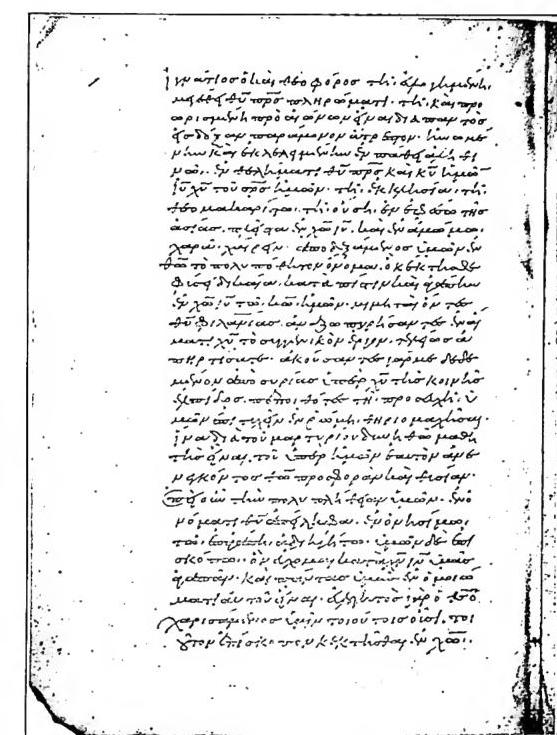
Holy Communion and entry into the church of Hagia Sophia to Barda, an extremely influential man at the imperial court, on account of his immoral life. The latter took revenge and had him condemned to exile on the island of Terebinthus, replacing him with the very learned president of the imperial chancery, Photius, and having this stratagem approved by a false synod, led by the excommunicated bishop Gregory of Syracuse.
Whether I. abdicated for the good of the Church is debated today; those who uphold this view, however, almost all speak of a conditional abdication and emphasize that Photius did not observe its conditions. Neither Pope Nicholas I (858–67) nor Adrian II (887–72) recognized Photius as the legitimate patriarch; only after I.’s death did John VIII (872–82) confirm him under certain conditions.
But the emperor Basil of Macedonia, from the beginning of his reign (867), resolutely deposed Photius, recalled I., after nine years of troubled exile and persecution, to the patriarchate of Constantinople, and sought the approval of the Holy See. This, under Adrian II, at a Roman Synod (June 869) and at the Eighth Ecumenical Council (869–70), through its legates and with subsequent approval, restored I. Despite the various benefits received from the popes, however, I. deemed it necessary to adopt an attitude contrary to the decisions of Rome in the matter concerning the jurisdiction of Bulgaria, so that John VIII threatened him with conditional excommunication in April 878 unless he recalled the Greek priests and bishops of Bulgaria within 30 days. But this papal sentence was issued when I. was already dead (23 November 877). The
Byzantine Church and the Roman Church alike honor I. as a saint.