
Regular Clerics. — These are the religious societies of clerics founded from the early sixteenth century until about the end of the eighteenth, which did not follow any of the monastic rules and devoted themselves to the most varied forms of apostolate.
Their origin is largely due to the ideals of reform in religious life, especially after the Council of Trent, to the need to meet the needs of the Church, to the rise of Protestantism, and to the newly discovered lands in the East and West Indies. They exercise the apostolate in the most varied forms, ranging from teaching and preaching to the care of the sick. They have their own constitutions; their government is more centralized than that of the mendicant Orders; they do not devote as much time to the Divine Office as monks do, and indeed many recite it only privately. In precedence, they come immediately after monks and before religious Congregations of clerics (can. 491).
I. REGULAR CLERICS OF THE MOTHER OF GOD
Religious order founded at S. Maria della Rosa in Lucca on 3 May 1574 by St John Leonardi (q.v.). Its original title, “Reformed Priests of the Most Holy Virgin,” was later changed to “Congregation of the Regular Clerics of the Blessed Virgin”; the present name was established in 1614.To ensure good guidance in the life of the small community, the founder initially relied on the assistance of two Dominican friars: Fr Francesco Bernardini and Fr Benedetto Onesti from the convent of S. Romano in Lucca.
In 1580 the small institution left the church of the Rosa and moved to that of S. Maria Corteorlandini, where, on 8 March 1583, canonical erection was completed through the efforts of Bishop Alessandro Guidiccioni the Elder. On 13 October 1595 came confirmation from the Holy See, and consequently exemption from the jurisdiction of the Ordinary. In 1621 the order was raised by Gregory XV to the rank of a religious order, and two years later it was admitted to share in the privileges and exemptions of the other religious orders. By a papal brief of 14 January 1614, at the request of Cardinal Benedetto Giustiniani, protector of the Piarists, a union was effected between them and Leonardi’s Congregation; but the union proved short-lived (until 6 March 1617), since the two institutions were incompatible in their ministries: the sons of Leonardi refused to renounce parochial ministry, while the Piarists were devoted to teaching.
In 1601 Leonardi had obtained in Rome the church of S. Maria in Portico (later dedicated to St Gall, demolished in 1935) at the foot of the Capitoline Hill, an unhealthy and sparsely populated area then, offered to him by Cardinal Bartolomeo Cesi, its titular. Adjacent to this church, which also served as a parish and was linked with canons, he opened a house of his institute, where it remained until 1620, when it moved to the nearby church of S. Maria in Campitelli, where the generalate of the order still has its seat today. Other houses were subsequently founded: in Naples, on the Riviera di Chiaia (S. Maria in Portico) and in the city centre (S. Brigida a Toledo); in Vasto in the Abruzzi; in Genzano di Roma in 1841; in Monaco (Principality) in 1873; in La Spezia around 1880; in Massa Marittima in 1897; in Fosciandora (Lucca) in 1903; in Candela (Foggia) in 1937; in Gallipoli (Lecce) in 1938; and in S. Ferdinando di Puglia in 1946. In recent years three houses have been opened in Chile in missionary locations in the spirit of Leonardi, who in 1603, together with the Spaniard Bishop G. Batt. Vives, had laid the groundwork for the institution of Propaganda Fide. Other attempts to open missionary houses had occurred at the beginning of the 18th century with Fr Domenico Perroni, who died in Canton (China) in 1729, having been sent there as procurator general of Propaganda Fide, and in 1924 with the erection of a house in the diocese of Botucatu in Brazil. In Lucca the order made an effective contribution to the Counter-Reformation movement.
Among the distinguished religious may be counted the Venerable Giovanni Battista Cioni (d. 1623) and Cesare Franciotti (d. 1627), the first companions of Leonardi; Ippolito Marracci (d. 1675), prolific writer on Marian subjects, his brother Ludovico (d. 1700), Arabist; Costantino Roncaglia (d. 1737), writer on moral theology; and Giandomenico Mansi (d. 1779), the well-known compiler of the Sacrorum Conciliorum.
The purpose of the order is the exercise of parochial and priestly ministry in all aspects of active apostolate. The habit is the same as that worn by priests in the 16th century: a black cassock without buttons, with one flap overlapping the other and fastened at the waist by a woollen sash; and a detachable collar turned down over the collar of the cassock. The emblem consists of an image of the Assumption of the Blessed Virgin Mary. The order today numbers about 100 religious in 8 houses.
Francesco Ferraironi
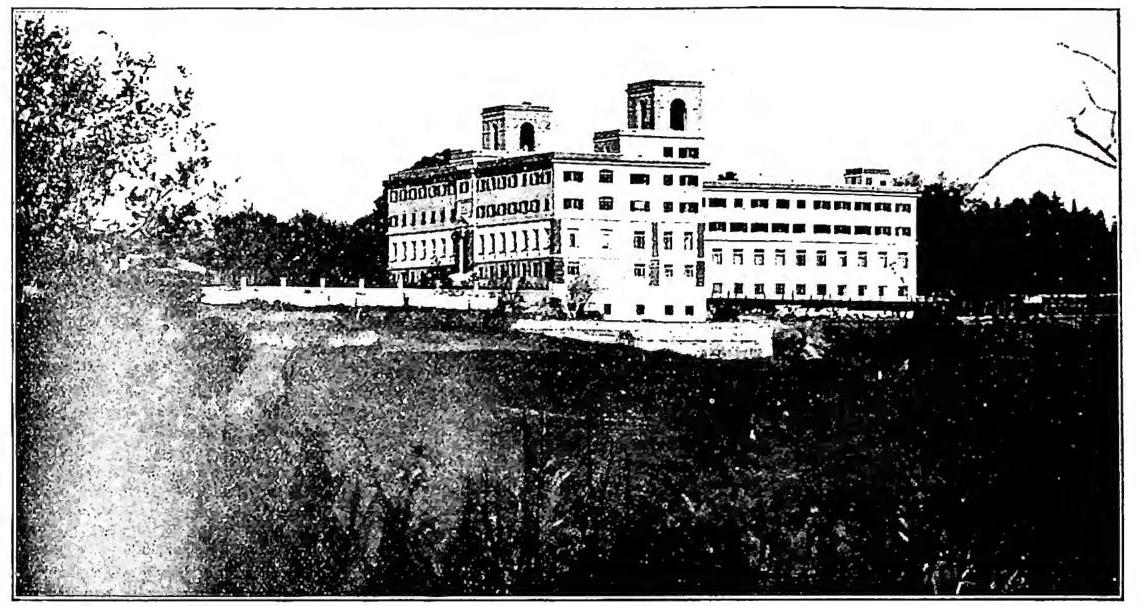
REGULAR CLERICS (Piarists) — Philosophical-theological studentate at Monte Mario in Rome.
II. CHIERICI REGOLARI MINORI (CARACCIOLINI)
They originated in 1588 in Naples through the initiative of Fr. Giovanni Adorno, of St. Francis Caracciolo and of Don Fabrizio Caracciolo, Prince of Marsiconovo, and were approved by Sixtus V on 9 April 1589.Their Constitutions differ from those of religious Orders with solemn vows chiefly in the following respects: a) in addition to the three religious vows, they take a vow not to seek ecclesiastical dignities and swear not to procure any offices, even within the Order; b) each religious is bound to spend an hour in turn before the Blessed Sacrament each day; c) where the number of priests and clerics permits, there is an obligation to recite the Divine Office in common, without chant; d) likewise in turn each religious must perform an extraordinary penance. They are also devoted to preaching, the education of youth, and the care of the sick, prisoners, etc.
After Adorno’s death three years later, the government of the Congregation was assumed by St. Francis Caracciolo, through whose efforts it spread especially in Italy and Spain, reaching a total of 60 houses with about 2,000 religious. It had missionaries in China, professors in universities, preachers, bishops and writers of great repute. In time it lost its former splendor almost to the point of extinction. Now it is enjoying a promising revival with eight houses and six parishes in Italy and America.
III. POOR REGULAR CLERICS OF THE MOTHER OF GOD OF THE PIous SCHOOLS (SCALOPPIANS)
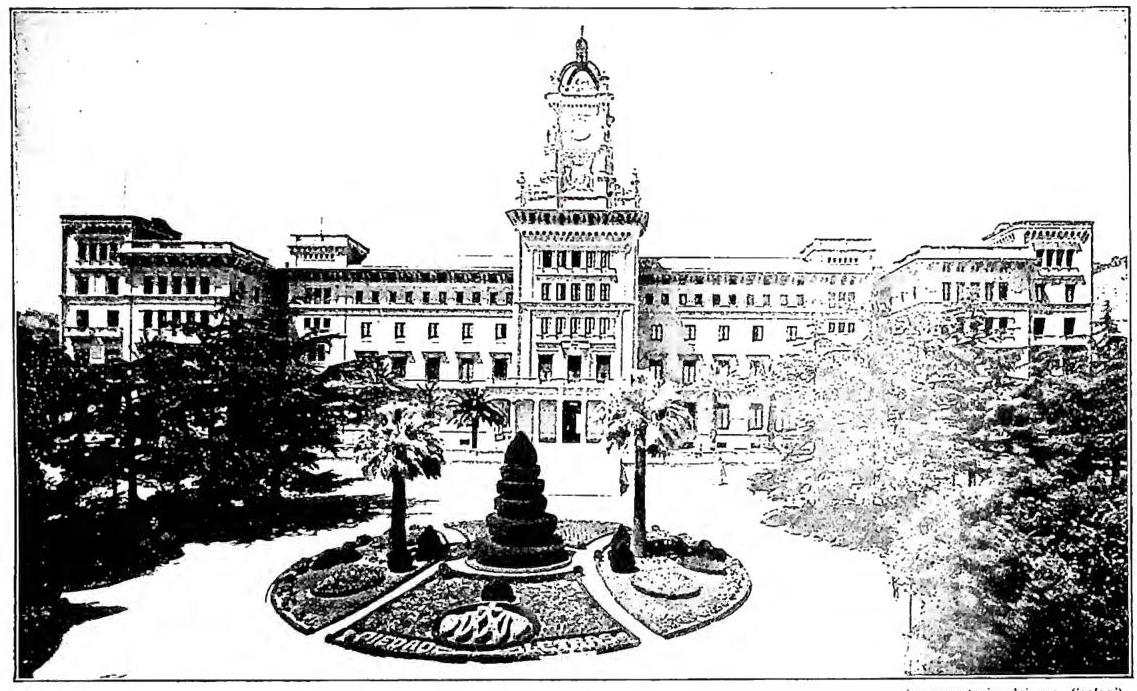
Founded by St. Joseph Calasanz (v.) in 1617 in Rome, the Congregation was preceded by the establishment of primary popular schools by the same Saint (in 1597, near the church of S. Dorotea in Trastevere), which he from the outset called “Pious Schools,” whence the name “Scolopi.”The Pious Schools, free for all, were the first true popular and primary schools in Italy and in Europe. They constituted a novelty for Rome, and they became so crowded so quickly that after a few years it was necessary to move elsewhere: in 1612 they finally settled in the house attached to the church of S. Pantaleo, where the general curia of the Order still resides. Meanwhile, Calasanz was concerned about his collaborators in the school ministry, and he matured in himself the intention of establishing a religious Congregation, which, after various vicissitudes, was founded in 1617, and Gregory XV in 1622 approved its Constitutions with the brief Sacri apostolatus.
Despite the hostility of some and some internal dissension, the work gained credibility and spread. First in Lazio, then in Liguria, in the Neapolitan area, in Tuscany, in Sicily, in Sardinia, in Germany, and in Poland, houses and schools were opened while the founder was still alive. The activity of the new Congregation soon extended also to non-primary schools, by the will of Calasanz himself, who recognized no limits in teaching. The school of mathematics established in Florence in 1639 is well known, as is the friendship cultivated by the Scoloppians with Galileo. Rivals and interested parties endeavored in every way to restrict the educational activity of the Scoloppians to the scope of primary or elementary school. The founder resisted this attempted limitation unflinchingly, and this was one of the causes of further relentless opposition to the Pious Schools.
However, it is certain that the rapidly expanding Institute, at the same time misunderstood and opposed, suffered a very serious crisis, provoked internally by lay brothers aspiring to the priesthood and externally by a decisive attack from competitors and enemies. This state of affairs led Urban VIII to depose Calasanz as Superior General, and then Innocent X issued a brief on March 16, 1646, which imposed the regression of the Order to a mere free union of various houses independent of one another, with full freedom for each to join or leave. The founder survived this suppression for two years, dying while foretelling the resurrection of his work, which occurred partially in 1656, when Alexander VII restored to the Institute the character of a religious Congregation with simple vows; and fully in 1669, when it was raised by Clement IX to its original state as a religious Order with solemn vows.
Subsequently, the Order experienced a vigorous revival, spreading in Italy and abroad. Alongside this rapid diffusion came a steadily growing progress in literary and scientific activity, which had its cradle in the Chieti studentate, whence, under the auspices of Fr. Morelli—the sole surviving “Galilean” of renown—the movement spread throughout the Order in the final years of the seventeenth century, mainly through the efforts of Fr. Pirroni, one of the most enlightened men to have governed the Order (1677–85).
In the second half of the eighteenth century, the Scoloppians entered a period of maximum flourishing in letters and sciences, coupled with a notable increase in houses and provinces. In many places they did not limit their work to schools but also took on the administration of colleges and seminaries, following the example of their founder, who from Cardinal Michelangelo Tonti accepted the task of establishing and directing the Nazareno College in Rome, opened in 1630. The Scoloppians also devoted themselves to the conversion of heretics in Bohemia and Moravia and to missionary work. The eighteenth century was the golden age of the Pious Schools, which in 1784 counted 218 houses and 15 provinces in Europe. Many Scoloppians, especially in Italy, taught in universities. In Florence, the Ximenian Observatory became famous, enhancing its reputation throughout the nineteenth century.
Regalist tendencies and the revolutionary movements of the late eighteenth and early nineteenth centuries adversely affected the Scoloppians, who, besides being divided into three practically separate parts, were severely weakened in some regions; and the Italian Pious Schools suffered greatly from the suppression of religious Orders in the second half of the last century. In 1904, Pope Pius X restored hierarchical unity to the entire Order, which had been broken by the creation in 1804 of the Vicariate of Spain.
Illustrious religious for holiness included, besides Calasanz (v.), St. Pompilio M. Pirrotti (v.), the Venerables Landriani and Casani, whose causes of beatification are underway. Many distinguished themselves in the sciences, letters, and arts.
The Scoloppians currently have 140 houses with 2,300 religious; 55,000 are the pupils educated in their colleges.
Firenze 1930: L. Picanyol, Brevis conspectus historico-statisticus Ordinis Scholarum Piarum, Roma 1932; id., Le Scuole Pie e Galileo Galilei, ivi 1942; Catalogus generalis Ordinis Scholarum Piarum exequatur anno scholastico 1947-48, ivi 1948.
Lecdeario Picanyol
CHIERICI SCALZI DELLA SS.MA CROCE E PASSIONE DI N. S. GESÙ CRISTO (PASSIONISTI). — Clerical congregation of perpetual simple vows, founded by St. Paul of the Cross (q.v.) in 1720, in which, in addition to the three vows common to all other institutes, a fourth vow is taken: to promote among the faithful devotion to the Passion of Christ. They wear a black woolen cassock of rough and heavy cloth, with a leather belt from which hangs on the left side the rosary, and a cloak of the same material reaching to the knee. They wear sandals and the ecclesiastical hat. On the left shoulder, both on the cassock and the cloak, they bear an emblem in the shape of a heart surmounted by a cross, with the inscription JESÙ XVI PASSIO and the three nails of the Crucifixion, in white on a black background. The lay brothers, as distinct from the clerics and priests, wear this emblem only on the cassock.
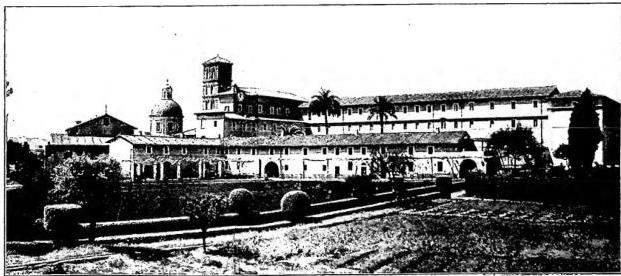
St. Paul of the Cross in 1725 obtained from Benedict XIII the faculty to gather companions, and on 14 September 1737 he opened the first retreat on Monte Argentario, near Grosseto. In 1741 Benedict XIV approved the rules and the few religious made their vows. Thus the first canonical community was formed with St. Paul as superior.
The Institute received solemn sanction from Clement XIV with the bull Supremi Apostolatus of 16 November 1769. The rules of the Passionists are marked by a very particular spirit of penance and prayer. Poverty is evident in everything: in the retreats, in the cells, in the objects of use. Nothing may be possessed either privately or in common, except the house and a limited plot of land attached to it, to be cultivated as a garden, meadow, and wood. Fixed revenues and perpetual burdens of Masses are forbidden. They live on alms, and as alms they receive what is offered them for the ministry of preaching. They dwell in solitude, far from inhabited places; hence their houses are called “retreats.” They sleep clothed on straw pallets and rise at night for the recitation of Matins. The principal observance is that of the choir, to which all must attend, both day and night: priests, clerics, and lay brothers; the latter recite the Lord’s Crown (of 33 Pater noster) and other prayers proper to them. Besides choral psalmody, there are each day two hours of mental prayer, one in the morning and one in the evening. Preaching is expressly forbidden to be elevated and elegant; rather, it must be in simple and clear language to instruct the faithful in the truths of the faith and in the observance of the divine law, while promoting at the same time the devout and assiduous memory of the Passion of Jesus Christ. It is not permitted to preach Lenten sermons, and the labors of the apostolate must be alternated with residence in solitude, to restore the strength of the spirit.
The Congregation is governed by a prepositus generalis, assisted by four consultors and a procurator, elected for a six-year term. The religious province is governed by the prepositus provincialis, assisted by two consultors elected every three years in the Provincial Chapters. None of the superiors may be confirmed more than once in the same office.
At first the Congregation encountered grave difficulties, yet it was able to establish itself and prosper happily. At the death of the founder (1775) it numbered 12 houses, divided into two provinces, with about 200 religious. And although in the early days the austerity of life was truly extraordinary, not a few men of nobility and learning belonged to II. The French Revolution, with its repercussions even in Italy, and the Napoleonic suppression (1810) slowed its development; but when it returned to Rome in 1814, Pius VII wished to re-establish the religious Orders, and by a letter of Cardinal Pacca, Secretary of State, dated 29 June 1814, he granted the Passionists, as a first step, permission to return to their retreats and resume regular observance. During the generalship of Fr. Antonio di S. Giacomo (1839–62), the Congregation extended into England, Belgium, France, America, and Australia. At present (1949) it has 18 provinces, with 165 houses and 3,300 professed religious.
The Passionists have in great numbers distinguished themselves for holiness of life: besides the founder, St. Gabriel of the Sorrowful Virgin (q.v.), Bl. Vincent Mary Strambi (q.v.), and those Servants of God whose causes of beatification are under way: Ven. Fr. John Baptist of St. Michael the Archangel, brother of the holy founder (d. 1765), Ven. Fr. Dominic of the Mother of God (d. 1849), Fr. Laurence of St. Francis Xavier (d. 1856), Br. Galileo Nicolini, novice (d. 1897), Fr. Charles of St. Andrew (d. 1893), Br. Pius of St. Louis (d. 1889), Fr. Bernard Mary of Jesus (d. 1911), Fr. John of the Holy Spirit (d. 1905).
(by courtesy of the Passionist Fathers)