
VIVES, JUAN BAUTISTA. - B. May 3, 1545 in Valencia (Aragon), d. Feb. 22, 1632 in Rome, belonging to the family of the humanist Juan Luis Vives (v.).
In 1588, already a doctor "utriusque iuris", he came to
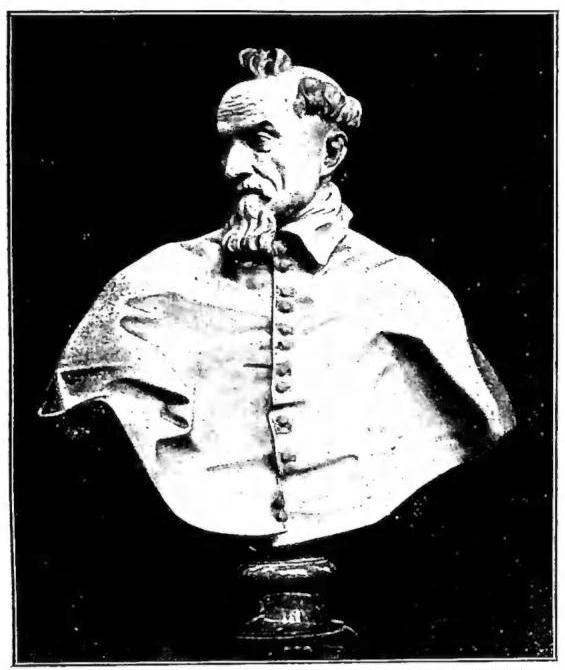
After his ordination as subdeacon (1591) V. opened a school for neophytes at his residence in Piazza del Popolo, later transforming it, with the help of St. John Leonardi, into a religious Congregation of Regular Missionary Clerics (1606-10); but this second attempt also failed. He then offered the general of the Theatines Vincenzo Filiberti (1621-27), probably in the years 1624-26, the Palazzo Ferratini which he had bought as early as Dec. 13, 1613 with a certain number of fixed revenues, in order to erect there, under the direction of the Theatines, a College for "transalpine secular clerics" who were preparing ad propagandam fidem catholicam, that is, for missionary work (Arch. Gen. of the Theatines, cass. 47, Propaganda f. 13). When this project also fell through, V. donated the same Palazzo Ferratini with sufficient revenue for 12 alumni to Urban VIII and his successors, with the obligation to erect a College there for secular priests from the whole world or for clerics in Holy Orders, to be promoted to the priesthood at the latest after one year, and to prepare pro propaganda in universum mundum catholica Fide (v. COLLEGI ECCLESIASTICI, XXXI). On July 14, 1626, the Congregation of Propaganda commissioned V. to draw up the regulations and statutes of the College. Urban VIII accepted the gift and the conditions contained in V.'s act of donation, and on Aug. 1, 1627, with the bull Immortalis Dei Filius, he erected, under the patronage of the holy apostles Peter and Paul, the "Collegium Pontificium", giving it his own name "Urbanianum" for secular priests from all over the world.
Seeing that the College of secular priests was not sufficient for his purpose, V. S. Bonaventura, to be entrusted to the Premonstratensians. But the Congregation, in its session of Dec. 12, 1628, did not accept the proposal, as the Pope had already disposed of the building for another purpose. More than eighty years old and confined to the room of the Rector of the Urban College, V. faith. Indeed, in June 1645, he had proposed to the Congregation the erection, alongside the Congregation de Propaganda Fide, of a similar one pro tuenda Fide, complemented by 24 theologians, an undertaking already practically carried out by the Sacred Congregation of the Holy Office. To interest the entire Catholic world in financially assisting the missions, he proposed in Feb. 1628 that a 10% tax on all legacies, mandates, and pious donations be allocated to the Sacred Congregation de Propaganda Fide to aid the missions. He justified this tax with Jesus' missionary precept addressed to all members of the Church.