
GROSSETO, DIOCESE of. – City, provincial capital, and diocese of Tuscany. The diocese comprises 38 parishes with approximately 100,000 Catholics, 62 diocesan priests and 29 religious priests, and a seminary.
The diocese was created by Pope Innocent II on 9 April 1138 through the suppression of that of Roselle. The diocese remained vacant from 1858 to 1867. Since 1925 the bishop has been apostolic delegate for the Tuscan part of the abbey of SS. Vicenzo and Anastasio alle Tre Fontane. It is first mentioned as a fief of the Aldobrandeschi family.
The Cathedral, dedicated to s. Lorenzo, was built between 1190 and 1250, but was reconstructed by the Sienese Sozzo di Pace Rustichini in 1294 and subsequently restored several times. To the left stands the bell tower (1402), which was likewise repeatedly rebuilt. The façade consists of bands of white marble alternating with red bands of Caldana marble. On the architrave, Jesus Christ among the four Evangelists; in the lunette, the Madonna and Child between two angels, a copy by C. Maccari of the work by Giovanni d’Agostino in the Oratory of S. Bernardino in Siena.
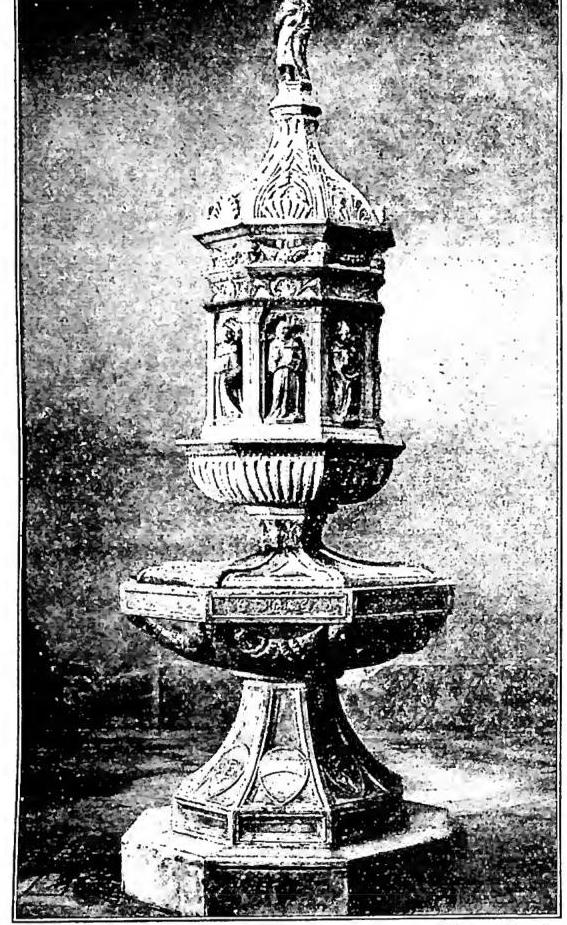
The interior is in the form of a Latin cross, with three aisles divided by pillars; it was restored in 1540, in 1666–69, and in 1858–65. The baptismal font is by the Sienese Antonio di Ser Ghino, dated 1474; in the transept, on the right, is a wooden Crucifix from the 15th century; on the left is the venerated chapel of the Madonna delle Grazie, with an altarpiece by Antonio di Ghino, containing the panel of the Assumption, considered to be the work of Matteo di Giovanni, while in the presbytery there is part of a triptych by Sano di Pietro with s. Antonio and s. Girolamo. Other churches are that of S. Francesco, with a single nave and two wooden Crucifixes, one from the beginning of the 14th century and the other from the 15th; beside the church is a cloister with a wellhead; and the church of S. Pietro, with a Romanesque apse. G. possesses a civic museum, whose rooms were damaged by the war, and a noteworthy sacred museum containing works of art formerly in the Cathedral, in the church of the Misericordia, and elsewhere. The most notable are the Madonna delle ciliegie, a masterpiece by Stefano di Giovanni, known as il Sassetta (1392–1450); the Madonna dell’uccellino, attributed to Pietro Lorenzetti; a small panel with the Crucifix, the Virgin, and s. Giovanni (first half of the 14th century); a Madonna known as della Sanità (14th century), from a demolished oratory, etc.; there are also choir books from the 13th century and a Byzantine bowl depicting the sacrifice of Isaac.
(photo Alinari)
GROSSETO, DIOCESE of – Baptismal font. Work by Antonio di Ser Ghino (1474) – Cathedral.
1295-1304 (Studi e testi, 98). Città del Vaticano 1942, pp. 185, 187, 189-90; Eubel, I, pp. 268-69; II, p. 161; III, p. 222; IV, pp. 197-98. Enrico Josi