
VINCENZO MARIA STRAMBI, saint. — Passionist, bishop of Macerata and Tolentino, born at Civitavecchia on 1 January 1745, died at Rome on 1 January 1824. Having undertaken an ecclesiastical career, he studied at the seminary of Montefiascone, at the Collegio Calasanzio in Rome, at the Dominicans of Gradi in Viterbo, and again in Rome at the Dominican convent of S. Sabina. Ordained a priest in 1767 at Bagnoregio, where he was already rector of the seminary, the following year he was received among the Passionists by Paolo della Croce (v.).
There he distinguished himself by his eminent virtues, by his theological teaching, opposed to the Jansenist and Gallican currents of the time, by the high offices he held, and by his preaching of Missions and spiritual Exercises, being regarded as one of the finest orators of his time. His preferred authors were s. Giovanni Crisostomo, s. Tommaso d'Aquino, and s. Alfonso M. de' Liguori. Promoted by Pius VII in 1801 to be bishop of Macerata and Tolentino, he took s. Carlo Borromeo as his model; he renewed in the clergy their commitment to virtue, study, and pastoral care; enlarged the two seminaries and caused learning and discipline to flourish anew in them; encouraged religious to strive for perfection; founded homes for orphans and the elderly; took solicitous care of the sick and prisoners; assisted the poor with inexhaustible generosity, going so far as to sell his furnishings, clothing, and even the sacred vessels. For himself, the strictest poverty and the rigors of penance. Tireless in preaching and pastoral ministry, he devoted more hours of the day and night to prayer, being favored by God also with supernatural gifts. In 1808, firmly refusing to swear the oath of allegiance imposed by Napoleon I and condemned by the pope, he was taken to Novara and then to Milan. Even in exile he sought to assist his dioceses by letter and to exercise a fruitful apostolate. Returning in 1814, he resumed his pastoral duties with zeal. In 1815 he preserved Macerata from the devastations caused by the warring troops of Gioacchino Murat and the Austrians. Weakened by age and labors, he sought several times to be relieved of the government of the two dioceses and finally obtained this in October 1823 from Leo XII, who wished him in Rome as his adviser in the Apostolic Palace of the Quirinal. But at the end of December, in order to preserve the life of the seriously ill pope, he offered his own life to God and was heard, dying a few days later.
As a spiritual director, V. guided many souls to perfection, among them the b. Anna M. Taigi, the ven. M. Luisa Maurizi, Carlo Emanuele IV of Sardegna, and his consort, the ven. M. Adelaide Clotilde.
As a writer, he was the first esteemed biographer of s. Paolo della Croce, whose cause of beatification he also promoted as postulator; he published the three-volume work Dei tesori che abbiamo in Gesù Cristo (1805) and various spiritual booklets, written especially during his exile; he is also the author, together with mons. G.
Bonanni, of the very widely circulated booklet: Il mese di luglio consacrato al Preziosissimo Sangue di G. C.
He was beatified by Pius XI in 1925 and canonized by Pius XII in 1950; his body is in the basilica of the SS. Giovanni e Paolo in Rome. Feast day: 1 January.
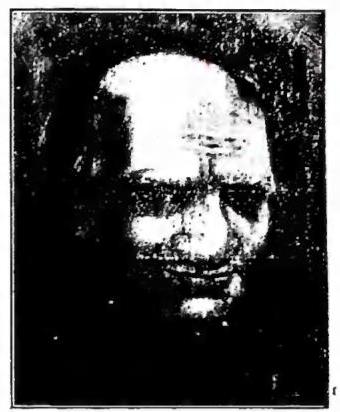
(courtesy of the Passionist Fathers)