
SARSINA, DIOCESE of. — City and diocese in the province of Forlì; a suffragan of Ravenna, in Romagna. It has an area of 620 sq. km. and a population of 26,000 inhabitants, all Catholics, with 52 parishes distributed among 8 vicariates, 62 diocesan priests, and 11 women’s religious houses with 44 professed religious (Ann. Pont. 1952, p. 369).
S. is mentioned among the cities of ancient Umbria; occupied by the Romans in 266 B.C., it retained a certain autonomy and in all probability belonged to the number of confederate cities; having become a «municipium», it was enrolled in the «Pupinia» tribe; the municipality was presided over by the «quattuorviri iure dicundo»; it rendered valuable assistance to the Romans by supplying weapons and soldiers in abundance, especially in the battles against the Gauls in 225 B.C. (Polybius, II,
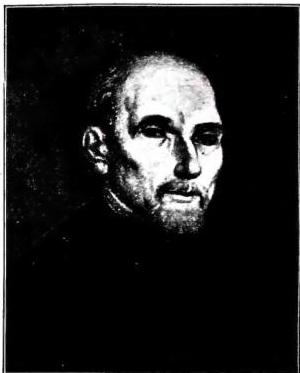
SARPI, PAOLO — Portrait. The original bears alongside it the inscription “Ipsissima P. Pauli Veneti viri ad miraculum docti integri iusti obdormientia in domino effigies” — Venice, private collection.
24) and against Hannibal at Cannae in 216 B.C. (Silius Italicus, X, 250–59). In 254 B.C. Plautus was born at S.; the city’s main square is dedicated to him.
Various indications suggest that the Christian religion was brought there by the immediate disciples of St. Apollinaris toward the end of the second century. The first bishop of whom there is knowledge is St. Vinicius, who governed the diocese at the beginning of the fourth century. During the centuries of transition from Roman to feudal rule, the territory of S. took the name of Bobbio, an appellation that, among certain historians, would occasion confusion with the Lombard diocese of the same name, a suffragan of Genoa, erected in 1014. While Narses governed Italy in the name of the Eastern Emperor (553–67), the County of Bobbio was created, and the bishop was invested with II. During the Avignon Captivity, S. was occupied by Neri della Fagiuola; in 1386 by Pino and Cecco Ordelaffi; in 1406 it was granted in fief to the Malatesta of Cesena; usurped by Cesare Borgia, it was restored by the Venetians to Julius II; in 1519 it was granted to Alberto Pio, lord of Carpi, then to the Aldobrandini family and subsequently to the Doria-Pamphily; in 1860 it passed definitively to the Kingdom of Italy. The diocese, very extensive for several centuries, underwent various reductions, especially in more recent times; many parishes were taken from it on several occasions, following the erection of the diocese of Borgo S. Sepolcro (1515). In 1824 Leo XII united it to the diocese of Bertinoro, and in 1850 a further 17 parishes were detached to form the new diocese of Modigliana. Pius IX then ordered the separation of S. from Bertinoro in 1853, and Pius X in 1908 returned the 17 parishes that had been incorporated into Modigliana.
Among the bishops, besides St. Vinicius, the following deserve mention: Benno (770–815), to whom the construction of the present Cathedral is attributed; Uberto I (1025–50), who obtained various privileges and grants of land from the Emperor Conrad II; Alberico (1176–1221), who received many estates from the Emperor Frederick II; Carlo Bovio (1635–1646), to whom the first construction of the Seminary (1643) is owed; and Gian Battista Braschi (1699–1718), a man of profound and extensive learning.
S. possesses an archaeological museum that is undoubtedly among the most important in the region; remains from the pre-Roman and Roman periods are preserved there. Moreover, recent excavations (1927–29) at a very nearby site, Pian di Bezzo, where a Roman necropolis was discovered, brought to light, in excellent condition, several mausoleums with curvilinear pyramidal finials. This discovery is of national importance, since throughout the peninsula this type of Roman architecture has been preserved only at S., apart from Aquileia, where numerous funerary cippi had already long since been brought to light, though of small dimensions and crowned with a curvilinear pyramidal finial. One of these mausoleums, erected in memory of “Aulus Murcius Obulaceus,” has been reassembled in the open air on a handsome terrace at the entrance to the city; it consists of three structural bodies: a base, a central distyle prostyle aedicule, and a pyramidal finial with curved edges. The whole reaches a height of approximately 9 m. The Cathedral is also of interest: a three-nave building in Roman-Byzantine style dating from the end of the eighth century, which, although modified several times internally, displays its original structure externally. A portion of an ambo, a valuable work of Romanesque sculpture, as well as other sculptures and paintings from various periods, is preserved there.
The episcopal archive, rich in precious documents and manuscripts and once kept in the fortress of Ciola, suffered damage on several occasions, especially in the sixteenth century and most recently in 1944, as a result of the fury of war; the town itself, more than half of it burned in an act of enemy reprisal, was among the places most severely tried along the “Gothic Line.” Almost as a means of commemorating and giving value to these painful events, the “Opera di carità Linea Gotica” was established at S.: a charitable and suffrage initiative canonically erected as a foundation for worship on 4 November 1948 and recognized by the State as a juridical entity on 31 August 1951.
Among the sanctuaries, mention should be made of a chapel in the Cathedral dedicated to St. Vicinius, the first bishop, venerated as patron of the diocese; the Saint’s mortal remains and the so-called “chain of St. Vicinius,” his instrument of penance, are preserved there.
Several monasteries, governed by the Camaldolese, once flourished in the diocese. Among them should be recalled that of S. Salvatore in Summano, united in perpetuity to the episcopal table by St. Pius V; that of S. Ambrogio di Ranchio; that of S. Giovanni “inter ambas Para” (that is, between the two Para torrents), also called the “Cella di S. Alberico,” after the Saint’s hermitage; and that of S. Maria in Trivio. — Vedi tav. CXXVIII.