
ALBERONI, GIULIO. – Cardinal and statesman, born at Piacenza on 31 (?) May 1664, died there on 27 June 1752. At the age of twenty he entered the favor of Mons. Giorgio Barni, papal vice-legate at Ravenna and subsequently (1688) bishop of Piacenza, and became priest and tutor to his nephew, Giovanni Battista, later a cardinal. He was a favorite of Marshal Vendôme, the French commander in Italy during the War of the Spanish Succession; after Vendôme’s death, he succeeded in winning the favor of Philip V, assuming, to the great advantage of his lord, the representation of Parma at Madrid. In this capacity, in 1714 he successfully concluded negotiations for the marriage of the king, widowed of Maria Luisa di Savoia, to Elisabetta Farnese, niece of Francesco. A consummate and resourceful diplomat, devoted to his native land and deeply attached to the Farnese, an implacable enemy of Austria and the Empire, he found it easy to rise to the apex of power with the ascendancy of the new queen (who increasingly dominated the weak and irresolute monarch without challenge), until he became prime minister of the kingdom, replacing Cardinal Francesco del Giudice (1716).
Only then did he clearly reveal his vast and carefully devised plans, which essentially consisted in fully satisfying Philip’s desire to reconstruct Spanish predominance in Italy and, at the same time, safeguard the rights of succession to the throne of France, while accommodating Elisabetta’s ambitions, which eagerly sought to make the successions of the Farnese of Parma and the Medici possible for her own children. In practice, this meant proceeding by force against the continental power of France and the peninsular power of Charles VI of Austria, freeing Italy and its princes from French and imperial domination through the rapid and audacious assertion of a preponderant return of Iberian influence; that is, fighting all the principal powers simultaneously and without quarter—France, Austria, and especially England, the inflexible guarantor of the Treaty of Utrecht, which, with the definitive dismemberment of the Spanish constellation, had sanctioned the decline of its predominance in the Mediterranean as well. Having removed and suppressed abuses of every kind, reformed the organs of supervision and government, replenished the treasury through appropriate tax measures, often also making use of the enlightened and devoted collaboration of Italians, he revived agriculture, gave new life to trade and to the currents of production and exchange, restored the merchant and war navies, and laid the foundations of a solid army well supplied with artillery.
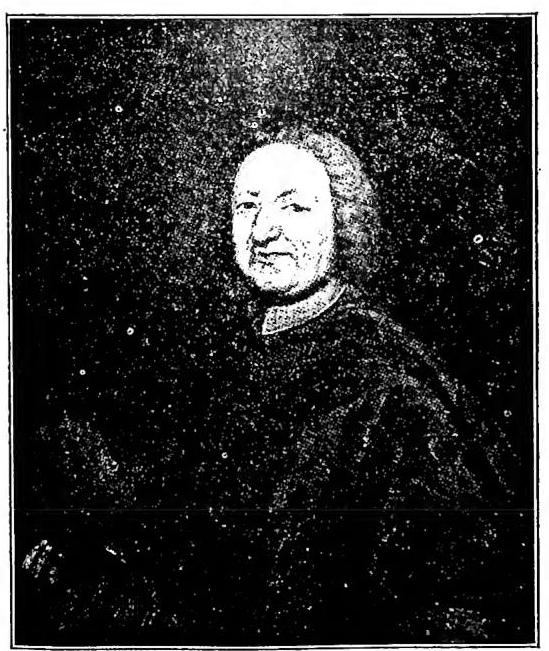
by G. F. Roen, Unites, art. Alberoni
ALBERONI, GIULIO - Portrait, canvas by Mulinaretto. Piacenza, Alberoni Gallery.
...landed in Sicily (1718), while a threatening quadruple alliance was being formed, in which France, England, and Holland took the field alongside the Empire. After the failure of the intrigues aimed at setting Charles XII of Sweden and Russia against Great Britain, at overthrowing the Duke of Orléans through the famous conspiracy of Prince Antonio di Cellamare, and at bringing the exiled James Stuart to England from Cádiz, the English maritime power soon got the better of the Spanish fleet in Sicilian waters; the island was easy prey for the imperial forces, and the French successfully attacked beyond the Pyrenees, in Navarre (1719). It was the catastrophe: the allies, concerned solely with maintaining the previous frontiers and instructed by experience, imposed upon Philip V the removal of the adventurous and unfortunate minister, whom he himself, in July 1717, had helped to make a cardinal of the title of S. Crisogono.
The Farnese contributed not a little to the A.’s undeserved disgrace, having changed from friend into enemy because he greatly feared that his indisputable responsibility for the outbreak of the conflict might come to light, and that the cardinal’s absolute and complete innocence would consequently shine forth clearly. The latter, expelled from Spain on 5 December 1719, pursued by agents who had orders to kill him, surprised and searched, could barely save himself and the documentary evidence favorable to him by taking refuge with the Republic of Genoa. Although it did not yield to the violent insistence of Philip V and the Pontiff, who immediately demanded his surrender, the Republic was nevertheless compelled to order him to leave its territory, especially since the king was breaking off diplomatic relations and the Pope was preparing to deprive him of the purple. But, despite relentless searches of every kind, at the beginning of 1720 the A. managed to make himself untraceable, hiding for months among the mountains of the Apennines. Meanwhile, Clement XI entrusted a congregation of fifteen cardinals with the arduous task of judging him, and investigating commissions set about, with zeal worthy of a better cause, gathering the information necessary for proceedings for high treason in Spain, Parma, and Rome. The accusations concerned not only the man’s private and priestly life, but also the alleged deception practiced upon the Pope by failing to fulfill the promise of assistance from the Spanish fleet in the Levantine war; the monarchy’s rupture of relations with Rome because the archiepiscopal see of Seville had been refused to the A.; the interception of the papal briefs to the bishops of Spain concerning the crusade and other matters; the unlawful use of the royal seal during an illness of the sovereign; as well as alleged embezzlement and irreverent remarks concerning the Pontiff and certain cardinals. But the unfounded nature of many of the elements, and the various obstacles placed in the way of establishing others, prolonged matters to such an extent that the voluminous files reached Rome only when the Pope was already at the point of death (March 1719).
Summoned, as was his right, to the Conclave, he appeared there without hesitation, traveling from Bologna toward Rome in April. Having requested and obtained from Innocent XIII the continuation of the case, the A. remained peacefully in Rome, purchasing a palace and a vineyard outside Porta Pia, while the congregation, establishing only entirely minor matters—such as the receipt of the revenues of the see of Seville—and declaring itself incompetent in questions concerning Spain, condemned him to four years’ imprisonment. At this point, however, Innocent XIII, intervening personally in the matter, declared the A. in consistory completely absolved and free from every stain; he also handed him a brief remitting the sentence and the censures incurred, and, the following year, finally imposed upon him the cardinal’s hat.
Turning to private life and devoting himself to agriculture on the Castelromano estate, he was consecrated bishop of Málaga by Benedict XIII in 1725 and was reconciled with Philip V, to the point of being able to enjoy a pension from the revenues of the see, although he had renounced that see. Nor did curial affairs remain foreign to him, and in 1732, having been invested with the commendam of the Piacenza hospital of S. Lazzaro, he benefited his homeland by suppressing the old and dilapidated lazaretto and laying the foundations for the construction of the celebrated ecclesiastical college to which his name was attached, with the intention of housing and maintaining there sixty young men from the Piacenza bourgeoisie aspiring to the priesthood. The institution, disturbed at its birth by the vicissitudes of war, was completed through his efforts and with his personal intervention in 1751 and entrusted to the Lazarists.
Beginning in 1735, the A., despite the burden of age, was compelled to submit to the will of Clement XII, who called him to govern the legation of Ravenna. There he undertook monumental building and hydraulic works, including the regulation of the course of the Montone. In 1739, in a gesture whose political significance was later intentionally exaggerated, particularly in relation to his actual responsibility, he occupied the territory of the free and peaceful Republic of San Marino in order to encourage currents favoring union with the Papal States; the same Pontiff soon repudiated this policy, not without controversy. Transferred for three years, through the cordial friendship of Benedict XIV, to the legation of Bologna, he finally withdrew to Piacenza, where he spent a further ten years in literary work and charitable activities. At his death he left all his possessions to the college, in whose church he was buried.
The modern, reliable, and objective elucidation of the much-debated ecclesiastical and political personality of A. is due almost exclusively to the following authors: S. Bersani, La Storia del card. G. A., Piacenza 1861; id., Osservazioni critiche sul profilo del card. G. A. delineato da Giuseppe Torelli e da altri autori, Piacenza 1862; E. Bourgeois, A., Madame des Ursins et la Reine Elisabeth Farnèse d'après des documents inédits, Paris 1891; id., Lettres intimes de J. M. A. adressées au comte Rocca de Parme et publiées d'après le manuscrit du Collège de S. Lazzaro A., Paris 1892; id., La jeunesse d'A. - A. et Vendôme, in Annales des Sciences Politiques, 15 (1900), pp. 145–82, 341–69; id., Le secret des Farnèse, Philippe V et la politique d'A., Paris 1903; P. Castagnoli, Il card. G. A., 2 vols., Piacenza–Rome 1929. — Pseudo-historical and fictional, on the other hand, is the volume by G. Bianchi, G. A. e il suo secolo, Piacenza 1901; generally noteworthy, although here and there not entirely reliable in its judgments, are the studies of A. Professione, which cover the long years between his diplomatic-military initiation and his ministry in Spain. One should also consult: V. Papa, L'A. e la sua dipartita dalla Spagna, Turin 1877; R. Quazza, La cattura del card. G. A. e la repubblica di Genova, Genoa 1913. Concerning the sensational trial, there is the exhaustive investigation based on Vatican documents by A. Arata, Il processo del card. A., Piacenza 1923. Finally, with regard to the San Marino controversy, C. Malagola, Il card. A. e la repubblica di San Marino, Bologna 1886. Paolo Dalla Torre