
BULLATORES. - In the papal chancery, they affixed the lead seal to documents (bulla);
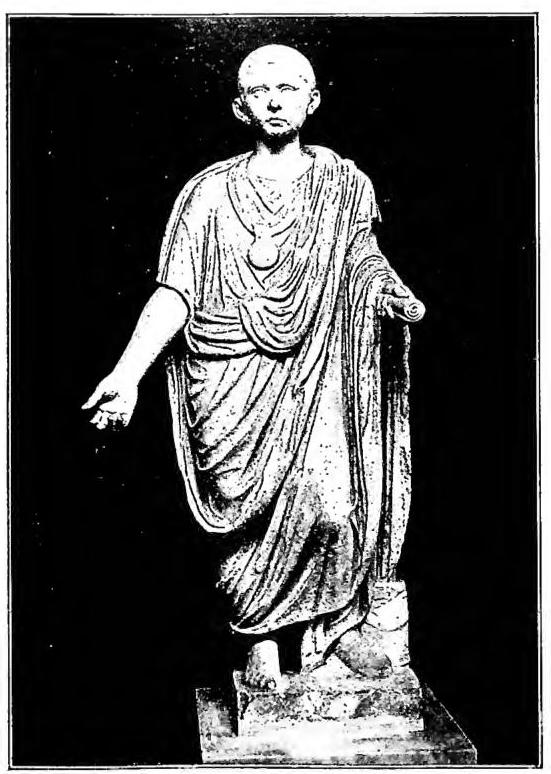
BULLA - Statue of a puer bullatus (late 1st century AD). Rome, Museo Profano of the Lateran.
BULLATORES - BULLETTINO DI ARCHEOLOGIA CRISTIANA
the first mention of the b. is found in a letter of Innocent III from 1198 and they later appear in the new chancery ordinance of 1213. They were usually two, at least since the time of Eugenius IV, and were called fratres barbati because they were originally chosen among the lay brothers of Orders that wore beards, mostly from the Abbey of Fossanova, of the Cistercian Order (constitution of Innocent VIII of May 15, 1486: « Notorium quippe est, in Romana Curia b. licterarum apostolicarum monachos monasterii Fossenove Cisterciensis ordinis, Verulane diocesis, et licterarum ignaros a longissimo tempore citra semper fuisse et adhuc existere »). That they had to be illiterate, to guarantee secrecy, was not sanctioned by any written rule (1524: « ab aliquibus assertur officium predictum per viros legere scientes obtineri non posse »). From 1512 comes the news of a dowry granted to the daughters of a deceased bullator; from which it is deduced that they were not always religious.