
CARTA. – Writing material of Chinese invention; its manufacture, using linen rags mixed with small quantities of hemp and cotton, was learned by the Arabs upon the conquest of Turkestan (751). The Arabs imported it into Europe as early as the 9th century, but it was only in the 12th century that it began to be manufactured in Spain (at Xativa, near Valencia); the venerable Pietro, abbot of Cluny (1122–50), reports this, describing it as made «ex rasuris veterum pannorum». In Italy, the paper mills of Fabriano were already in full development in the 13th century. In the Middle Ages the term «c. bambagina» (bambycina or bambycina) was often used; until recent times this led people to believe in the existence of paper made of pure cotton in its raw state;
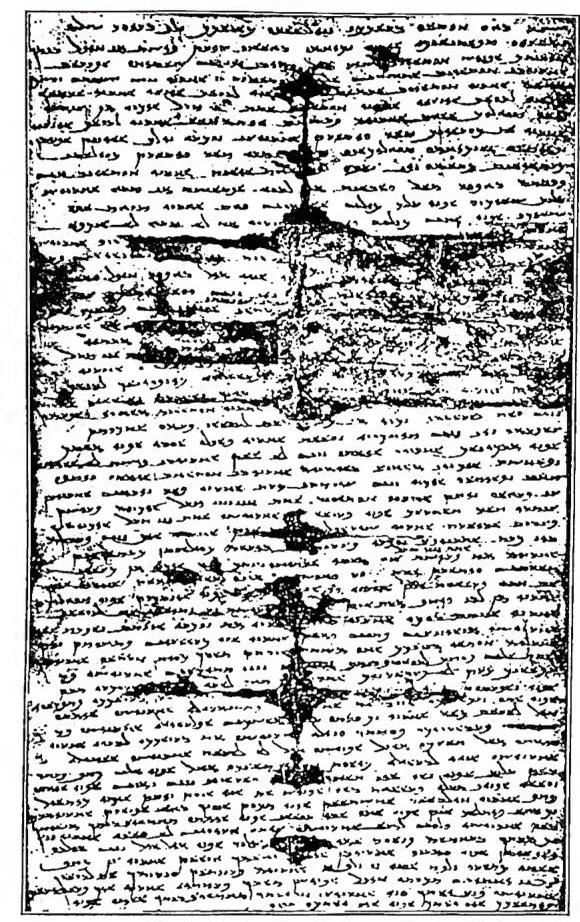
In the famous cave of Tun-huang, explored by Paolo Pelliot between 1906 and 1907, the oldest paper manuscripts known to date have been discovered, dating “to the second century A.D., a few decades after the invention of paper” (cf. G. Messina, Cristianesimo, buddhismo, manicheismo nell'Asia antica, Rome 1947, p. 17).
No European codices or documents on paper dating from before the twelfth century are known. It is known that in Sicily, before 1145, the Norman sovereigns often used paper, and a letter of Countess Adelaide from 1109 is known, constituting the oldest surviving European paper document; of the Genoese notary Giovanni Scriba, there is a register begun in 1154. But in the thirteenth century Frederick II marked a reaction against the use of paper: in 1231 he ordered that parchment be used for official acts and that documents written on paper should not constitute evidence in court. With the fourteenth century, the use of paper became increasingly widespread, until it definitively gained the upper hand.
A clear distinction must be made between the medieval age and modern times with regard to the method of manufacture:
paper, formerly produced by hand by spreading a pulp of macerated rags over a frame of metal wires, is today produced mechanically from a cellulose pulp. Handmade paper is used in modern times only for luxury specimens. Characteristic of paper produced by this process are the lateral deckle edges or fringes, the chain lines and laid lines, visible as lines in transparency because of the reduced thickness of the pulp where it corresponds to the metal wires of the frame. For watermarks V. FILIGRANA.