
Dakar, Apostolic Vicariate of. — The evangelization of the Senegalese coasts dates back to the late 18th century and suffered from the unfortunate interferences of the French authorities, who appointed the apostolic prefects and regulated the apostolate at their discretion. More effective work began in 1852, especially through educational institutions. Efforts were also made to penetrate slowly into the interior in order to halt the advance of Islam.
On 6 February 1863, the territory was erected into the Apostolic Vicariate of Senegambia and entrusted to the Fathers of the Congregation of the Holy Spirit, being detached from that of the Two Guineas; from 1873, the apostolic vicar was also apostolic prefect of Saint-Louis of Senegal (q.v.). In 1893, the first Synod of Western Africa was held, during which regulations were promulgated that constituted the official directory of the mission.
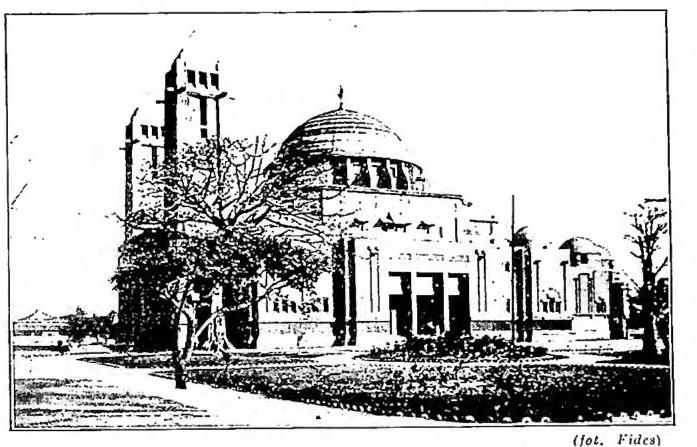
(photo: Fides)
From this vicariate in 1897 the Apostolic Prefecture of French Guinea was detached; since 1920 it has been a vicariate (see KONAKRY; KANKAN). In 1931 the mission of Gambia was detached (see GAMBIA), and in 1939 the Apostolic Prefecture of Ziguinchor. On 27 January 1936 it took the name of Dakar, which in 1947 became the seat of the Apostolic Delegation for the missions of French Africa.
The territory covers approximately 985,000 sq. km. with a population of about 1,680,346 inhabitants, of whom 57,335 are Catholics, 2,463 catechumens, 1,910 Orientals, 648 Protestants, 1,368,545 Muslims, and 249,445 pagans. There are 3 districts, 7 quasi-parishes, 8 primary stations, and 188 secondary stations. In the 79 schools of various levels about 4,347 pupils are educated. Two periodicals are published with a total circulation of 4,100 copies. There are 40 missionaries, including 2 indigenous, 13 lay brothers, and 130 sisters. There is a major and a minor seminary.