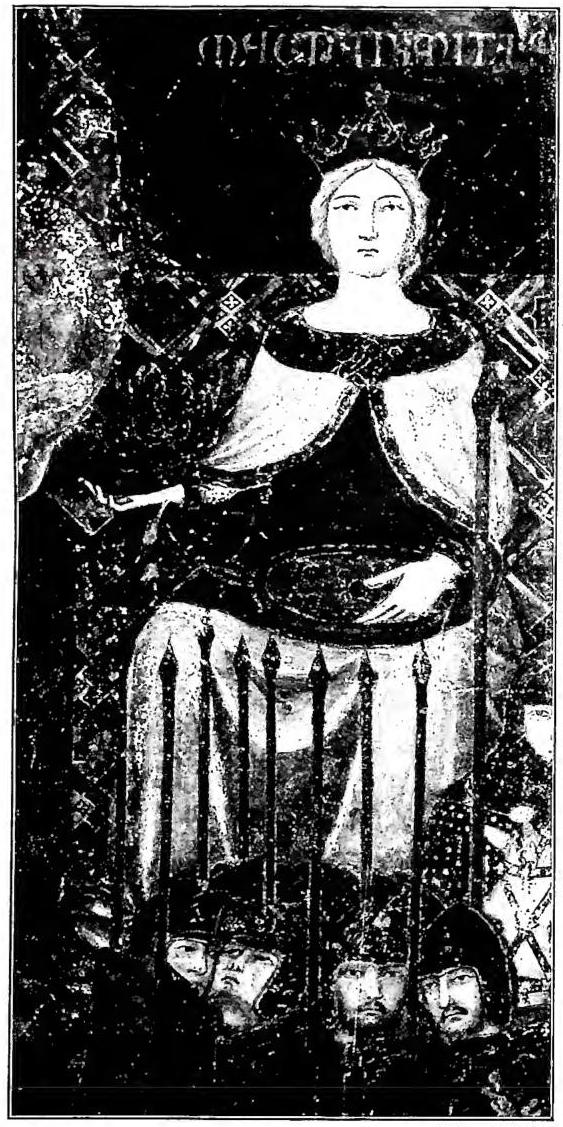
MAGNA CHARTA LIBERTATUM. — This name designates the foundational act of English constitutional life, issued by King Giovanni Senza Terra on 19 June 1215 at the request of the rebellious English barons. The value and significance of the M. C. I. of 1215 were not, however, originally what they came to be regarded as through an unfolding that was not always organic over several centuries, up to and beyond the Revolution of 1688. The English monarchy of the Plantagenets had sought in the twelfth century, through the efforts of Enrico II and Riccardo Cuor di Leone, to establish a strong, centralized royal government by curbing feudal particularism. This had not come about easily: the monarchy had been compelled to make concessions, such as the Constitutions of Clarendon of 1164 and the Assizes, also of Clarendon, of 1166.
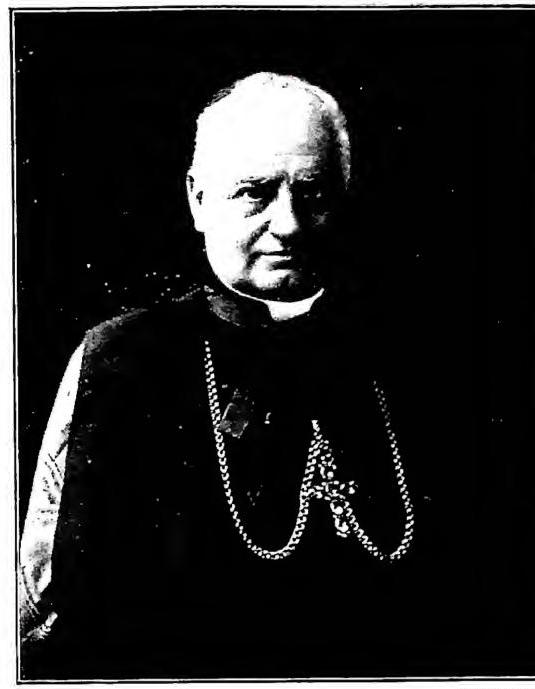
(phot. Felici)
MAGLIONE. LUIGI - Portrait.
The M. C. I. undoubtedly represents a weakening of the monarchical autocracy established by the kings of the twelfth century, but to the advantage of the feudal caste. The latter took advantage of the weakness of King John to react victoriously against royal despotism, but it demanded only practical provisions for government, imbued with a feudal spirit, and restored feudal customs and guarantees that had been superseded. Conversely, there was no affirmation whatsoever of rights pertaining either to a popular collective body or to a class. Yet, while acknowledging that the M. C. I. concerned the particular interests of the various feudal and ecclesiastical groups, it cannot be denied that its clauses, in their theoretical indeterminacy, allowed various interpretations and thus that grand work of theoretical construction which became what is usually called the English parliamentary Constitution.
Strange were the vicissitudes through which the M. C. I. passed in the thirteenth century: as soon as it had been approved, the King appealed to Pope Innocent III, who, as early as 24 August, declared the document null and void as unjust and injurious to the rights of the king and the pope. The new king, Henry III, however, on the advice of a papal legate, solemnly confirmed it in 1216; but he was thereafter unable either to uphold or to destroy it, so that in 1258 the Great Council, which was beginning to be called Parliament, rose against the disorderly government of the King’s favourites, and the good men formed a league which imposed the convening of a Committee of the Twenty-Five for the reform of the State. Thus came the Provisions of Oxford, a developed reaffirmation of the M. C. I. of 1215; and later, after an attempt by the King to evade the application of the Provisions of Oxford, there was a new revision in the Provisions of Westminster. Yet even then there was no lasting system capable of controlling the monarchy; at will, it could convene Parliament, still a feudal assembly. Only in the political struggles of the fourteenth century did the Charter of 1215 undergo a more vigorous and innovative development, as a consequence of the activity carried on by the cities, in a completely new situation.