
CLAIRVOYANCE.—A fully satisfactory definition of c. is difficult. Etymologically: “clear vision, clarity of perception.” Even the most competent authors differ as to the meaning to be assigned to this word; therefore, instead of c., different names are used: “metagnomy,” “second sight,” “lucidity,” etc. The definition proposed by E. Servadio (Enc. Ital., IX, p. 997), one of the most felicitous, compromises the doctrinal unity which should, insofar as possible, bind together the apparent multiplicity of phenomena. In fact, Servadio excludes from his definition of c. all those facts in which the knowledge acquired derives from a mentality extrinsic to that of the percipient. Therefore, taking account of the multiplicity of hypotheses concerning the nature of c., the following definition is proposed, intended to encompass the various tendencies and to correspond to the essence of the phenomenon, while remaining sufficiently similar to that of Servadio, whose informing idea it reproduces, with amendments suited to unifying the mass of phenomena within doctrinal unity: “C. is a comprehensive term for all those facts of knowledge whose object is any event or entity situated in space and time, and which occur without the use of the empirical senses.” This is a negative definition, but the only one currently possible, because the inner mechanism of c., now an established fact, completely eludes us. The proposed definition states that the essential element of c. consists not so much in the position which the event or entity has locally and temporally in relation to the knowing (perceiving) subject, as in the para-normal mode of knowledge, which seems to occur only under suitable circumstances and in particularly gifted subjects, although, according to the latest research conducted in America and elsewhere (Duke University of Durham, Columbia University of New York, Hunter College, etc.), it appears that everyone possesses this faculty to some degree, and that it is capable of development and appropriate training (v. : J. B. Rhine, J. G. Pratt, B. M. Smith, C. E. Stuart, J. A. Greenwood, Extra-Sensory Perception after Sixty Years, New York 1940; J. B. Rhine, The Reach of the Mind, New York, Italian translation by G. D'Agnano under the title: I poteri dello spirito, Rome 1949).
A person endowed with this power knows where others, lacking it, do not know; sees where others do not see at all; possesses clear vision, whence the meaning of the term c.
The practical mechanism by which c. is effected, or at least is claimed to be effected, is manifold: for example, by looking at shiny objects, such as glass or metal plates (crystalloscopy), or even luminous objects; by using suitable revealing instruments; by establishing intimate contact with the object to be examined, selected in an appropriate manner (psychometry, from the Greek ψυχή = “soul” and μέτρον = “measure”), a term, however, that is improper and equivocal because of the use made of it in scientific psychology, with a substantially different and proper meaning. Richet proposed more suitable terminology, introducing the term pragmatic cryptesthesia (from the Greek κρυπτός = hidden, αδάφησις = sensitivity, πραγματικός = practical); but this term did not succeed.
(courtesy of Dr. H. Degenhart)
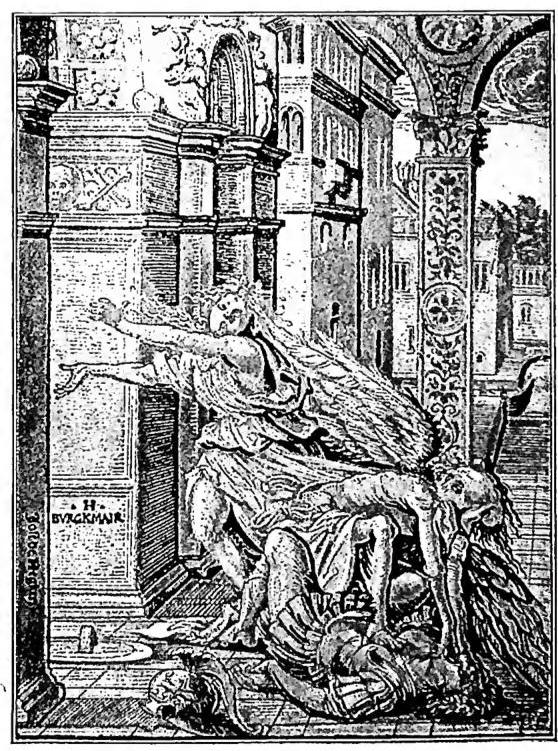
CHIAROSCURO - Allegory of death, by H. Burgkmair (15th century). Woodcut printed from three blocks - Berlin, Cabinet of Prints and Drawings.
The effectiveness of the technical procedure adopted depends on the greater or lesser correspondence it bears to the objective laws governing the mechanism of clairvoyance. Certainly, the matter would be fairly simple if these laws were known. But here the true and radical difficulty arises: these laws remain extremely obscure to this day. Rhine’s studies (Duke University) have brought some clarification, but in general we move in the deepest darkness and amid the gravest uncertainties. There remains only one remedy, namely, to resort to the criterion of probability, constructing hypotheses and theories as close as possible to what, on the basis of experience, is believed to be the inner reality of the phenomena. For now, however, none of the theories provides a satisfactory answer.
Before examining the most important hypotheses and briefly criticizing them, it is appropriate to establish firmly the objective reality of the phenomena. In the first place, the facts are possible because, even beyond natural forces, God would always be capable of producing them whenever He deemed it appropriate. But, setting aside divine intervention (which cannot be invoked except in cases where some other power would be incapable of producing the phenomena), the facts are not only possible but actually exist: this is proved by the extraordinarily abundant historical documentation, especially contemporary documentation, whose genuineness, at least in general, is beyond dispute. A serious objection is that the facts may be due to chance coincidences. Although this possibility cannot be excluded in a number of cases, in many others it can and must be entirely rejected. To reach these conclusions, the phenomena have been reproduced in the laboratory in very large numbers and then tested by statistical calculation. This has shown that, whenever man enters as the agent producing the phenomena, mathematical probability is always exceeded by a wide margin, so that one must admit in man the existence of an extrasensory cognitive power (“ESP effect,” that is, extra sensory perception, the name adopted by Duke University of Durham, North Carolina; Rhine directed these statistical investigations). The use of the statistical method is not new; begun by Richet in 1880, by 1884 he had assembled 2,927 trials; Gurney had 17,653. From 1880 to the present, 150 groups of major statistical experiments have been formed, corresponding to approximately 5 million individual experimental trials. Rhine and his collaborators have applied the statistical method to a body of nearly one million experiments. The greater part of these studies concerns clairvoyance, and especially its so-called indirect form, namely telepathic clairvoyance (a substantial portion of the experiments concerns telekinetic phenomena, that is, the “PK” effect, namely mechanical impulses at a distance: V. METAPSICHICA): the results were brilliant and convincing. In addition to Richet and Gurney, these studies were pursued by Dessoir, Sidgwick, Barret, Ochorowicz, Warcollier, Brugmans, and others (v. METAPSICHICA; TELEPATIA).
It is necessary to consider separately the theories associated with so-called direct clairvoyance and those connected with indirect clairvoyance. In the first case, clairvoyant knowledge would occur by virtue of a direct action between the object or event and the percipient, considered direct even when obtained with the aid of “revealing” instruments (as, for example, in dowsing [v.]). In the second, the inner mechanism of the phenomenon is linked to the transmission of messages from mind to mind, that is, by telepathy (v.), whatever the nature of the communicating mind: divine, angelic, human, living, or deceased.
In examining the phenomena, the first question is to see to which category (direct or indirect clairvoyance) they can be assigned. Certain fairly simple criteria are therefore applicable; direct clairvoyance may be considered more probable when all the following conditions are present: the entity or event perceived a) exists simultaneously with the percipient, and b) no human beings participate in it in any way (for example, if it is an event in whose occurrence human activity plays no part). In other cases indirect clairvoyance is more probable, at least in general, especially when it concerns clairvoyance of the future, where, for reasons to be mentioned below, it is often necessary even to posit divine intervention, mediated or immediate. After classifying a phenomenon in one category or the other, one may propose the hypothesis that appears best suited to explain its absence.
With regard to direct clairvoyance, the most authoritative authors propose the hypothesis that the phenomena are attributable: a) to the action of a “sixth sense” or another “special faculty” of the percipient (cripteiensis of Richet); b) to the manifestation of the subject’s perceptive faculties beyond their normal limits of intensity and, above all, of location (tele-sensia [v.], from the Greek “ἔλε = distant and αἰσθησις = sensitivity: literally, therefore, “distant sensitivity”); c) to the subject’s reception of special, still unknown radiations emitted by the perceived object or by the environment in which the event occurred in the past and the object was made: in this case it is admitted that the object or event has left its radiations in the environment (the psychometric hypothesis, studied by Fechner, Buchanan, Denton, Myers, De Rochas, Bozzano, and others); d) to a hypothetical partial dissociation—not quantitative but active—of the percipient’s soul from his body, so that the soul, being independent of space, could instantaneously perceive, at any distance, any object or event whatever.
When, on the other hand, it is considered more probable that the percipient knows the object or event by virtue of a message transmitted by another mind—and this is the case with indirect clairvoyance—then, where there is “telepathy between the living,” one might imagine a mechanism of action analogous to that of radio (Sinclair, Cazzamalli), or else a direct “contact” between the souls of the agents, partially dissociated from their bodies (telepsychism); however, rather than contact between the souls, one should speak of contact between the activities of the souls. This latter hypothesis enjoys some standing even in cases where the message is thought to come from a deceased person. When the message is believed to come from a pure spirit or even from God, one moves into hypotheses that, in metapsychics, are not worthy of consideration, while in occultist books they are ridiculous, not infrequently insane and blasphemous.
Still with regard to indirect clairvoyance, it is interesting to examine the most notable criteria by which scholars believe they can recognize, with some degree of probability, the nature of the transmitting mind (living, deceased, pure spirit, God). If the object or event is present or past, and if the perception is symbolic, purposive, or in any case such as to reveal intelligent elaboration, one may unhesitatingly admit indirect clairvoyance; it is nevertheless extremely difficult, even in theory, to determine whether the intelligence is that of a living person or of a deceased one; the possibility of identifying the transmitting intelligence with that of a deceased person would resolve nothing less than the problem of the soul’s survival after death. This suggestive possibility (v. SPIRITISMO); despite the alleged “identifications” of deceased spirits (Bozzano, Trespioli, and others), owing to the lack of scientifically acceptable experimentation and the numerous frauds uncovered precisely in the cases most often invoked by spiritists in support of their thesis, the question of survival, at least by this route, remains sub indice.
Of particular importance is the interpretation of the phenomenon when the event or object is future; in that case the only credible hypothesis is that of indirect c. Setting aside for the moment the possibility that the transmitting intelligence is God himself, telepathy between living persons must immediately be excluded. Indeed, the transmitter would find himself in the identical difficulties of the receiver, namely, in the impossibility of knowing a future event, and therefore one that does not yet exist (unless it is foreseen in the causes destined to produce it, as, for example, the exact date of a lunar eclipse).
The problem becomes arduous if we ask whether other intelligences, distinct from God and from the living human being, can know the future. Upon careful consideration, it seems that no recourse is possible except to the intelligence of a disembodied soul (the deceased) or to a pure spirit (angels, demons). Whoever it may be, however, it remains firmly established that a future event, not being by definition yet knowable in itself precisely because it does not yet exist, can be known only in its causes. If the future event is due to the decision of a free cause, for example, a human being, it cannot be known with certainty in that cause, but only conjecturally; otherwise, in manifest absurdity, the cause would be at once free and predetermined. If the future event is due to a non-free cause, it could also be known by an intelligent entity distinct from God, capable nevertheless of establishing contact with that cause, knowing it and sufficiently analyzing its mechanism of action, as much as necessary to derive from it knowledge of the future effect. Such would be the case of the premonition of the death of a certain person from illness, when, because of the limitations of human science, this remained obscure even to physicians, but was clear instead to the intellect, incomparably more powerful, of a pure spirit. On the contrary, it is not easy to accept the intervention of a deceased person, since one cannot admit in him an intelligence endowed with a natural power superior to that of the living. This is because, even granting that the deceased, through a mechanism of action entirely unknown to us today, could naturally (that is, by the forces proceeding solely from his nature as a disembodied soul, without, therefore, the assistance of God) establish contact with a living person, for example, with the certain person in the case proposed, it is not apparent how his mind, not superior in power to that of the living and therefore, in the example, not even to that of the physicians, could have the capacity to discern what they are unable to see. Nor can the fact that the deceased exists in conditions different from ours provide assistance; it is not apparent in what manner his powers could be strengthened by his state of existence, certainly inferior to that of the living person, in whom the soul is united with the body, that is, with its natural instrument of vital action and therefore of knowledge.
The possibility that God may transmit to human beings any premonition of future events, whether secondary to determined or free causes, remains beyond dispute. Here arise extremely grave questions concerning the manner in which God knows free future events and the harmony between divine foreknowledge and human free will; for their solution, reference is made to treatises of speculative theology (cf., for example, H. Hurter, Theologia dogmat., II, Innsbruck 1885, from thesis 97 to thesis 106). God’s intervention should be admitted only if every other cause determining the phenomenon proves inadequate; certainly, in the case of an exact (that is, non-conjectural) premonition of a free future event, the cause of the prophecy can only be God.
Students of psychical research resort to hypotheses that make the fact of premonition of the future appear plausible, while remaining proportionate to the knowledge of the living and to the nature of disembodied souls; these hypotheses, however, are all untenable and often ridiculous. Three are cited: a) life, which we believe to be a succession of events in time, is instantaneous, but we are not conscious of this; b) before becoming incarnate, the soul determines its entire future and also the date of its death (the prenatal, fatalistic, reincarnationist theory); c) the events of this life that are future for us are already present and existing in an order different from ours, which could be the divine essence (that is, God), or a “fourth dimension,” or the order
in which disembodied souls and pure spirits exist (such an order, outside time, would permit the simultaneous vision of human events).
Myers, with his considerable authority, upheld these doctrines (though not all of them), which various writers of treatises had adopted both before and after him. But the hypothesis of the instantaneousness of life is incompatible with the reality of the facts; the prenatal theory plainly conflicts with the Catholic faith, with the results of the psychological sciences, and with the facts that attest that our life is not the product of decisions made before birth, and therefore of fatality, but of our free effort. The last theory may be accepted provided that one does not claim that the intellect of the percipient already sees the divine essence directly in this life: this would in fact be identical with the errors of ontologism, condemned by the Church (Decr. S. Uff. of 14 Dec. 1887 against the errors of Antonio Rosmini-Seebati; Denz-U, nos. 1891–1930); moreover, it is contrary to reason and to the experimental facts. The hypothesis of the “fourth dimension” is without value. The admission that for the deceased and pure spirits our life is already entirely present, and this solely because they are outside time, has no foundation: indeed, it would amount to admitting that an entity simultaneously exists and does not exist, which is absurd.
In conclusion, the following may be said: it is certain that c. exists, but it is difficult to identify its causes: in very many cases these are natural and must be attributed to a power inherent in the living human being, capable of manifesting itself under favorable conditions; in some cases, on the other hand, divine intervention is necessarily required. The admission of pure spirits as the cause of the phenomena is ordinarily very improbable; on some occasions credible, indeed certain; that of the deceased is even less probable and always uncertain.
BIBLI: F. W. H. Myers, Human Personality and its Survival of Bodily Death, 2 vols., London-Bombay 1903 (of this fundamental work there are various translations, among which the French adaptation by S. Jankelovitch, Paris 1919, deserves mention; there is also an Italian abridgment in 2 vols., published by E. Voghera, Rome 1909); E. Duchâtel, La vue à distance dans le temps et dans l'espace. Enquête sur les cas de psychométrie, Paris 1910; E. Osty, Lucidité et intuition. Étude expérimentale, ibid. 1913; E. Bozzano, Dei fenomeni di telestesia, Rome 1920; R. Tischner, Über Telepathie und Hellsehen. Experimentell-theorische Untersuchungen, Munich 1920; E. Bozzano, Gli enigmi della psicometria, Rome 1921; C. Richet, Traité de métapsychique, Paris 1922; W. Mackenzie, Metapsichica moderna, Rome 1923; E. Osty, La connaissance supernormale, Paris 1923; E. Bozzano, Premonizioni, precognizioni, profezie, Rome 1929; U. Sinclair, Mental Radio, Monrovia (California) 1930; E. Osty, Télépathie spontanée et transmission de pensée expérimentale, in Revue de métapsychique, 12 (1932), 13 (1933), Italian translation, La telepatia, Milan 1934; G. C. Barnard, The Supernormal, London 1933, Italian translation, Rome 1948; C. E. Stuart and J. G. Pratt, A handbook for testing extrasensory perception, New York 1937; J. B. Rhine and J. G. Pratt, Extra-Sensory Perception after Sixty Years, ibid. 1940; F. Cazzamalli, Di un nuovo apparato radioelettrico rivelatore dei fenomeni elettromagnetici radianti dal cervello umano, in Energia Elettrica, 1 (1941), p. 28 ff.; J. B. Rhine, Experiment bearing upon the precognition hypothesis, in The Journal of Parapsychology, 1 (1941), pp. 51-57; G. Schepis, La ricerca scientifica in metapsichica, Rome 1942; id., Un nuovo campo di applicazione del metodo statistico: lo studio dell'effetto dato di percezione extrasensoriale (ESP), offprint from the Proceedings of the Italian Society of Demography and Statistics, ibid. 1947 (contains a rich bibliography of the latest American publications concerning studies and statistical methods in parapsychology); B. M. Humphrey, Handbook of Tests in Parapsychology, Durham (North Carolina) 1947; W. Carrington, Telepatia, Italian translation, Rome 1948; A. Grandori, Prodigie del pendolo, Milan 1948 (contains an extensive bibliography); J. B. Rhine, The Reach of the Mind, Italian translation, Rome 1949.
Alighiero Tondi
C. SPIRITUALE. — In the language of mystical theology, this is the supernatural gift of discerning by which spirit, whether good or evil, a soul to be guided is moved; or of reading the secrets of hearts; or of seeing and manifesting past or even present events, but at a distance, which otherwise could not be known by the sole means or according to the sole laws of nature. According to some, spiritual c. would be an aspect of «prophecy», understanding prophecy in the broad sense as knowledge of things past, present, and future unknown to the prophet (Sum. Theol., 2a-2ae, q. 131, a. 3); more commonly and more properly, however, the term «prophecy» is restricted to knowledge and foreknowledge of the future (Benedetto XIV, De serv. Dei beatificatione et beat. canonizatione, l. III, cap. 45, n. 2).
The occurrences of spiritual c. must naturally be examined according to the rules of severe criticism, so as not to fall into errors, illusions, or credulity; yet, leaving aside those that can be explained by recourse to science and psychology, others will remain which, both because of their content and their circumstances, will require the intervention of a supernatural agent. For example, the most intimate secrets of hearts, concerning the state of conscience, vocations, and God’s designs for souls, cannot in many cases be read except in the interior light of the Holy Spirit, who «penetrates all things, even the depths of God» (I Cor. 2, 20).
One of the distinguishing characteristics of these occurrences is the clarity, precision, and certainty regarding what has thus come to be known: «Although the Lord does not show Himself in sensible form, He impresses Himself upon the mind with knowledge so clear that it seems impossible to doubt it in the least, because He wishes the object to remain so deeply engraved in the mind that we cannot conceive any doubt about it, any more than about what we see with our eyes; indeed, even less» (s. Teresa, op. cit., p. 366).
As for the manner in which spiritual c. takes place and unfolds, those who experience it themselves cannot find suitable words to explain it: «God instructs the soul and speaks without speaking. And this language is so heavenly that it can scarcely be made understood here below, however much we may try to express it, unless the Lord teaches it through experience» (ibid., p. 366).
It remains to note that spiritual c., being a gratuitous gift, like prophecy, neither confers nor presupposes holiness; and therefore a sinner too may be its subject; generally, however, it is granted to holy souls, so that they may feel themselves more and better assisted in the mission entrusted to them by God.