Also known as:
Saint Luigi Guanella;
Italian: Don Luigi Guanella, Luigi Guanella
GUANELLA, LUIGI. - Priest and founder of the Servants of Charity and of the Daughters of St. Mary of Providence, b. at Fraciscio di Campodolcino (Sondrio) on 19 Dec. 1842 and d. at Como on 24 Oct. 1915. He was ordained a priest on 26 May 1866 at Como by Msgr. B. Frascolla, but he had to wait a full twenty years for the hour of Providence for his work, persecuted in the meantime by the Masonic government at Savogno and later at Traona; misunderstood by his superiors, who confined him on the Alpine peak of Olmo.
A friend of Fr. D. Albertario (v.), he shared his ideals of apostolate and the fortunes of persecution. An open and far-seeing spirit, he was a pioneer of the most modern forms of apostolate. He opened day and evening schools for the civil and religious instruction of the people and institutes for the education of youth, which he also gathered into oratories, guiding certain souls all the way to perfection. A son of the people, to
(phot. Fider)
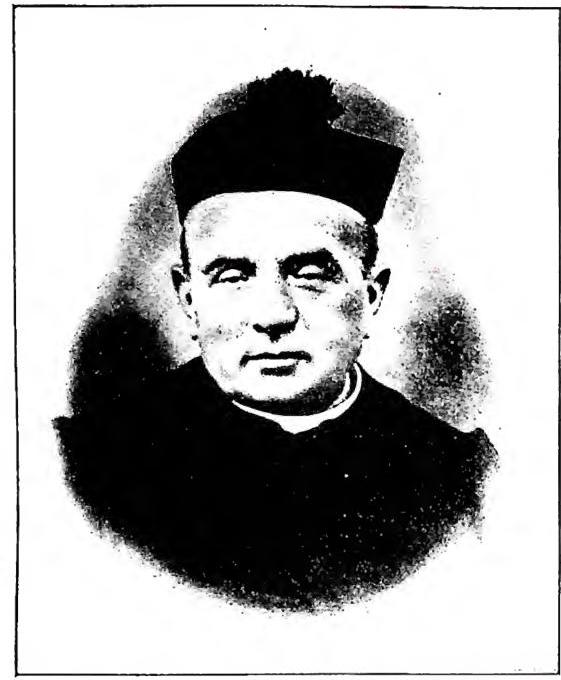
GUANELLA, LUIGI - Portrait. (by courtesy of Msgr. A. P. Frulaz)whose good he consecrated his whole work, he championed their cause, following with passion the development of the social and workers' question, as it was being outlined by the directives of the pontiffs and in the works of his friend, Prof. G. Toniolo (v.) and of that other distinguished sociologist, whose last hours he watched over, Msgr. G. Sichirolo (cf. F. Giavarini, Mons. G. Sichirolo, Rovigo 1936). Under the gaze of Our Lady of Labor he himself reclaimed the malarial tract of the Pian di Spagna (Sondrio), transforming it into an active center of life around the church and a hospice for the physically and mentally disabled which he caused to be built there. Continuing his work, which he had entrusted to Our Lady of Divine Providence, he offered lodging to the unfortunates of the Messina earthquake (1908), whom his most beloved friend Fr. G. Beccaro brought in large numbers to his houses, and to those of the Marsica earthquake (1915), whom he himself, at the age of seventy-three, gathered, directing them toward his houses in Rome. Aware of the formative power of the press, he made himself its apostle, distributing it free of charge and himself writing some fifty pamphlets on hagiographic, historical, apologetic, pedagogical and devotional subjects. Mindful of the growth of the migratory movement, he first sent a priest to North America to assist the Italians who had emigrated there and later, after a journey of his own to America, he sent his ranks of priests and sisters. He partly compensated for the unrealized missionary apostolate with the work carried out in ProtestantSwitzerland, so that the valleys which had been excluded from it by the "Reformation" might be reopened to the penetration of Catholicism. The zeal to extend to all souls the salvation brought by the Redemption suggested to him the grand idea of uniting the whole world in an immense crusade of prayer for the salvation of the dying, for whom in various parts of the globe tens of thousands of priests (Archconfraternity of the Transit of St. Joseph, with 9 million members: v. GIUDAIZZANTI) offer unceasingly to God the sacrifice of propitiation. Because of his life, fruitful in works and in faith, he was venerated by Card. Ferrari (v.) and held most dear by Pope Pius X (v.), who honored him with particular confidence.
No less affection and esteem did St. John Bosco have for him, who stood beside him during the three years (1875-1878) and, almost alone, blessed him and encouraged him at the beginning of his work. This was begun at Pianello Lario (Como) with the small religious community of Fr. C. Coppini (1827-81), a volunteer of 1848 and secretary of G. Mazzini at Lugano. In 1886 that small community was transferred to Como, the seed of the two religious Congregations that subsequently sprang from it: that of the Daughters of St. Mary of Providence, definitively approved in 1917, with the development of some fifty houses in Europe and America, and that of the Servants of Charity, approved in 1928, which currently numbers about forty houses for the shelter of the aged, the physically and mentally disabled, and for the education of youth.
The cause of beatification of G. has been introduced.
BIBL.:sources
F. Foffano, D. L. G., Rome 1919; L. Mazzucchi, La vita, le opere e lo spirito di d. L. G., Como 1920; F. F. Meda, Storie brevi, Milan 1920, pp. 110-33; G. Bologna, D. L. G., Rome 1923; anon., Un servo della Carità, d. L. G., Turin 1930; P. Alfieri Tognini, D. L. G., 2nd ed., Lecco 1935; G. Prestoni, D. L. G., Rome 1940; A. Tamborini, D. L. G., Como 1943. Leonardo Mazzucchi
Mazzucchi, Leonardo. “Guanella, luigi.” In Enciclopedia Cattolica, vol. VI, coll. 1197–1200. Città del Vaticano: Ente per l’Enciclopedia Cattolica e per il Libro Cattolico, 1951. https://azioneromana.com/article/guanella-luigi.
MLA
Mazzucchi, Leonardo. “Guanella, luigi.” Enciclopedia Cattolica, vol. VI, Ente per l’Enciclopedia Cattolica e per il Libro Cattolico, 1951, coll. 1197–1200. Azione Romana, https://azioneromana.com/article/guanella-luigi.
BibTeX
@incollection{ec6_guanella_luigi,
  author    = {Mazzucchi, Leonardo},
  title     = {Guanella, luigi},
  booktitle = {Enciclopedia Cattolica},
  volume    = {VI},
  pages     = {1197--1200},
  note      = {Cited by column},
  publisher = {Ente per l’Enciclopedia Cattolica e per il Libro Cattolico},
  address   = {Città del Vaticano},
  year      = {1951},
  url       = {https://azioneromana.com/article/guanella-luigi}
}
Click or scroll to zoom · drag to pan · Esc to close