
MINISTERS OF THE SICK (CAMILLIANS, CAMILLINI, CRUCIFERS). — Clerics regular founded by s. Camillo de Lellis (v.) in 1586. They wear the cassock of the other clerics regular, from whom they are distinguished by a red cloth cross on the breast. With a fourth solemn vow, they consecrate themselves to the spiritual and bodily assistance of the sick, even when contagious. They exercise this apostolate in public hospitals and sanatoria, in private homes, in clinics and outpatient facilities belonging to them, throughout Europe and America and in mission lands, with particular attention to lepers.
The history of the M. of the s., especially in Italy, coincides, between the 17th and 19th centuries, with that of the epidemics of plague, cholera, and smallpox and with the wars that afflicted the Peninsula. During the epidemics, especially those of 1630 and 1656, the M. of the s. were nearly wiped out, so great was the number of victims. The same occurred in the 19th century through their assistance to cholera sufferers. In wartime, beginning with the expedition of the Papal army to Hungary against the Turks in 1595, the M. of the s., trained by the founder himself, organized the first aid for the wounded on the battlefields and in the immediate rear areas. Their unremitting apostolic work in civil hospitals and private homes, both in spiritual and bodily assistance, inspired by the most enlightened charity, was even more arduous.
The M. of the s., in their three and a half centuries of existence, have always experienced modest growth. Throughout the first century (1586–1685) and until well beyond the middle of the second (c. 1760), the Order remained consistently at an average of five hundred professed members, despite the frequent decimations caused by the plague. From the French Revolution onward, and as a result of the suppression of religious institutions in the various States, their number gradually declined to two hundred professed members, only to recover rapidly at the end of the last century and reach (in 1949) one thousand and thirty professed members, in addition to more than seven hundred aspirants and novices, with 90 houses and 125 residences.
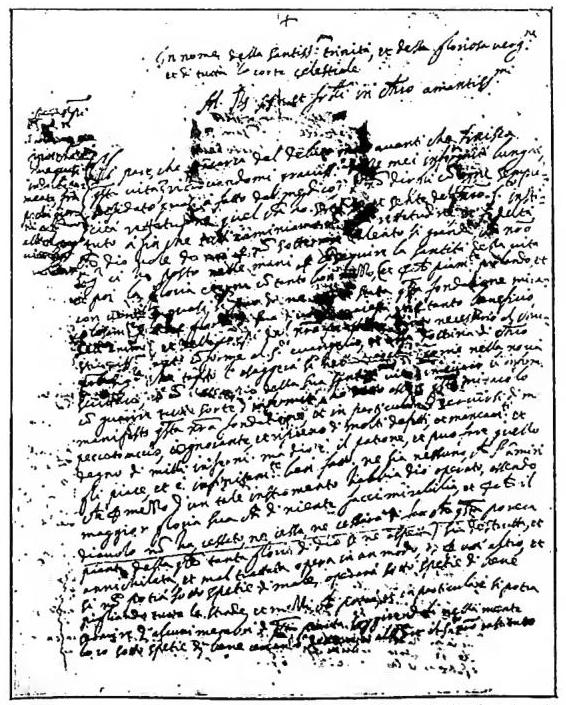
(from l'Ordre des Pères Camilliens, Liana 1925)
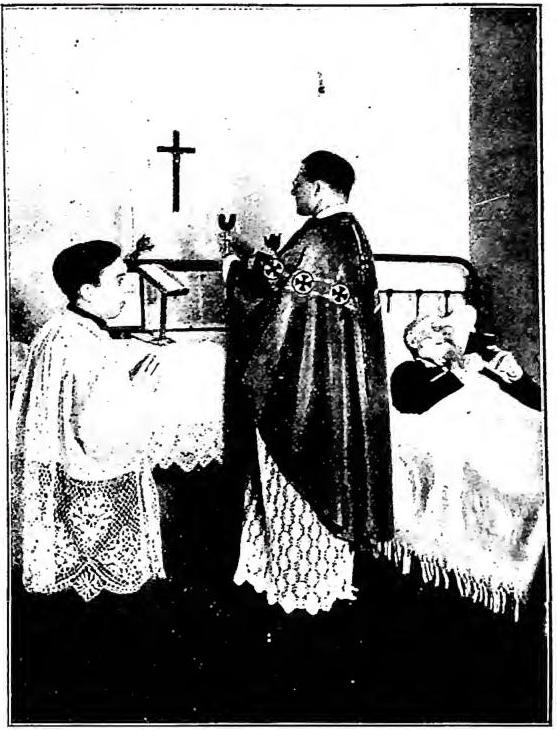
MINISTRI DEGLI INFERMI — A Minister of the Sick celebrates Holy Mass at the bedside of a sick person. Privilege granted by Pius X.
In each branch and in their individual activities, the Ministers of the Sick have had religious of outstanding renown and have been at the forefront in solving problems of assistance and charity.